May 4, 2026
Key Takeaways:
- Strategic trimming prevents shrubs from becoming hiding spots for intruders or breeding grounds for pests.
- Overgrown bushes near foundations trap moisture, leading to wood rot and basement dampness.
- Seasonal pruning encourages healthy air circulation and vibrant flowering for Michigan ornamentals.
- Clear sightlines at driveways and entryways significantly reduce the risk of accidents and collisions.
- Professional trimming increases property value by creating a polished, intentional landscape aesthetic.
For many homeowners in the Great Lakes State, the landscape is a living investment. We spend our spring weekends planting hydrangeas, lilacs, and boxwoods to frame our homes and create a sense of privacy. However, there is a fine line between a lush, vibrant garden and a chaotic thicket that compromises both your home’s security and its visual appeal. In Michigan, where the growing season is fast and aggressive, understanding when shrub trimming moves from a chore to a necessity is key to maintaining a safe and beautiful property.
The Safety Imperative: Beyond the Surface
When we think of safety in the yard, we often look at large, looming trees. Yet, shrubs play an equally vital role in the security and physical safety of your home. Overgrown shrubbery acts as a natural screen, but when left unchecked, it can become a liability.
Eliminating Blind Spots and Hiding Places
Security experts often recommend the 3-foot, 7-foot rule: shrubs should be trimmed to no higher than 3 feet, and tree canopies should be limbed up to 7 feet. This creates a clear line of sight across your property. In Michigan suburbs, overgrown bushes that hug the foundation or block windows provide perfect cover for unauthorized individuals to approach a home unseen. By maintaining low, tidy shrubs near entry points, you eliminate these tactical advantages and increase the natural surveillance of your neighborhood.
Driveway and Sidewalk Sightlines
If you live on a corner lot or have a driveway that exits onto a busy street in cities like Farmington Hills or Royal Oak, overgrown shrubs are a significant hazard. Large evergreens or dense burning bushes can obstruct your view of oncoming traffic, cyclists, or pedestrians. Regular trimming ensures that you have maximum visibility when pulling out of your garage, preventing avoidable accidents.
Protecting the Structural Integrity of Your Home
Michigan’s climate is characterized by high humidity in the summer and heavy snow in the winter. Shrubs that are planted too close to the home or allowed to grow against the siding can cause quite, expensive damage.
Moisture Retention and Siding Damage
When branches press against your home’s exterior, they trap moisture against the siding. This is particularly problematic for wood or fiber cement siding, as it leads to mold, mildew, and premature rot. Even on brick or vinyl, constant contact with damp foliage can cause staining and structural degradation. Trimming creates an air gap that allows the home’s envelope to dry properly after a typical Michigan rainstorm.
Pest Highways and Infestations
Overgrown shrubs act as a direct bridge for pests. Carpenter ants, termites, and rodents use touching branches to bypass ground-level treatments and enter your home through eaves, vents, or small cracks in the siding. Furthermore, dense, unpruned centers of bushes are the preferred nesting sites for ticks and mosquitoes. Opening up the shrub’s structure through professional thinning reduces the habitat available for these unwanted visitors.
The Science of Curb Appeal and Property Value
Curb appeal is often the primary reason homeowners seek out shrub trimming, but there is a psychological and financial science behind it. A well-manicured landscape signals to neighbors and potential buyers that the home is cared for with attention to detail.
Restoring Architectural Balance
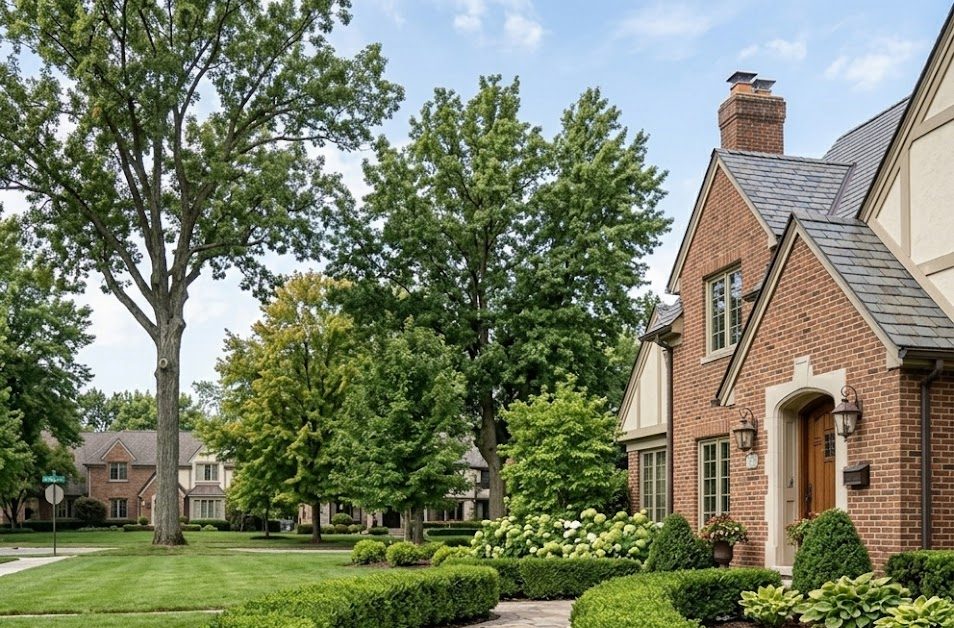
Over time, shrubs can grow to disproportionate sizes, swallowing windows and making a large home look cramped or neglected. Professional trimming isn’t just about haircuts, it is about shaping. By restoring the intended scale of the plants relative to the house, you highlight the architectural features of the building rather than hiding them behind a wall of green.
Encouraging Floral Abundance
For Michigan favorites like Forsythia, Lilacs, and Hydrangeas, the timing and method of trimming dictate the quality of next year’s bloom. Deadheading spent flowers and removing old wood encourages the plant to put its energy into new, vibrant growth. Without this intervention, shrubs often become leggy, with flowers only appearing at the very tips of long, unsightly branches.
Seasonal Trimming Cycles in Michigan
In our region, the timing of your trimming depends heavily on the species and the goal.
- Spring Trimming: Best for evergreens and summer-blooming shrubs. This helps them recover from winter burn and prepares them for a flush of new growth.
- Summer Maintenance: Focuses on deadheading and maintaining the shape of hedges to keep the property looking crisp through the peak of the season.
- Late Winter/Dormant Pruning: Ideal for heavy rejuvenation. Since the plant is dormant, it experiences less stress, and the lack of leaves allows for a clear view of the branch structure to remove crossing or diseased limbs.
The Professional Edge: Why Precision Matters
While many homeowners own a pair of electric hedge trimmers, there is a significant difference between shearing and horticultural pruning. Shearing only cuts the outer layer of leaves, which often leads to a thick shell that blocks light from reaching the interior of the plant. This eventually causes the center of the shrub to die out.
Professional crews understand the biology of the plant. They use thinning cuts to allow sunlight and air to reach the inner branches, ensuring the shrub remains healthy from the root up. They also recognize the signs of Michigan-specific diseases, such as boxwood blight or various fungal infections, and can treat them before they spread to the rest of your landscape.
Transforming an overgrown yard into a polished, safe, and inviting landscape requires a combination of artistic vision and technical expertise. At Clean Cut Tree Experts, we have spent over 25 years helping homeowners in Southeast Michigan maximize their curb appeal while prioritizing property safety. Based in Farmington Hills, our family-owned business understands that your shrubs are more than just plants; they are the framing for your home. Jeremy Clarke and our dedicated crew utilize professional-grade equipment and horticultural best practices to ensure your boxwoods, hollies, and ornamentals thrive throughout Michigan’s challenging seasons. We are fully licensed and insured, providing you with total peace of mind while we treat your property with the same respect we would our own.
Whether you are looking for a one-time rejuvenation of a neglected hedge or ongoing seasonal maintenance, we offer senior discounts, first-responder savings, and flexible financing to fit your budget. Don’t let your landscape become a liability or an eyesore. Call Clean Cut Tree Experts today at (734) 290-3370 for a free estimate and discover why we have been awarded the Angie’s List Super Service Award seven years in a row.
Frequently Asked Questions by Homeowners in Michigan
How often should I trim my shrubs in Michigan?
Most shrubs benefit from at least two trimmings per year: one in late spring to manage the first flush of growth and another in late summer or fall to tidy the shape before winter. However, fast-growing hedges may require more frequent attention.
Can I trim my shrubs in the middle of a hot summer in Michigan?
While light pruning is usually fine, heavy rejuvenation during a heatwave can stress the plant. It is best to wait for a cooler stretch or ensure the shrubs are well-hydrated before and after trimming.
Why are my shrubs dying from the inside out?
This is often caused by improper shearing, where only the tips are cut. This creates a dense outer layer that prevents light and air from reaching the center. Professional thinning can often reverse this.
Is there a difference between pruning and trimming?
Generally, trimming refers to maintaining the shape and aesthetic of a plant, while pruning is a horticultural practice focused on removing diseased, dead, or crossing branches to improve the plant’s health.
How far should shrubs be from my foundation?
To prevent moisture issues and pest access, you should maintain at least a one-foot gap between the mature edge of the shrub and your home’s siding or foundation.
Do I need to trim my shrubs before selling my home in Michigan?
Absolutely. Curb appeal is one of the highest-return investments you can make when listing a home. Neatly trimmed shrubs suggest a well-maintained property and create a strong first impression.
Can overgrown shrubs attract ticks?
Yes. Dense, unmaintained shrubbery provides the shade and moisture that ticks and mosquitoes thrive in. Regular trimming improves airflow and sunlight, making the environment less hospitable for these pests.
Will my shrubs grow back if they are cut back severely?
Most deciduous shrubs handle heavy rejuvenation well, but many evergreens do not grow back from old wood. It is critical to know your species before performing a hard cut-back.
Summary Checklist: Shrub Maintenance for Safety
| Condition | Risk Level | Recommended Action |
|---|---|---|
| Shrubs blocking basement windows | High | Trim below the window height to improve visibility, security, and emergency access |
| Branches touching house siding | Moderate | Prune branches back to maintain clearance and reduce moisture, pest, and abrasion damage |
| Overgrown hedges near the driveway exits | High | Thin or reduce hedge height to restore safe sightlines for vehicles and pedestrians |
| Dead or diseased interior shrub growth | Moderate | Use selective thinning cuts to improve airflow, light penetration, and overall plant health |
| Foliage covering house numbers or exterior lights | Low | Trim vegetation to keep address markers and lighting clearly visible for visitors and emergency responders |
Final Advice
Maximizing curb appeal and safety through shrub management is a study in spatial discipline and horticultural foresight. Thought leadership in modern landscaping emphasizes that a property is never finished; it is in a constant state of transition. To maintain an environment that is both welcoming and secure, homeowners must look past the immediate green foliage and consider the long-term structural impact of their plants. The most successful Michigan landscapes are those where the growth is curated to enhance, rather than compete with, the residence.
Prioritizing visibility and airflow is not just a matter of aesthetics; it is an essential component of home defense and preventative maintenance. By integrating regular thinning and shaping into your seasonal routines, you prevent the gradual encroachment of nature upon your living space. The goal is to achieve a landscape that feels intentional and controlled, providing the privacy you desire without creating the vulnerabilities you fear. A commitment to precise, professional maintenance today is the surest way to preserve the beauty, health, and value of your property for the decades to come. Consistency is the true secret to a landscape that stands out for all the right reasons.