January 12, 2026
What You Can and Can’t Do
Trees don’t respect fences, survey stakes, or property lines. When branches hang over your roof or roots crack your driveway, it feels personal, even when it isn’t. Michigan law gives homeowners specific rights in these situations, but those rights come with important limits that many people don’t realize until a dispute starts.
This guide explains what Michigan law allows, what it forbids, and how to handle neighbor tree issues without turning them into legal or personal battles.
Who Owns a Tree in Michigan
Under Michigan law, a tree belongs to the person who owns the land where the trunk is rooted. This rule applies even if:
- Half the canopy hangs over your yard
- Roots grow under your driveway
- Leaves, sap, or acorns fall onto your property
If the trunk is on your neighbor’s side of the property line, it is legally their tree. You do not gain ownership just because parts of it cross into your space.
However, Michigan also recognizes that you have a right to protect your own land from damage. That is where trimming and root cutting come in.
What Michigan Homeowners Are Allowed to Do
Michigan follows what is commonly called the “self-help” rule. That means you are allowed to take action on your side of the property line to protect your property.
You may legally:
Trim branches that cross the property line
If limbs extend over your yard, roof, or fence, you can cut them back to the property line. You must do all cutting from your side. You cannot step into your neighbor’s yard or lean over their fence to reach them.
Remove roots that cross into your property
If roots from a neighbor’s tree are damaging sidewalks, foundations, underground pipes, or landscaping, you may cut the roots that are inside your property boundary.
Hire a tree service to do the work
You do not have to do the trimming yourself. You can hire a professional tree service, as long as they follow the same rules: no trespassing and no damage to the tree.
These rights exist so homeowners are not forced to tolerate damage or hazards simply because a tree grew on the wrong side of a fence.
What Michigan Law Does Not Allow
Your rights are not unlimited. There are important boundaries.
You cannot kill or seriously weaken the tree
You may trim, but not in a way that causes the tree to die, fall, or become unsafe. If your cutting kills the tree or makes it structurally unstable, you can be held financially responsible.
You cannot cut beyond the property line
Even a few inches over the line counts as trespassing. This includes climbing the tree or standing on your neighbor’s lawn to reach a branch.
You cannot remove the whole tree
Only the tree owner has the right to remove the tree. Cutting down a tree rooted on someone else’s land is considered property damage.
You do not automatically own fallen wood
Branches, logs, and fruit from a neighbor’s tree still belong to them, even if they land in your yard.
Who Is Responsible When a Tree Causes Damage in Michigan
Michigan uses a negligence-based rule, which means liability depends on whether the tree owner failed to act responsibly.
If the tree was healthy
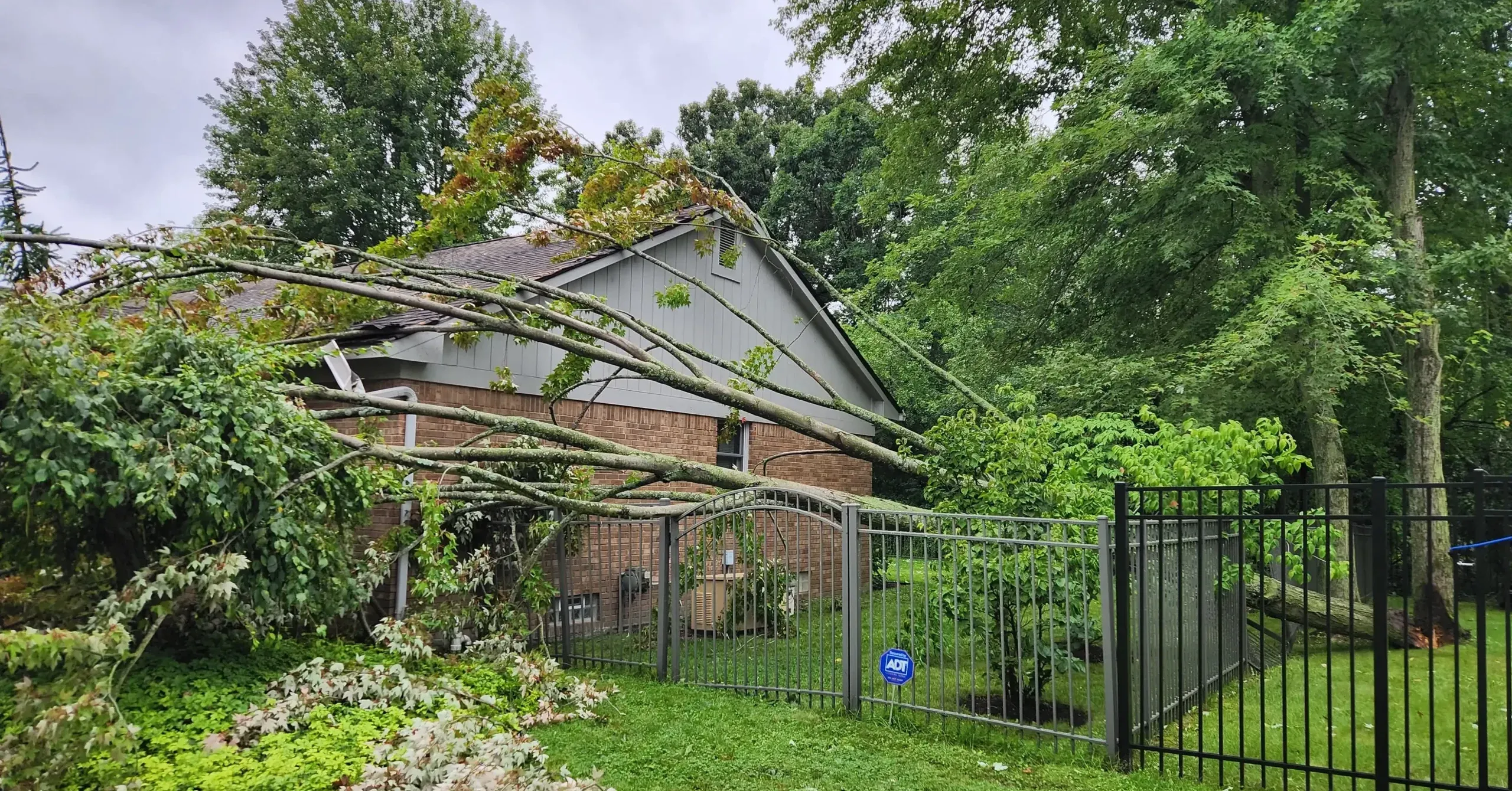
If a healthy tree falls in a storm, it is treated as a natural event. Each homeowner typically handles their own damage through insurance.
If the tree was clearly unsafe
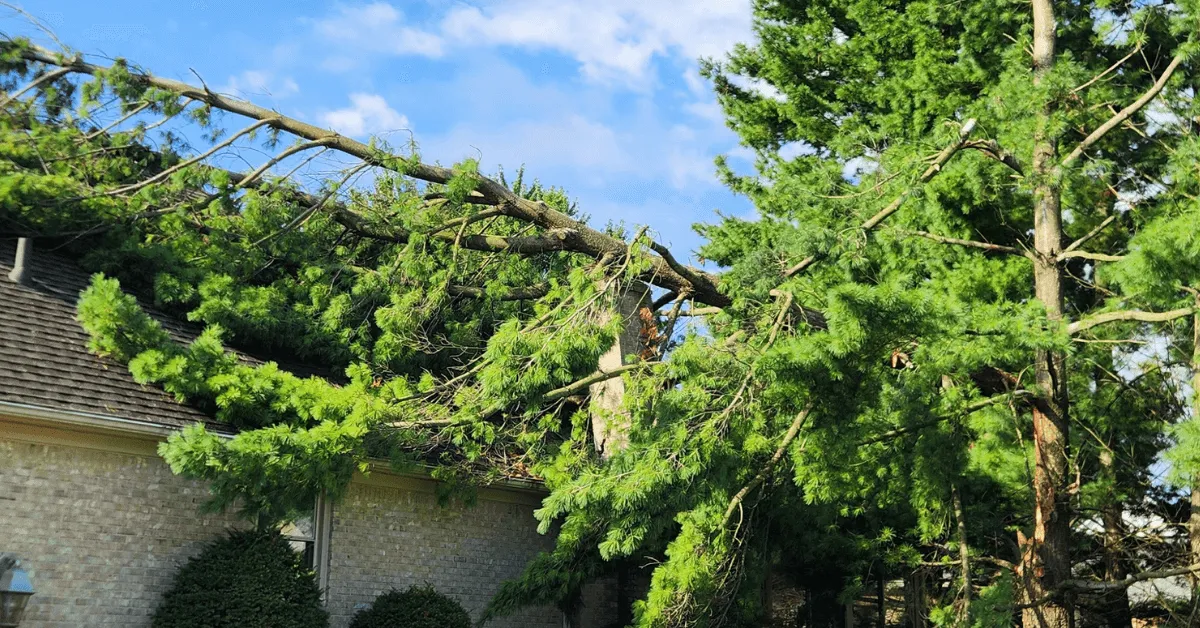
If a tree was dead, decaying, severely leaning, or visibly unstable and the owner knew or should have known about the risk, they may be legally responsible if it causes damage.
This is why documentation matters. Photos, emails, and written notices can make the difference between paying out of pocket and having the neighbor held responsible.
How to Handle the Situation Before It Becomes a Dispute
Most tree conflicts are not about trees. They are about communication.
A practical approach:
- Talk to your neighbor early
- Show photos of what the tree is doing
- Explain the specific damage or risk
- Suggest solutions such as shared trimming
- Keep notes if the issue continues
Many disputes escalate simply because one side felt ignored or surprised.
When an Arborist Should Be Involved
Some trees are too risky to guess about. A certified arborist should be consulted when:
- Heavy branches hang over a house or driveway
- Roots are lifting pavement or foundations
- The tree shows decay, cracks, or fungus
- You are unsure how much can be cut safely
An arborist can assess whether trimming is safe, how much can be removed, and whether the tree is becoming dangerous.
When City or Legal Help Is Needed
If a tree is a safety hazard and the owner refuses to act, you may need to involve others.
In Michigan, you can:
- Contact your city or township for inspection
- Request enforcement if the tree violates safety codes
- Seek legal advice if property damage occurs
Courts can order a dangerous tree to be dealt with if it poses a risk.
How to Prevent Tree Problems in Michigan Neighborhoods
Most conflicts start because trees were never managed.
Prevention includes:
- Regular pruning
- Watching for disease and decay
- Keeping large trees away from fences and homes
- Communicating when concerns arise
Trees that are maintained rarely become legal problems.
Conclusion
Neighbor tree issues in Michigan are rarely simple. While homeowners have the right to protect their own property from overhanging branches and invasive roots, those rights stop at the property line and cannot be used to harm or destroy a tree that belongs to someone else. Most disputes come down to two things: whether the tree is actually causing damage or posing a safety risk, and whether the owner of the tree has acted reasonably once that risk was known.
Understanding Michigan’s rules on ownership, trimming, liability, and negligence gives homeowners a clear path forward. In many cases, problems can be solved through careful pruning, documentation, and respectful communication before they turn into insurance claims or legal disputes. When trees are properly maintained and concerns are addressed early, most boundary issues never have to become conflicts at all.