April 17, 2026
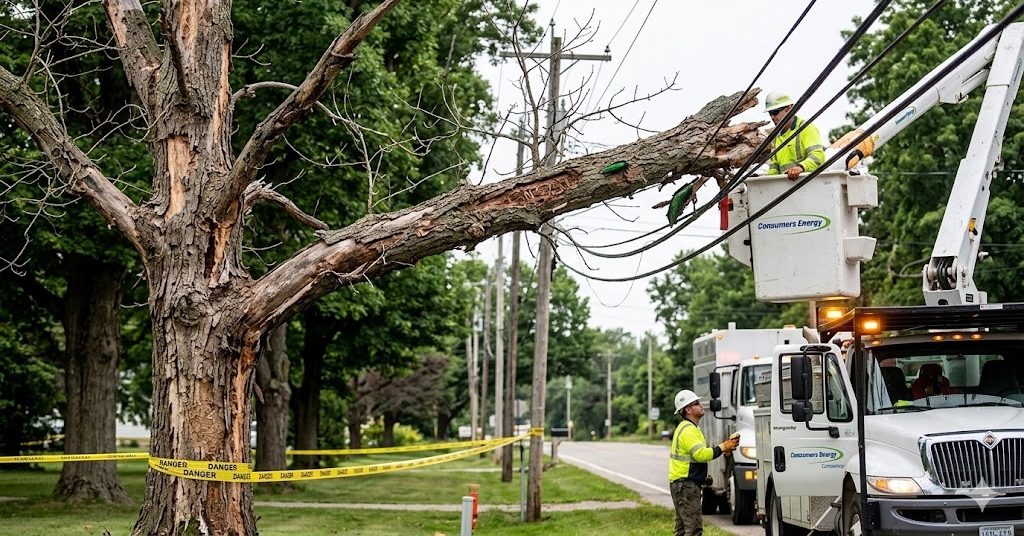
A fallen tree or a dangerously leaning branch near utility lines creates an immediate, life-threatening emergency. The presence of live wires introduces severe risks far beyond typical tree removal. Knowing how to react quickly and safely protects lives, prevents extensive property damage, and restores essential services.
Key Takeaways
- Never approach or touch a tree or power line involved in an emergency; assume all lines are live and dangerous.
- Immediately contact your utility provider (DTE Electric or Consumers Energy in Michigan) for any tree in contact with or threatening power lines.
- Homeowners are generally responsible for maintaining trees on their property to prevent them from becoming a hazard to utility lines.
- Professional emergency tree services, like Clean Cut Tree Experts, are essential for safe and compliant removal of trees near power lines.
- Costs for emergency tree removal vary significantly but are an investment in safety and property protection; insurance may cover certain damages.
- Proactive tree care, including regular trimming and strategic planting, can prevent future utility line emergencies.
What Constitutes a Tree Emergency Near Utility Lines?
A tree emergency near utility lines involves any situation where a tree or a part of it poses an immediate threat to, or is already in contact with, electrical wires, communication cables, or other utility infrastructure. These situations demand immediate attention due to the high risk of electrocution, fire, power outages, and significant property damage.
Identifying Immediate Dangers
Recognizing the signs of an immediate danger is the first step in protecting yourself and others. Don’t wait for a complete failure; act on these warning signals:
- A tree or a large branch has fallen onto power lines.
- A tree is leaning severely towards utility lines, especially after a storm.
- Visible sparks, smoke, or fire coming from a tree near the lines.
- Utility lines are sagging or broken due to tree contact.
- A tree has split or fractured, with parts dangerously close to wires.
- Any loud cracking or groaning sounds coming from a tree near utility infrastructure.
When to Call the Utility Company vs. a Tree Service
Understanding who to call first is critical. Your local utility company is always the initial point of contact when power lines are involved. They have the authority and expertise to de-energize lines, making the area safe for further work.
Call Your Utility Company First:
- If a tree or branch is touching power lines.
- If power lines are down or sparking.
- If there’s a power outage directly caused by a tree.
Call a Professional Tree Service
- Once the utility company has confirmed that the lines are de-energized and the area is safe.
- If a tree has fallen and blocked access, but is NOT touching power lines.
- For preventative trimming of trees that are close to, but not touching, utility lines, after consulting with your utility.
Michigan’s Regulatory Landscape: Who Is Responsible?
Michigan’s regulations clearly define the responsibilities for tree maintenance near utility lines, aiming to prevent outages and ensure public safety. Homeowners in areas like Farmington Hills, Livonia, and Novi need to understand their role.
Utility Company Responsibilities
In Michigan, major utility providers like DTE Electric and Consumers Energy must adhere to strict Michigan Public Service Commission (MPSC) reliability standards, which currently mandate a five-year tree trimming cycle to reduce vegetation-related outages. This adherence to the National Electrical Safety Code aims to ensure reliability and safety.
- Primary Lines: Utilities are legally mandated to trim and remove trees that are near or in contact with primary power lines.
- Vegetation Management Cycles: They often operate on a 4-year vegetation management cycle to proactively manage tree growth near lines.
- Federal Regulations: Utilities operating transmission grids face federal ‘zero-outage’ mandates for vegetation interference, with significant potential fines for non-compliance. This drives their aggressive vegetation control efforts.
- Emergency Response: Utilities will respond to situations where trees are actively impacting or threatening their infrastructure.
Homeowner Obligations and Liabilities
While utilities manage trees near their main lines, property owners in Michigan have critical obligations regarding trees on their land. Neglecting these duties can lead to significant liability.
- Property Line Responsibility: Homeowners are generally responsible for maintaining trees located on their private property, even if they extend towards utility lines.
- Proactive Maintenance: This includes regular trimming and pruning to prevent trees from growing into utility company clearance zones.
- No DIY Near Lines: Property owners must never attempt to prune trees within 10 feet of power lines. Under Michigan House Bill, utilities are authorized to maintain vegetation for up to 15 feet from the outermost wire to ensure grid stability and public safety.
- Potential Liability: If a homeowner’s poorly maintained tree falls and damages utility infrastructure or a neighbor’s property, they could be held liable for repair costs and damages.
The Hidden Dangers of DIY Tree Work Near Power Lines
Trying to handle a tree emergency near power lines yourself is one of the most dangerous decisions you can make. The risks far outweigh any perceived savings, often leading to severe injury, death, or massive financial repercussions.
| Aspect | DIY Tree Removal Near Utility Lines | Professional Tree Service |
| Safety | Extremely high risk, including electrocution, severe injury, or death | Trained crews follow strict safety procedures and use specialized equipment |
| Expertise | Limited knowledge and no coordination with local utility companies | Experienced arborists with training in utility line safety and removal methods |
| Equipment | Basic tools without insulated gear or heavy machinery | Professional equipment, including insulated tools, cranes, bucket trucks, and chippers |
| Cost | It may seem cheaper, but accidents or property damage create major hidden costs | Higher upfront cost but includes labor, insurance, equipment, and expertise |
| Liability | Homeowner assumes full responsibility for injuries or damage | Covered by company liability insurance |
| Cleanup | Manual and time-consuming debris cleanup | Fast debris removal, hauling, and complete site cleanup |
Electrocution and Injury Risks
Electricity is an invisible killer. Power lines carry thousands of volts, and even indirect contact can be fatal. This isn’t a job for a homeowner with a chainsaw.
- Direct Contact: It is fatal, but even indirect contact is a major risk. OSHA Safety Standard 29 CFR 1910.269 mandates that only ‘line-clearance’ qualified professionals may work within the Minimum Approach Distance (MAD) of energized utility lines.
- Indirect Contact: Even touching a tree branch or tool that is in contact with a live wire can transfer a fatal electrical charge.
- Arc Flashes: Electricity can arc (jump) to nearby objects without direct contact, especially in damp conditions.
- Falls and Injuries: Working at heights with heavy equipment, especially near dangerous electrical hazards, significantly increases the risk of falls, cuts, and other injuries.
Property Damage and Legal Consequences
Beyond personal injury, attempting DIY tree work near utilities can lead to extensive property damage and serious legal trouble. Are you willing to risk your home and your financial future?
- Utility Infrastructure Damage: Accidentally damaging power lines, transformers, or other utility equipment can result in significant repair bills from the utility company.
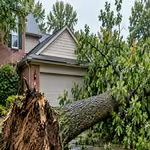
- Home Damage: An uncontrolled falling tree or branch can cause severe damage to your home, garage, or vehicle.
- Neighbor Disputes: If your tree work causes damage to a neighbor’s property, you could face expensive lawsuits.
- Insurance Voidance: Many homeowner’s insurance policies will not cover damages resulting from dangerous, unauthorized DIY work near utilities.
- Fines and Penalties: Violating local ordinances or utility regulations regarding tree work near power lines can lead to hefty fines.
Emergency Tree Service Process: What to Expect
When you call for emergency tree service, especially for situations involving utility lines, you can expect a structured, safety-first approach. Knowing this process helps manage expectations during a stressful time.
Initial Contact and Assessment
The first moments of an emergency call are crucial for assessing the situation and deploying the right resources. Clean Cut Tree Experts prioritizes rapid response and clear communication.
- 24/7 Availability: Reputable emergency services operate around the clock, ready to take your call.
- Information Gathering: You’ll be asked for details about the tree’s location, its proximity to utility lines, and any visible damage or hazards.
- Utility Coordination: The tree service will confirm if the utility company has been contacted and if lines are de-energized or if they need to coordinate this step.
- On-Site Evaluation: A crew will be dispatched to assess the scene, identify all hazards, and plan the safest course of action.
Safety Protocols During Removal
Safety is the absolute priority during any tree removal near utility lines. Professionals follow strict protocols to protect their crew, your property, and the public.
- Site Securement: The area will be cordoned off to prevent unauthorized access.
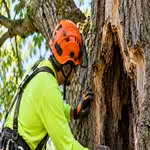
- Personal Protective Equipment (PPE): All crew members will wear appropriate safety gear, including hard hats, eye protection, and specialized insulated clothing if working near power lines (after de-energization).
- Specialized Equipment: Cranes, bucket trucks, winches, and insulated tools are commonly used to safely manage large, dangerous sections of trees.
- Controlled Removal: Sections of the tree are removed systematically, often with ropes and rigging, to prevent uncontrolled falls and further damage.
- Debris Management: Removed sections are safely lowered, chipped on-site, or hauled away, ensuring a clean and safe area post-removal.
Cost of Emergency Tree Removal Near Utility Lines
The cost of emergency tree removal near utility lines can be a significant concern for homeowners. While it’s an investment in safety, understanding the factors involved helps prepare you for the expense.
Factors Influencing Emergency Service Costs
Emergency tree removal costs aren’t fixed; they depend on a range of variables unique to each situation. Expect prices to be higher than routine tree trimming due to urgency and risk.
- Emergency Surcharge: Expect higher rates for immediate, after-hours, weekend, or holiday services.
- Tree Size and Type: Larger, denser trees require more time, equipment, and personnel, increasing costs.
- Proximity to Utility Lines: Work near power lines demands specialized training, insulated equipment, and extra safety precautions, which adds to the price.
- Location and Accessibility: Trees in confined spaces, on steep slopes, or difficult-to-access areas (e.g., over fences, near structures) are more complex and costly.
- Degree of Damage: If the tree is shattered, tangled in wires, or causing structural damage, removal becomes more intricate.
- Required Equipment: Use of cranes, bucket trucks, or other heavy machinery increases the overall cost.
- Debris Removal: Hauling away large amounts of wood and brush is often included but can be a separate line item.
Navigating Insurance Claims
Understanding your homeowner’s insurance policy is vital. It can significantly offset the financial burden of emergency tree removal, particularly if a storm caused the damage.
- Covered Perils: Most homeowner’s insurance policies cover tree removal if the tree falls due to a covered peril (like wind, lightning, or ice storms) and damages your insured property or a neighbor’s.
- Damage to Utilities: If a tree falls on and damages utility lines, your policy might cover the removal cost, but the utility company often bears the repair cost for its infrastructure.
- Deductibles Apply: You’ll typically need to pay your deductible before insurance coverage kicks in.
- Documentation is Key: Take photos and videos of the damage before any work begins. Get detailed invoices from the tree service.
- Act Quickly: Contact your insurance provider as soon as possible after the incident to initiate the claims process.
Prevention is Key: Proactive Tree Care Near Utilities
While emergency services are essential, preventing these dangerous situations is always the best approach. Proactive tree care can significantly reduce the risk of utility line emergencies in Michigan.
Regular Trimming and Pruning
Regular maintenance is crucial for keeping trees healthy and away from utility lines. Don’t wait for a storm to force your hand.
- Maintain Safe Clearance: Schedule routine trimming to ensure branches don’t grow into the utility company’s mandated clearance zones.
- Identify Weaknesses: Professional arborists can identify weak, diseased, or dead branches that are prone to breaking and falling during storms.
- Improve Tree Health: Proper pruning techniques promote overall tree health, making them more resilient to Michigan’s harsh weather conditions like ice storms and high winds.
- Reduce Storm Damage Risk: Proactive trimming can reduce storm-related tree damage by as much as 63%, significantly lowering the chance of outages.
Selecting Appropriate Tree Species
The type of tree you plant and where you plant it make a huge difference in long-term safety and maintenance needs.
- Consider Mature Size: Choose tree species that will not grow tall enough to interfere with overhead power lines at their full maturity.
- Root Systems: Be mindful of root systems that could impact underground utility lines or foundations.
- Native Species: Opt for native Michigan species that are well-suited to the local climate and less prone to disease or structural weakness.
- Consult an Arborist: A professional arborist can guide appropriate tree selection and optimal planting locations to avoid future conflicts with utility infrastructure.
Frequently Asked Questions
When should I call the utility company instead of a tree service?
You should call your local utility company (like DTE or Consumers Energy in Michigan) immediately if a tree is touching or very close to primary power lines, or if a downed tree has fallen onto utility lines. They are responsible for de-energizing lines and ensuring safety before any tree work can begin.
How much does emergency tree removal near power lines cost?
The cost varies widely, typically ranging from $500 to over $5,000 for emergency services. Factors include the tree’s size, location, proximity to lines, required equipment, and the urgency of the situation. Expect higher costs for after-hours or holiday emergency calls.
Can I remove a tree near a power line myself?
No. It is extremely dangerous and illegal to attempt to trim or remove trees within 10 feet of utility lines or those in contact with lines. You risk electrocution, severe injury, property damage, and legal penalties. Always call professionals.
Who is responsible for tree trimming near utility lines in Michigan?
In Michigan, utility companies handle trees directly impacting primary power lines. Property owners are generally responsible for trees on their land that *could* threaten utility lines, requiring proactive maintenance. Always confirm responsibility with your utility and municipality.
What should I look for in an emergency tree service?
Look for a company with 24/7 emergency service, proper licensing, comprehensive insurance (liability and workers’ comp), licensed Arborists, and strong local references. Experience with utility line work and specialized equipment is also vital for safety.
Does homeowner’s insurance cover emergency tree removal?
Yes, many homeowner’s insurance policies cover tree removal if the tree falls due to a covered peril (like a storm) and damages your property or a neighbor’s. Coverage for removal without damage or for preventative trimming is less common. Review your policy details.
Act Fast and Stay Safe During Tree Emergencies Near Power Lines
When a tree near a utility line becomes an emergency, quick, informed, and safe action is crucial. Never attempt to handle such a situation yourself. Understanding Michigan’s regulations, knowing when to call your utility, and having a trusted professional on speed dial can make all the difference. For immediate, expert, and safe emergency tree services in Southeast Michigan, Contact Clean Cut Tree Experts. We’re ready to respond 24/7 to protect your property and ensure public safety.