September 3, 2026
Key Takeaways
- Howell’s USDA hardiness zone and clay-heavy soils narrow down which species will thrive long-term without heavy intervention.
- Native and regionally adapted trees generally handle Michigan’s winters, summer humidity, and soil conditions better than non-native ornamentals.
- Matching a tree’s mature size and root habit to the planting site prevents future conflicts with structures, driveways, and utility lines.
- Fall and early spring are typically the best windows for planting in southeast Michigan.
- A mix of shade trees, ornamentals, and evergreens creates a more resilient, year-round landscape than relying on a single species.
Choosing the right tree for a Howell, Michigan property means thinking beyond how it looks in a nursery photo. Livingston County’s clay-heavy soils, cold winters, humid summers, and occasional ice storms all affect how well a given species actually performs once it’s in the ground for a decade or more. The following trees are well suited to the Howell area’s climate and soil conditions, along with some practical guidance for choosing and planting the right one for your yard.
Understanding Howell’s Growing Conditions
Howell sits within USDA hardiness zone 5b to 6a, meaning winter temperatures can regularly dip well below freezing for extended stretches, and any tree planted here needs to reliably handle that cold. Soils across much of Livingston County tend to run heavier and more clay-based than sandy soils found elsewhere in the state, which affects drainage and root development, particularly for species that prefer looser, well-drained ground. Summers bring enough humidity to create favorable conditions for certain fungal diseases, so disease resistance is worth factoring in alongside cold hardiness.
Red Maple (Acer rubrum)
Red maple is one of the most dependable shade trees for southeast Michigan, tolerating Howell’s clay soils better than many other maple species while still delivering strong fall color, often shifting to deep red or orange well before most other trees change. It grows at a moderate to fast pace and adapts to a range of moisture conditions, from relatively dry sites to areas with occasional standing water. Because it can reach 40 to 60 feet at maturity with a broad canopy, it needs a location with enough open space, away from power lines and close structures.
Serviceberry (Amelanchier canadensis)
For smaller yards or spots where a full-sized shade tree isn’t practical, serviceberry offers spring flowers, summer berries that attract birds, and reliable fall color in a smaller package, typically topping out between 15 and 25 feet. It’s native to the region, tolerates a range of soil types including the heavier clay common around Howell, and handles both sun and partial shade reasonably well. Its multi-season interest makes it a popular choice for foundation plantings and smaller residential lots.
Bur Oak (Quercus macrocarpa)
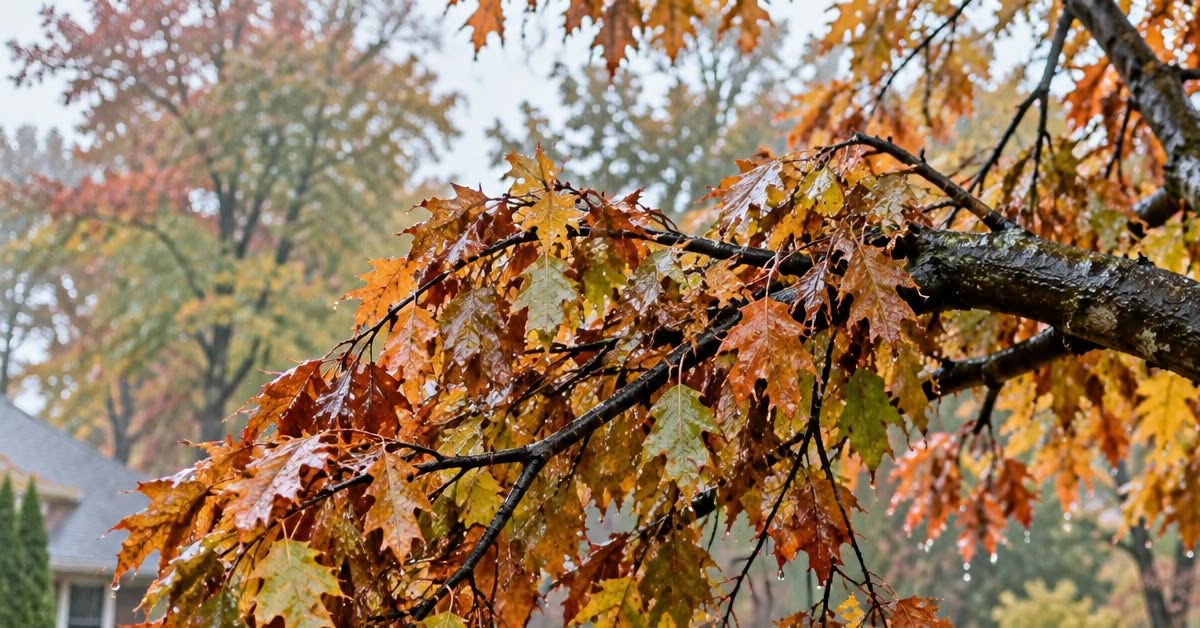
Bur oak is an excellent long-term investment for larger Howell properties with room to accommodate its eventual size, often exceeding 60 feet with an equally wide canopy at full maturity. It’s notably tolerant of the heavy clay soils common in the area and handles both drought and occasional wet conditions better than many other oak species. Its thick, corky bark also gives it strong resistance to fire and some pest pressure. The tradeoff is a slower growth rate, so this is a tree planted more for the next generation than for quick shade.
River Birch (Betula nigra)
River birch handles wetter, poorly drained spots better than most trees suited to the area, making it a strong option for low-lying yards or areas near drainage swales that stay damp after rain. Its peeling, multi-toned bark provides visual interest even in winter when most trees have gone dormant. Unlike white birch, river birch has good resistance to bronze birch borer, a pest that has caused problems for other birch species across Michigan, making it a more reliable long-term choice.
Eastern Redbud (Cercis canadensis)
Eastern redbud brings some of the earliest color of the season, with clusters of pink-purple blooms appearing directly on bare branches before leaves emerge in spring. It stays relatively compact, generally 20 to 30 feet at maturity, making it a good fit for smaller yards or as an understory planting beneath larger shade trees. Redbud does best with some afternoon shade in hot, exposed sites and appreciates well-drained soil, though it adapts reasonably well to the clay common around Howell once established.
Norway Spruce (Picea abies)
For year-round structure and a windbreak on more open Livingston County lots, Norway spruce is a fast-growing evergreen that handles Michigan winters without difficulty. It tolerates a range of soil conditions and can reach substantial height at maturity, so it’s best suited to larger properties with room for its eventual size rather than tight residential lots. Its dense branching also makes it a practical choice for screening a property line or blocking wind on the more exposed farmland-adjacent parcels around Howell.
Sugar Maple (Acer saccharum)
Sugar maple is a Michigan classic, known for some of the most vivid fall color of any regional tree, shifting through yellow, orange, and red over the course of autumn. It prefers well-drained soil and can be more sensitive to compacted, heavy clay than red maple, so site selection matters more with this species. Where conditions are right, it rewards patience with a long-lived, majestic shade tree that can anchor a property for generations.
Matching Tree Size to Your Property
One of the most common planting mistakes is choosing a tree based on how it looks as a young sapling rather than its eventual mature size.
- A red maple or bur oak planted too close to a house will eventually create problems with roofing, gutters, and foundations,
- A tree planted directly beneath overhead utility lines will require repeated, disfiguring pruning to keep it clear of the wires.
- Checking a species’ mature height and canopy spread, and measuring the actual planting site against those numbers, prevents years of maintenance headaches down the road.
When to Plant in Howell
Fall planting, generally from early September through mid-October, gives trees time to establish root systems before winter dormancy while avoiding the stress of summer heat. Early spring, once the ground has thawed and before the heat of summer arrives, is the other reliable window. Planting during the height of summer is possible but requires more diligent watering to help a new tree establish under heat and moisture stress it wouldn’t otherwise face.
Soil Preparation for Howell’s Clay-Heavy Ground
Because much of the area has denser, clay-based soil, proper planting technique matters more here than it would in looser, sandier ground. Digging a planting hole wider than the root ball, rather than deeper, helps roots spread outward into loosened soil instead of staying confined to a narrow column. Avoiding over-amendment of just the planting hole, sometimes called the “bathtub effect,” is also important, since roots can struggle to move from rich amended soil into the surrounding native clay if the transition is too abrupt.
Caring for a Newly Planted Tree
The first two to three years after planting are the most critical period for a new tree’s long-term survival.
- Deep, infrequent watering that reaches the full root ball, rather than frequent shallow watering, encourages roots to grow downward and outward in search of moisture.
- A two-to-three-inch layer of mulch spread in a wide ring around the base, kept a few inches back from the trunk, helps retain soil moisture and moderate root zone temperature through both summer heat and winter cold.
- Staking is sometimes necessary for larger nursery stock or trees planted in particularly windy, exposed locations around Howell. However, stakes and ties should be removed within a year or so once the tree has developed enough root strength to stand on its own.
- Leaving support ties on too long can restrict trunk growth and, in some cases, girdle the tree as it expands.
When to Get a Professional Opinion
An experienced tree service firm in Howell, Michigan can assess your specific yard’s sun exposure, soil drainage, and space constraints, and help match a species to those conditions rather than relying on general guidance alone. This is especially useful on properties with mixed sun and shade, known drainage issues, or existing mature trees where root competition and shading need to be factored into the decision.
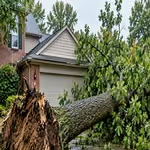
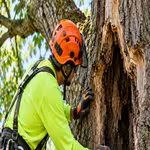
Choosing the right tree is only the first step; proper planting and long-term care are just as important. Clean Cut Tree Experts can assess your property’s space, existing trees, and site conditions to help you avoid planting conflicts with structures, driveways, or utility lines. Our team can also provide pruning to establish healthy structure as young trees mature and remove hazardous or declining trees when needed. For existing trees affected by storm damage, poor growth, or overcrowding, we offer professional trimming, removal, and stump grinding & removal to keep your landscape safe and healthy.
Frequently Asked Questions About Planting Trees in Howell, MI
What is the best fast-growing shade tree for Howell, MI?
Red maple is a strong choice, offering a moderate to fast growth rate along with good tolerance for the area’s clay soils and reliable fall color.
What trees handle Howell’s clay soil best?
Bur oak, red maple, and river birch are all more tolerant of heavy, clay-based soil than many other commonly planted species.
When is the best time to plant a tree in Michigan?
Early fall and early spring are generally the best windows, giving new trees time to establish roots before summer heat or winter dormancy.
Are there evergreen options that do well in Howell?
Norway spruce is a reliable, fast-growing evergreen for larger properties, offering good winter structure and windbreak potential.
How far should a large shade tree be planted from my house?
As a general guideline, large shade trees should be planted at least 15 to 20 feet from a structure to account for eventual canopy and root spread.
Summary Checklist: Choosing and Planting Trees in Howell, MI
| Situation | What to Check | What to Do |
| Small yard or tight planting space | Available mature canopy width | Choose a smaller ornamental like serviceberry or redbud |
| Low-lying or poorly drained area | Soil moisture and drainage after rain | Plant river birch, which tolerates wetter soil better than most species |
| Heavy clay soil | Drainage and compaction at the planting site | Favor red maple, bur oak, or river birch over more soil-sensitive species |
| Open lot needing a windbreak | Available space for a mature evergreen | Plant Norway spruce with enough clearance from structures |
| Planting near power lines | Overhead clearance and mature tree height | Choose a smaller species or shift the planting location away from the lines |
Final Advice
The right tree for a Howell property depends on more than personal preference. Soil type, mature size, sun exposure, and how a species handles Michigan’s winters and humid summers all play a role in whether a new planting thrives for decades or struggles from the start. Taking the time to choose a well-suited species and plant it correctly pays off in a healthier, longer-lasting addition to the landscape.
Clean Cut Tree Experts can help Howell homeowners make informed tree-care decisions based on their property’s specific conditions. Right from selecting suitable planting locations to pruning, removal, and stump grinding, our team can help keep your landscape safe, healthy, and well maintained for years to come.
Reviewed by a Licensed Arborist
This article has been reviewed by a licensed arborist to ensure the species recommendations and planting guidance reflect current regional growing conditions.
Sources & Credible References
- The University of Maine
- University of Minnesota Extension
- Arbor Day Foundation
- Purdue University
- Michigan State University Extension
- USDA Forest Service
- Arbor Day Foundation
- Michigan Department of Natural Resources
- International Society of Arboriculture
- Morton Arboretum