September 29, 2026
Key Takeaways
- Michigan’s freeze-thaw cycles can create cracks that weaken mature tree trunks and limbs.
- Heavy snow and ice can place excessive weight on branches, increasing the risk of breakage.
- Road salt and de-icing chemicals can damage tree roots, bark, buds, and foliage.
- Winter damage may remain hidden until spring, when delayed growth or dieback becomes noticeable.
- A late-winter inspection can identify structural problems before spring storms create additional hazards.
Michigan winters can place significant stress on mature landscape trees. Repeated freeze-thaw cycles, heavy snow and ice, harsh winds, and exposure to road salt can gradually weaken trees throughout the season. While some damage is immediately visible, other problems remain hidden until temperatures rise and trees begin to leaf out.
For homeowners in Farmington Hills, Birmingham, West Bloomfield, and surrounding Southeast Michigan communities, understanding these winter stresses can make it easier to recognize problems early. Proper preparation before winter and a professional inspection afterward can help protect mature trees and reduce the chance of unexpected failures.
Freeze-Thaw Cycles and Trunk Cracking
Michigan winters frequently move between freezing temperatures and warmer daytime conditions. These repeated temperature changes can put stress on tree bark and wood. When moisture inside the tree freezes and expands, it can create pressure that eventually causes cracks.
Frost cracks typically appear as long, vertical splits in the trunk. They are often more noticeable on the south or southwest side of a tree, where winter sunlight can cause the bark to warm during the day before rapidly freezing again at night. Once a frost crack develops, the damaged area can reopen during future winters. Repeated cracking may create an entry point for decay organisms and insects, making annual monitoring especially important for mature trees with a history of winter injury.
Snow and Ice Load on Tree Branches
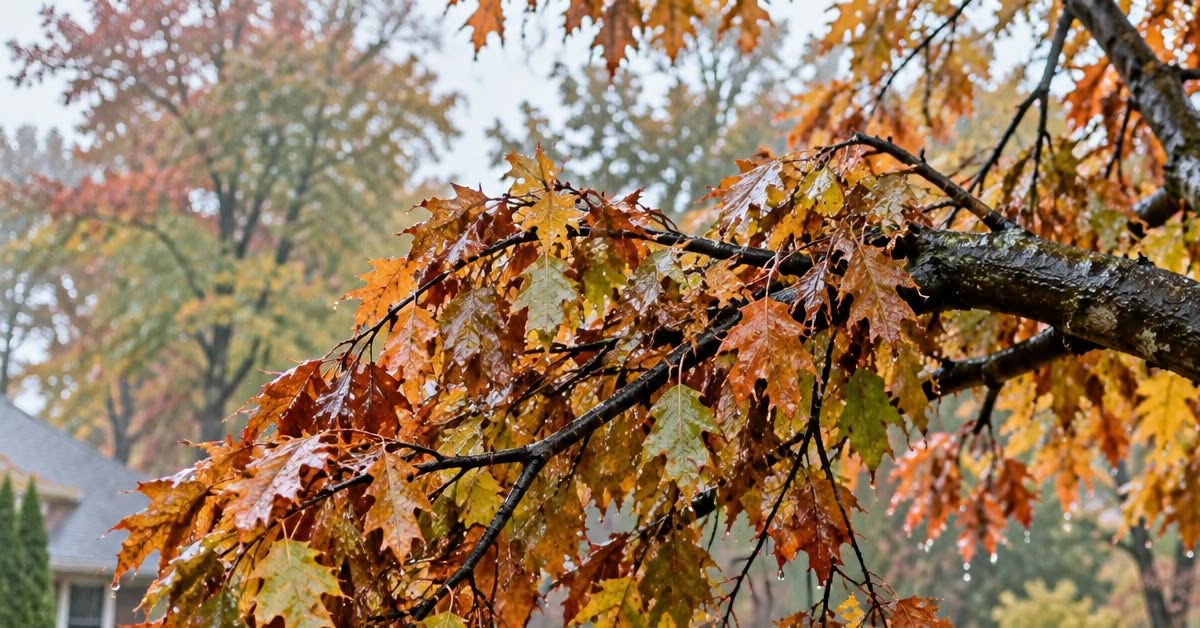
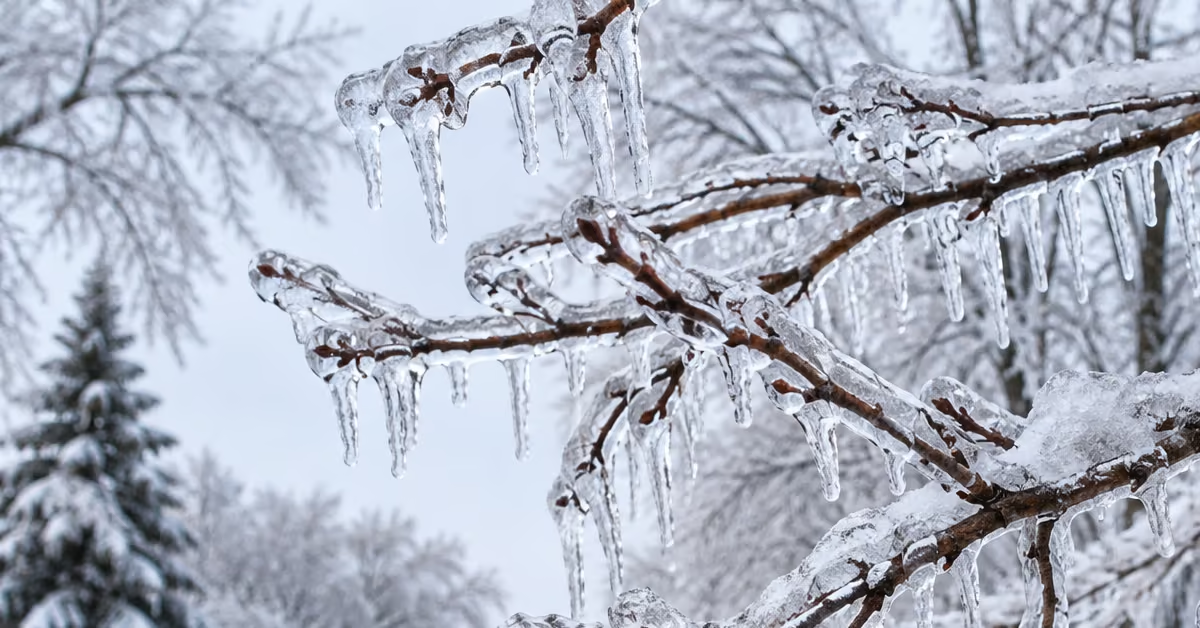
Winter precipitation can add substantial weight to a tree’s canopy. Heavy, wet snow can bend branches downward, while freezing rain can create a thick layer of ice across limbs and twigs.
Ice is particularly dangerous because it can add weight evenly across the canopy. Branches that normally withstand summer winds may not be able to support the additional load created by an ice storm.
Mature trees with weak branch attachments, multiple trunks, or large horizontal limbs are particularly vulnerable. When winter precipitation combines with strong winds, the likelihood of branch failure increases further.
Most Vulnerable Trees
Trees with narrow branch unions, co-dominant stems, multiple trunks, or dense canopies can be particularly vulnerable to winter loading. Evergreens also collect snow throughout winter because they retain their needles.
What Often Breaks First
Smaller branches may fail first, but large structural limbs can also break when snow and ice accumulate. Existing defects should be addressed before winter whenever possible.
Road Salt and De-Icing Damage
Trees near streets, sidewalks, and driveways may be exposed to road salt throughout winter. Salt can reach trees through vehicle spray or runoff that carries dissolved chemicals into the soil. Salt exposure can damage roots, buds, twigs, and foliage. Symptoms often appear in spring as browning, reduced growth, or poor leaf development.
Trees located close to heavily salted roads and driveways typically face greater exposure. Proper drainage and careful landscape management can help reduce the amount of salt reaching the root zone.
Hidden Root Zone Stress
Winter conditions can also affect roots beneath the soil.
- Repeated freezing and thawing near the surface can disturb shallow roots and create fluctuating soil conditions.
- Trees in exposed areas may experience greater temperature changes, particularly when there is little mulch protecting the root zone.
- A suitable layer of mulch can help moderate soil temperatures and provide insulation.
- Mulch should be spread across the root zone without piling it against the trunk. Keeping the trunk base clear helps prevent moisture-related problems.
Why Winter Damage Often Goes Unnoticed
Tree problems can be difficult to identify during winter. Without leaves, subtle structural changes, small cracks, and early dieback may be overlooked. Some injuries only become obvious when spring growth begins. Delayed leaf development, sparse foliage, dead branches, or localized dieback can indicate that a tree experienced significant winter stress.
Early identification gives homeowners more time to determine whether trimming & pruning, cabling, monitoring, or tree removal is appropriate.
Why Late Winter Is a Good Inspection Window
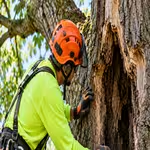
Late winter is an ideal time to assess mature trees before spring growth begins. With the canopy mostly bare, structural problems are easier to see. A professional tree service firm in Farmington Hills, Michigan can perform inspections to identify damaged limbs, frost cracks, weak branch unions, cavities, and other concerns before spring storms increase the risk of failure. Addressing these problems early can also reduce the need for emergency tree work later in the season.
How Southeast Michigan Winters Affect Landscape Trees
Southeast Michigan experiences frequent temperature fluctuations rather than one long period of consistent freezing. These freeze-thaw cycles repeatedly stress bark, branches, and shallow roots.
Snow and ice can add additional weight, while trees in open areas may experience stronger winds. Native species generally tolerate regional conditions well, but mature ornamental and non-native trees may require closer monitoring during severe winters.
Evergreens Face Different Winter Challenges
Evergreens face several winter stresses because they retain their needles throughout the season. Their branches can collect heavy snow, increasing the risk of bending, splitting, or breakage. Evergreens can also experience winter burn. Sun and wind cause moisture loss from needles while frozen soil limits the water roots can replace. Dense or multi-stemmed evergreens, including some arborvitae, may also splay apart under heavy snow.
Reducing Snow Load on Evergreens
After heavy snowfall, loose snow can be gently brushed from evergreen branches. Avoid forcefully shaking branches because this can cause additional damage. Ice should generally be allowed to melt naturally. Attempting to knock heavy ice from branches can break already weakened limbs.
Preparing Trees Before Winter Arrives
Winter preparation should begin before temperatures consistently fall below freezing. A fall inspection can identify deadwood, weak limbs, and structural defects before snow and ice test the tree. Removing hazardous deadwood can reduce potential failure points. Applying fresh mulch around the root zone can also help moderate soil temperatures and protect shallow roots. Preventive maintenance is generally safer and more manageable than responding to storm damage after it occurs.
Young Trees Need Extra Winter Protection
Newly planted trees have developing root systems and thinner bark, making them more vulnerable to winter temperature fluctuations. Light-colored tree wraps can help protect young trunks from sunscald and frost-related injury. They should be installed correctly in late fall and removed when winter conditions have passed.
Signs Your Tree Needs Attention After a Hard Winter
Spring often reveals winter-related tree damage. Some of the signs that indicates your tree needs attention after a hard winter includes –
- Delayed budding
- sparse foliage
- dead branches, and
- concentrated dieback
Homeowners should also look for broken limbs, newly visible cracks, loose bark, or changes in the tree’s structure. Trees near salted roads may show browning or reduced growth. Any significant structural change in a mature tree deserves professional evaluation.
Building a Year-Round Tree Care Routine
Winter tree health is easier to manage with year-round care. Fall preparation helps reduce winter risks, while late-winter inspections identify damage before spring storms. Spring follow-up can address problems that become visible as trees leaf out. Regular monitoring is especially important for large, mature trees because structural defects can become more hazardous as trees age.
Clean Cut Tree Experts provides professional tree inspections and winter damage services throughout Farmington Hills, Birmingham, West Bloomfield, and surrounding Southeast Michigan communities. Our team checks for frost cracks, damaged limbs, weak branch unions, and signs of salt-related stress. When corrective work is needed, our professionals can recommend pruning, cabling, or removal based on the tree’s condition.
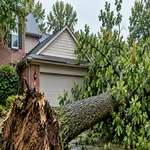
Clean Cut Tree Experts also provide 24/7 emergency tree service when winter storms leave hazardous branches or damaged trees on your property. As a licensed, insured, family-owned company with more than 25 years of experience, Clean Cut Tree Experts understands the seasonal challenges Michigan trees face.
Frequently Asked Questions About Michigan Winter Tree Stress in Farmington Hills, Michigan
How does freeze-thaw weather damage Michigan trees?
Repeated freezing and thawing can cause moisture inside bark and wood to expand and contract, creating stress that may result in frost cracks and structural damage.
Why are ice storms so damaging to mature trees?
Ice adds substantial weight across branches and the canopy. When combined with strong winds, this additional weight can cause weak limbs to break.
Can road salt damage landscape trees?
Yes. Salt spray and salty runoff can affect roots, buds, twigs, and foliage. Symptoms may not become visible until spring.
Why is winter tree damage sometimes difficult to notice?
Some structural problems are subtle during winter, while other injuries become visible only after spring growth begins.
When should Michigan homeowners inspect trees for winter damage?
Late winter is a useful inspection period because trees are mostly bare, making structural problems easier to identify before spring storms.
Can Clean Cut Tree Experts help with winter tree damage?
Yes. Clean Cut Tree Experts can assess winter and storm damage, recommend corrective work, and provide emergency tree services when necessary.
Do evergreens face different winter risks?
Yes. Evergreens can collect snow throughout winter and may experience branch breakage, splaying, or winter burn caused by sun and wind.
Summary Checklist: Winter Tree Stress Assessment
| Evaluation Area | What to Confirm |
| Trunk condition | Frost cracks or vertical splits |
| Branch integrity | Broken, bent, or ice-damaged limbs |
| Salt exposure | Proximity to salted roads or driveways |
| Root zone | Mulch coverage and soil disturbance |
| Weak unions | Co-dominant stems or narrow attachments |
| Inspection timing | Late-winter assessment before spring storms |
Final Advice
Inspect mature trees in late winter for frost cracks, broken limbs, and weak branch attachments. Pay close attention to trees near salted roads and maintain proper mulch around their root zones. If you notice new damage, delayed growth, or structural changes after winter, have the tree professionally assessed before the next storm.
Clean Cut Tree Experts can identify winter-related hazards and recommend the appropriate tree care solution. With more than 25 years of experience, our team provides dependable tree care and emergency services throughout Southeast Michigan.