June 22, 2026
Key Takeaways
- Dangerous trees often show clear warning signs long before failure.
- Cracks, leaning trunks, dead branches, and root issues are major red flags.
- Storm damage, pests, and soil movement can weaken trees internally over time.
- Professional inspection is the safest way to confirm real structural risk.
Why Dangerous Trees Are Common in Farmington Hills
Farmington Hills neighborhoods are known for mature, well-established trees that add shade, beauty, and property value. However, the same maturity that makes these landscapes attractive also increases risk over time. Large oaks, maples, pines, and ash trees gradually weaken due to age, storms, disease, and shifting soil conditions. Many homeowners assume a tree is healthy because it still has leaves, but internal decay often develops long before visible symptoms appear. This hidden deterioration is what makes tree failure unpredictable and sometimes sudden.
Local environmental conditions also contribute to tree stress. Clay-heavy soil in Southeast Michigan expands and contracts with moisture changes, which can slowly destabilize root systems. Winter cycles add further pressure by causing micro-cracks in trunks and branches. Over time, these small issues compound into major structural weaknesses that can lead to falling trees during storms or even calm weather conditions.
Why Mature Trees Become Hazardous
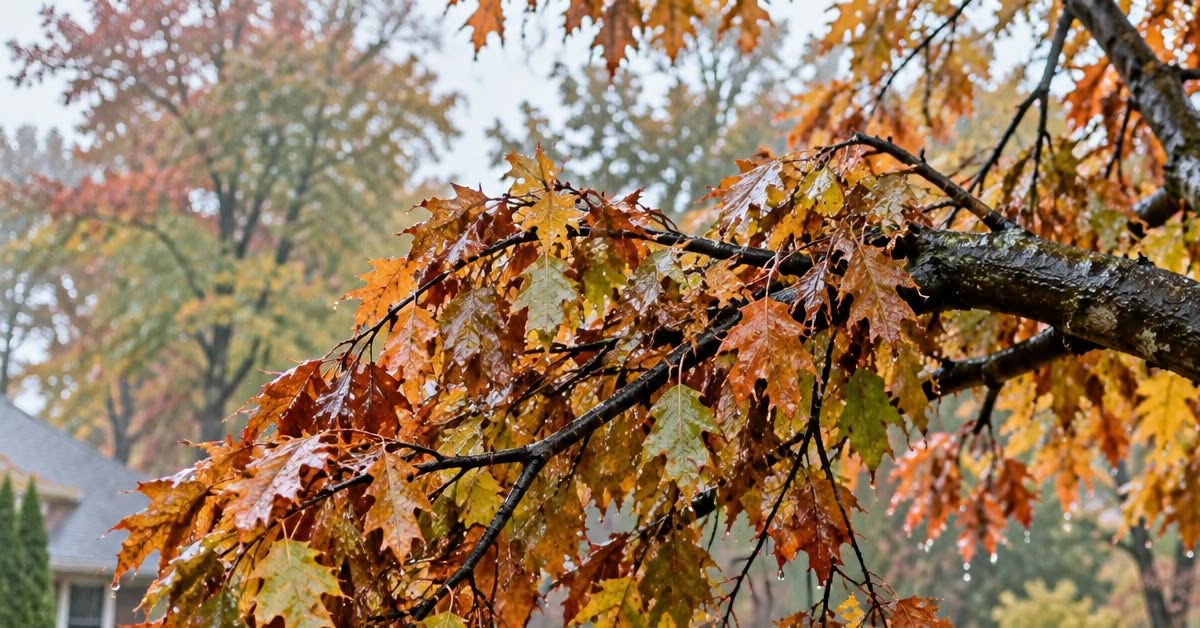
As trees age, their structural load increases while their internal strength often decreases. Heavy limbs, hollow trunks, and weakened root systems make older trees more vulnerable to collapse, especially during high winds or wet soil conditions. Seasonal storms, ice accumulation, and rapid temperature changes create repeated stress cycles. These cycles weaken branch attachments and increase the likelihood of splitting or breakage, especially in already compromised trees.
Warning Signs That a Tree May Be Dangerous
Identifying early warning signs is the most effective way to prevent property damage and injury. Trees rarely fail without showing symptoms first, but these signs are often subtle and easy to overlook. Regular inspection of your yard can help detect problems before they become emergencies.
Trunk Damage and Decay
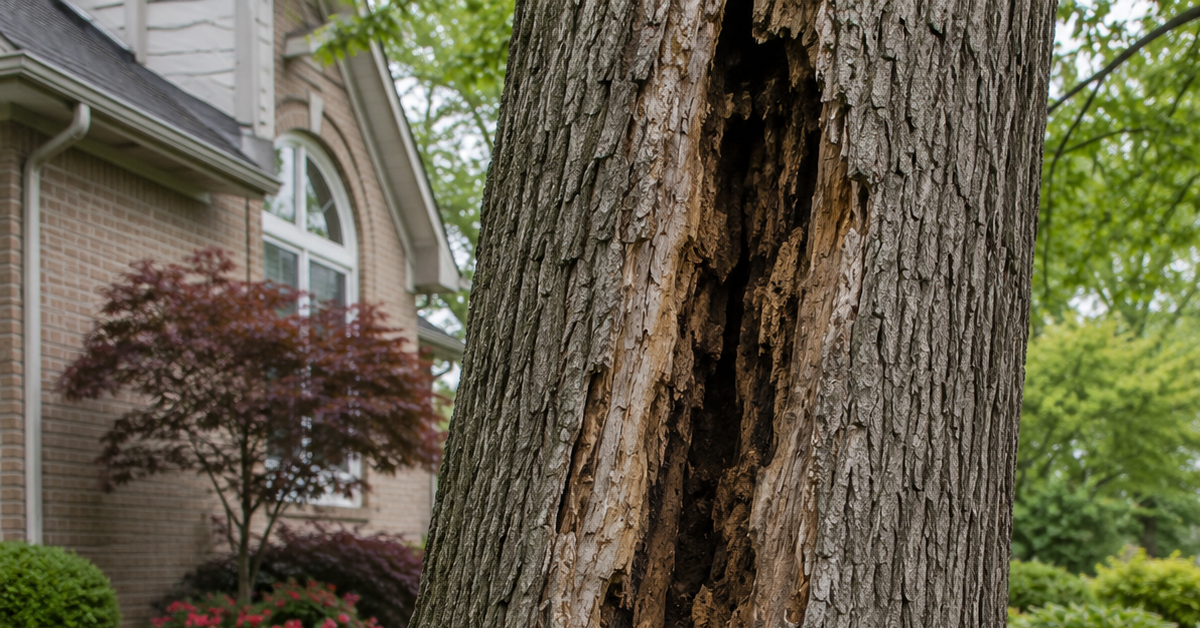
Cracks running vertically along the trunk, hollow sounds when tapped, and areas of missing bark are strong indicators of internal decay. Fungal growth such as mushrooms or conks at the base often means the inside wood is already decomposing. These conditions significantly reduce a tree’s ability to support its own weight.
Leaning or Shifting Trees
A slight natural lean can be normal, but a sudden or worsening tilt is a red flag. If soil around the base is lifting, cracking, or separating, it may indicate root failure. Trees in this condition can fall without warning, especially after heavy rain or wind.
Dead Branches and Canopy Decline
Large dead limbs, thinning foliage, or uneven leaf growth often suggest stress or disease. If more than 25 percent of the canopy is dead or declining, the tree may no longer be structurally stable. Dead branches are particularly dangerous because they can fall unexpectedly even in mild weather.
Hidden Risks Beneath the Surface
Some of the most dangerous tree problems are not visible from the outside. Root decay, underground rot, and pest infestations can weaken a tree significantly before any external signs appear. Construction work, grading changes, or compacted soil can also disturb root systems and reduce stability.
In Farmington Hills, where many properties have undergone landscaping changes over decades, root zones are often unknowingly disturbed. Even small changes in drainage patterns can cause long-term stress to trees. Insects such as borers and beetles may also attack weakened trees, accelerating internal decay. Because these issues are hidden, trees may appear stable until sudden failure occurs during storms or high winds.
When a Tree Becomes an Immediate Safety Hazard
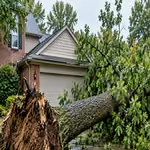
Some tree conditions require urgent action rather than observation. Trees that are partially uprooted, splitting at the trunk, or dropping large limbs should be treated as immediate hazards. Trees leaning toward homes, garages, or power lines pose a serious risk of structural damage or injury.
After severe storms, trees can remain unstable even if they are still standing. Internal fractures or root separation may not be visible but can worsen quickly. In these situations, delaying removal increases danger and can lead to costly emergency damage. Professional intervention ensures the hazard is handled safely and efficiently.
Why Professional Tree Inspection Is Essential
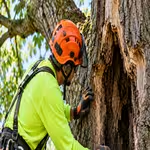
While homeowners can recognize obvious warning signs, professional arborists are trained to detect deeper structural issues. They use specialized tools to evaluate internal decay, root stability, and stress distribution throughout the tree. This level of assessment is essential for making accurate decisions about pruning, treatment, or removal. Professional inspection is especially important in tight residential areas like Farmington Hills, where trees often grow close to homes, driveways, and utilities.
A professional tree service firm in Howell, MI & Livingston County can determine whether a tree can be preserved safely or whether it should be removed before it becomes a liability. This prevents unnecessary risks and ensures long-term landscape safety.
Clean Cut Tree Experts proudly serves Howell and Livingston County with professional, safety-focused tree care backed by over 90 years of combined experience. Our team specializes in tree removal, tree trimming and pruning, stump grinding & removal, lot clearing, and 24/7 emergency tree services, and crane-assisted tree removal designed for high-risk or hard-to-reach trees. Every project begins with a thorough assessment to determine the safest and most efficient approach for the property. Click here to get a free estimate now !!
Frequently Asked Questions About Identifying Dangerous Trees in Farmington Hills, Michigan
How can I tell if a tree is dangerous?
Look for cracks, leaning, dead branches, fungal growth, or exposed roots that indicate structural instability.
Are leaning trees always unsafe in Farmington Hills, Michigan?
Not always, but sudden or increasing lean is a strong warning sign of root failure.
What does a hollow trunk mean?
It usually indicates internal decay, reducing the tree’s strength and stability significantly.
Can storm damage weaken a tree permanently?
Yes, internal fractures and root damage often worsen over time if not addressed.
Do dead branches mean the whole tree is dying?
Not always, but widespread dieback often signals deeper health or structural issues.
Can pests destroy healthy trees?
Yes, insects like borers can weaken internal wood and cause long-term decline.
What do mushrooms at the base indicate?
They often signal root rot or internal decay within the lower trunk.
How often should trees be inspected?
At least once a year and after every major storm event.
Summary Checklist: Dangerous Tree Warning Signs
| Situation | Risk Level | What It Means |
|---|---|---|
| Large Trunk Cracks | High | The tree may be developing serious internal structural failure. |
| Increasing Lean | High | The root system may be weakening and losing stability. |
| Hollow Cavities or Fungal Growth at the Base | High | Internal decay and rot are reducing the tree’s structural strength. |
| Lifting or Exposed Roots | High | The soil and root system may no longer provide adequate support. |
| Storm Damage or Hanging Limbs | High | Hidden fractures can cause branches or the entire tree to fail unexpectedly. |
| Dead or Thinning Canopy | Medium to High | The tree may be under stress, affected by disease, or gradually declining. |
Final Advice
Early detection is the most reliable way to prevent tree-related accidents in Farmington Hills yards because most hazardous trees show warning signs long before failure occurs. Homeowners should regularly inspect their trees for cracks, leaning movement, dead limbs, fungal growth, and soil changes around the base. After storms, trees should always be checked carefully since hidden structural damage can develop even when no immediate collapse is visible. Small changes should never be ignored because they often indicate deeper internal problems. Trees located near homes, driveways, or power lines require even closer attention due to higher risk exposure.
Homeowners should avoid attempting removal or heavy pruning without professional guidance, as unstable trees can shift unpredictably. Certified arborists are trained to evaluate both visible and hidden risks using specialized tools and experience. Preventive care such as routine trimming and removal of weak branches significantly reduces long-term hazards. In dense suburban environments like Farmington Hills, safety must always take priority over appearance. Taking early action protects both property and lives while maintaining a safer and healthier outdoor environment overall. Book your Free Estimate now to explore our tree services in Farmington Hills, MI.