
September 29, 2026
Key Takeaways
- Wet leaves can weigh significantly more than dry leaves on the same branch.
- Weak branch unions are most likely to fail under added autumn weight.
- Early fall storms combine full leaf weight with strong, gusty wind.
- An unexpected early snow on full canopies dramatically raises failure risk.
- Fall pruning before peak leaf weight can help prevent branch failure.
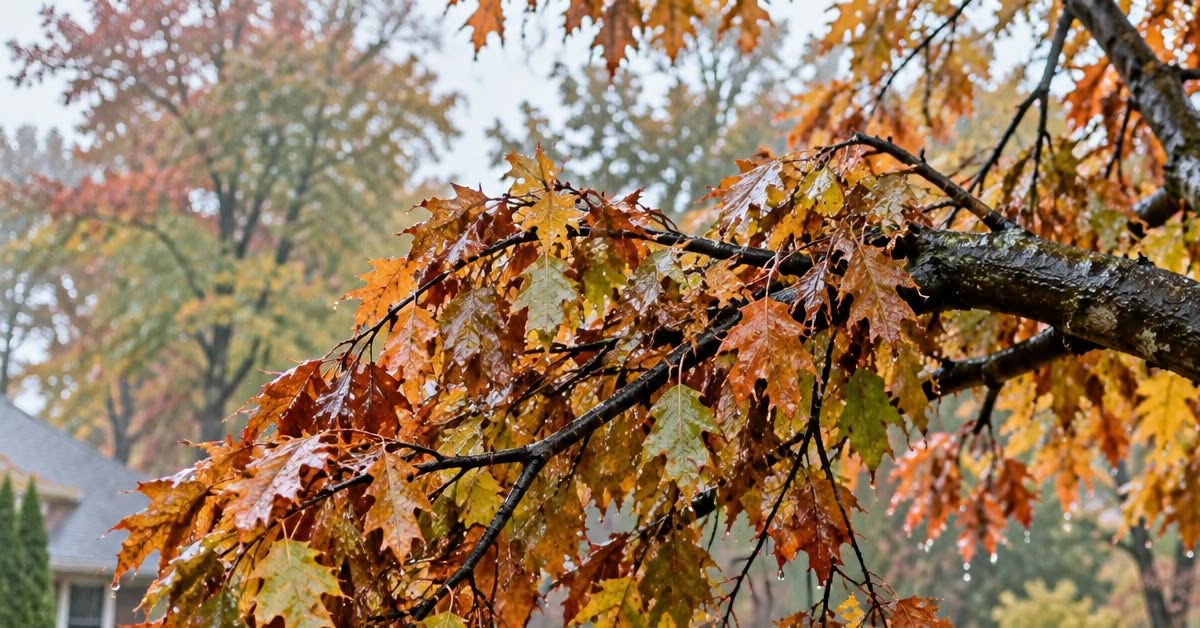
Autumn leaf weight matters on weak branches because wet leaves can add significant weight to an already compromised tree structure. As leaves absorb rain, their added weight places greater stress on weak branch unions and damaged limbs. A full canopy also catches more wind, increasing pressure on branches during Southeast Michigan’s fall storms. If an early snowfall occurs before leaves drop, the combined weight can become even more dangerous.
Trees with narrow branch unions, previous storm damage, or dense canopies are especially vulnerable. Even branches that appear stable during summer can fail when autumn weather adds sudden loads. Inspecting and addressing weak branches before peak leaf weight can help reduce the risk of unexpected limb failure.
How Much Weight Wet Leaves Actually Add
Dry leaves are relatively light per square foot. Rain-soaked leaves can weigh several times more. A large canopy holding thousands of wet leaves adds meaningful, distributed weight. That weight is spread across every branch still holding foliage. Branches that were already under stress feel this added load most severely. A single large branch can hold hundreds of pounds of wet leaves by late autumn, which is a substantial and often underestimated load.
Why Weak Branch Unions Fail First
A branch union with included bark is inherently weaker than a well-formed union. Included bark occurs when two branches grow so close together that bark gets trapped between them. These unions lack the strong wood-to-wood connection of a healthy branch. Added leaf weight, combined with any wind, is often enough to cause a split. The split often happens suddenly and without much visible warning beforehand, which is part of why these unions are so dangerous.
Spotting a Weak Union
Look for a narrow, V-shaped angle between two large branches. A visible seam or bark ridge along the union is another common warning sign.
Fall Storms Add Wind on Top of Weight
Early autumn storms in Michigan often bring strong, gusty wind. Unlike winter storms, these systems arrive while trees still hold most of their leaves. That full canopy acts like a sail, catching far more wind than a bare branch would. Combined with wet leaf weight, the strain on weak unions multiplies quickly.
A single fall storm can therefore cause more limb damage than a much stronger winter storm hitting a bare tree. This is one reason insurance claims for tree damage often spike in September and October across Southeast Michigan.
Early Snow on Full Canopies
Southeast Michigan occasionally sees early-season snowfall before leaves have fully dropped. Snow clinging to a leafy canopy adds dramatic, sudden weight. This scenario is particularly dangerous because trees are not adapted for snow load while still in leaf. Widespread limb failures can occur during these unusual early events.
Which Trees Face the Highest Risk
Trees with a history of storm damage or previous limb loss carry more risk. Species prone to weak branch unions, such as silver maple and Bradford pear, are also more vulnerable. Large, mature trees with dense, wide canopies hold the most leaf weight and deserve closer attention as fall approaches.
Trees planted too close together can also develop narrower, weaker branch angles as they compete for light. Older trees that have never received structural pruning may carry more hidden weak points than younger, well-maintained trees.
Reducing Risk Before Leaf Drop
A late-summer or early-fall inspection can identify weak unions before peak leaf weight arrives. Selective pruning can reduce canopy density on vulnerable trees. Cabling can also reinforce a weak union without removing the branch entirely. Addressing these issues before the first fall storm is far better than reacting after a failure.
Why Rain Timing Matters as Much as Rain Amount
A slow, steady autumn rain soaks into leaves gradually, while a sudden downpour on a dry canopy can add weight almost instantly. Wind arriving right after heavy rain is the most dangerous combination because branches have little time to shed water before facing strong gusts. A calm, rainy day can quietly create conditions for major damage during the storm that follows.
How Leaf Drop Timing Affects Risk
Trees that drop leaves earlier in fall face fewer weeks of peak canopy weight. Trees that hold leaves later, including some oaks, stay vulnerable longer into storm season. Species that retain dead leaves through much of winter, a trait called marcescence, can carry unexpected weight well past typical leaf drop.
Trees That Hold Leaves Longer
Some oak and beech varieties retain dry leaves into winter. This extends the period during which snow or ice can add weight to the canopy.
After a Branch Fails: What Homeowners Should Do
If a branch fails, take these steps to protect people, property, and the remaining tree:
- Keep People Away: Keep children and pets away from fallen or hanging branches until the area has been assessed.
- Watch for Movement: A branch that appears stable can still shift or fall unexpectedly.
- Document the Damage: Take clear photos of the fallen branch and tree damage before cleanup begins for insurance purposes.
- Avoid DIY Removal: Do not attempt to cut or move large, suspended, or damaged branches yourself.
- Call a Professional: A professional tree service firm in Farmington Hills, MI can assist you in safely removing the debris and inspecting the remaining tree for additional hazards.
Raking Season and Yard Debris Planning
Heavy fall leaf drop often coincides with storms that stress weak branches. Clearing debris promptly reduces slip hazards and keeps drains clear. Coordinating yard cleanup with a professional trimming visit can also be efficient, allowing fallen debris and weak overhead limbs to be addressed during the same visit.
Planning Ahead for Next Fall
Noting which trees showed stress this year can help guide next year’s maintenance plan. A simple record of past issues makes future inspections faster and more focused. Trees that have lost limbs are more likely to experience additional failures nearby, so prioritizing them for a fall checkup is a practical precaution.
Balancing Canopy Health With Fall Safety
A full, healthy canopy is a good sign for a tree overall. The goal of fall pruning is not to strip that canopy, but to reduce risk at specific weak points. A thoughtful, selective approach protects both tree health and the safety of everything beneath it. Working with an experienced arborist helps strike that balance correctly.
Clean Cut Tree Experts inspect trees across Farmington Hills, Novi, and Southeast Michigan each fall for weak branch unions. Our experienced team identifies weak branch unions and at-risk limbs before wet leaves, strong winds, and early snow increase the risk of failure. We use proper pruning techniques to reduce excess canopy weight while supporting long-term tree health. If a branch fails unexpectedly, our 24/7 emergency tree service is available to help protect your property. With more than 25 years of family-owned experience, Clean Cut Tree Experts understand how to prepare Michigan trees for challenging fall and winter weather.
Frequently Asked Questions
Why do wet autumn leaves add so much weight to a branch?
Rain-soaked leaves can weigh several times more than dry leaves, and that added weight is distributed across the entire canopy of a tree.
What makes a branch union weak?
Included bark, where two branches grow too close together, creates a weak connection that lacks the strength of a healthy wood-to-wood union.
Why are early fall storms especially risky for trees?
These storms bring strong wind while trees still hold full leaf canopies, combining wet leaf weight with wind resistance on weak branches.
Can an early snowfall really damage a leafy tree?
Yes. Snow clinging to a full canopy adds sudden, dramatic weight that trees are not structurally adapted to handle while still in leaf.
Which trees are most at risk during autumn storms?
Trees with a history of storm damage, weak-union species like silver maple, and large trees with dense canopies face the highest risk.
How can pruning reduce autumn branch failure risk?
Selective pruning before peak leaf weight reduces canopy density and takes strain off weak unions before fall storms arrive.
Do some trees hold leaf weight risk longer into the season?
Yes. Trees such as some oak varieties retain dry leaves later into fall and winter, extending the period when additional canopy weight can become a concern.
Summary Checklist: Autumn Branch Failure Risk
| Evaluation Area | What to Confirm |
| Branch unions | Narrow, V-shaped angles or included bark identified |
| Canopy density | Overall leaf weight and wind resistance evaluated |
| Storm history | Previous limb loss or storm damage noted |
| Species risk | Known weak-union species identified on property |
| Inspection timing | Assessment completed before peak fall leaf weight |
| Corrective action | Pruning or cabling scheduled for weak limbs |
Final Advice
Schedule a branch inspection in late summer before leaves reach peak weight. Look for narrow, V-shaped branch unions on large, mature trees and prioritize trees with a history of storm damage. Consider cabling for weak unions that may be preserved and watch the forecast closely during unexpected early snow events. If a heavily leafed branch begins sagging or showing movement, have it assessed promptly rather than waiting for failure.
Clean Cut Tree Experts provides professional tree inspections and pruning services across Southeast Michigan. Our experienced team can help identify weak branches and reduce the risk of fall storm damage.