November 15, 2026
Yes, you can clear a lot without removing every mature tree. Selective lot clearing removes unwanted underbrush, invasive vegetation, dead wood, and designated trees while preserving healthy trees that add character and shade to the property. This approach can help homeowners and developers prepare land for construction or landscaping without clearing the entire site.
With careful planning, protected root zones, and appropriate equipment, selective clearing can retain valuable parts of the existing landscape. The key is to identify which trees can remain and protect them throughout the work, including during construction.
What Is Selective Lot Clearing?
Selective lot clearing involves removing specific trees, stumps, brush, and other vegetation while intentionally retaining selected trees and plants. Rather than clearing every tree, the crew plans the work around the property’s intended use, the condition of existing trees, and the space needed for buildings, driveways, utilities, and landscaping.
- Tree selection: A property assessment helps identify healthy trees worth preserving, along with dead, damaged, invasive, or poorly located vegetation that may need removal.
- Site planning: A reliable tree service company in Farmington Hills, MI can review the clearing goals and mark trees designated to remain. Construction plans should account for their location, root systems, and long-term growing space.
- Equipment access: Crews can establish designated travel routes to reduce unnecessary disturbance around protected trees. The right approach depends on the terrain, soil conditions, vegetation density, and available working space.
Retaining suitable trees may help maintain shade, intercept rainfall, and support soil stability, although the benefits depend on the site and the trees preserved.
The Impact of Soil Compaction on Retained Trees
Soil compaction occurs when machinery or repeated foot traffic presses soil particles together, reducing the spaces that hold air and water. This can limit root growth, reduce water infiltration, and put stress on trees that appear undamaged above ground.
- A mature tree can survive the initial clearing but decline later if machinery repeatedly travels over its root zone.
- A tree’s roots often extend well beyond its visible canopy. The exact root spread varies by species, soil conditions, age, and growing environment.
- Professional crews can reduce disturbance by establishing equipment routes, limiting unnecessary traffic, and using suitable ground-protection measures where needed.
- Protecting the trunk from scrapes and impact is important, but protecting the soil and roots is also essential.
The University of Minnesota Extension’s guidance on soil compaction explains how compacted soil can affect the movement of air and water through the ground. On a clearing project, careful equipment placement and traffic management can help limit this risk.
How Do Arborists Protect Mature Trees During Clearing?
Arborists and tree-care professionals can help protect mature trees by identifying their root zones, planning equipment access, and setting clear boundaries before clearing begins. The International Society of Arboriculture’s guidance on avoiding tree damage during construction recommends having an arborist define a tree protection zone early in the planning phase. The specific protection measures depend on the tree species, site conditions, and construction plans.
- Fencing and signage: Install suitable barriers around designated protection zones to keep machinery, stored materials, and unnecessary traffic away from tree roots.
- Manual underbrush removal: Use hand tools or other appropriate equipment near sensitive areas when heavy machinery could damage roots or compact the soil.
- Root protection: Avoid cutting or exposing roots unnecessarily. If excavation near roots is unavoidable, consult a qualified arborist before work begins.
- Trunk protection: Where trees are vulnerable to accidental impacts, suitable barriers can help prevent damage from equipment and materials.
- Planned access routes: Identify where machinery can travel and where materials can be stored before work starts. Keep these areas away from protected trees wherever practical.
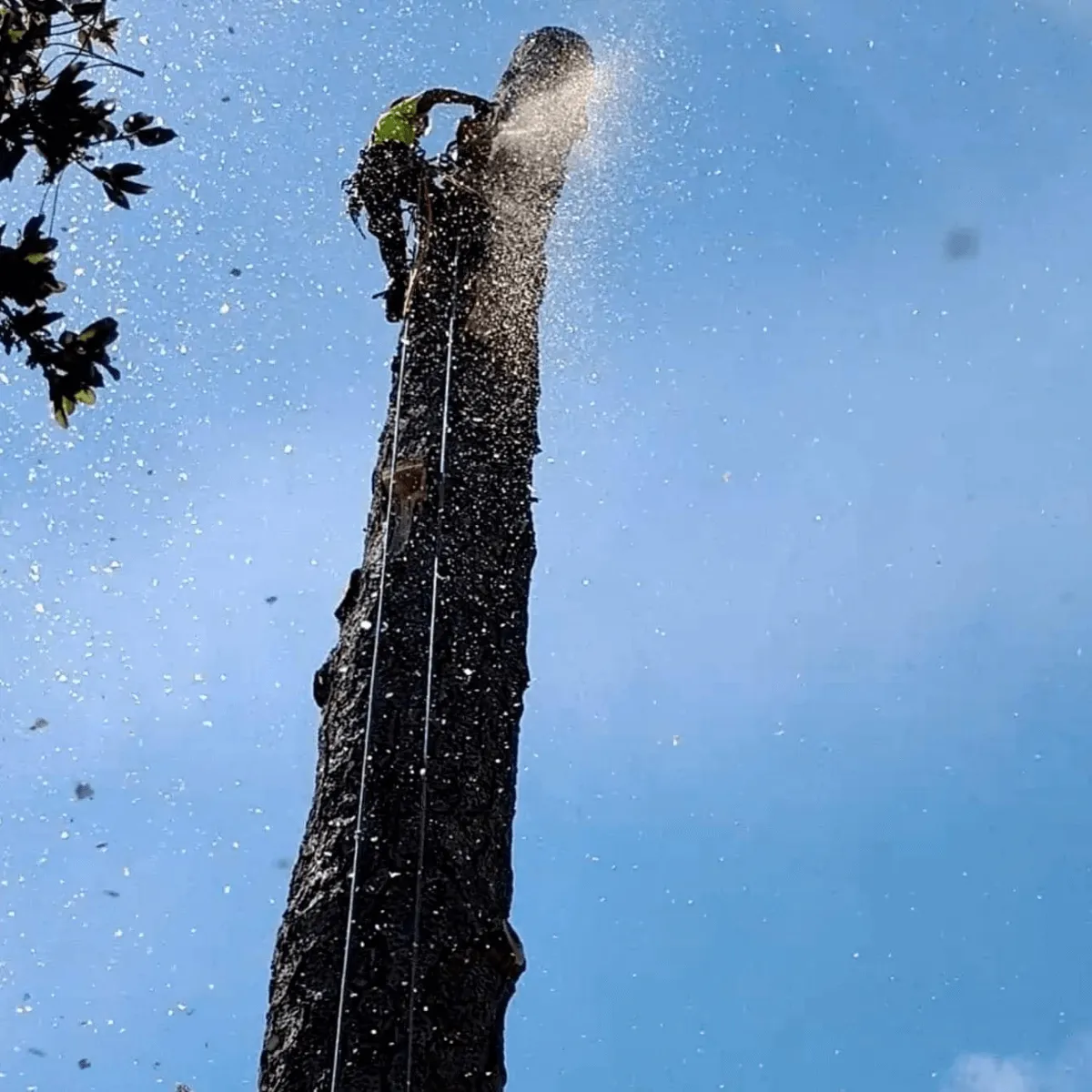
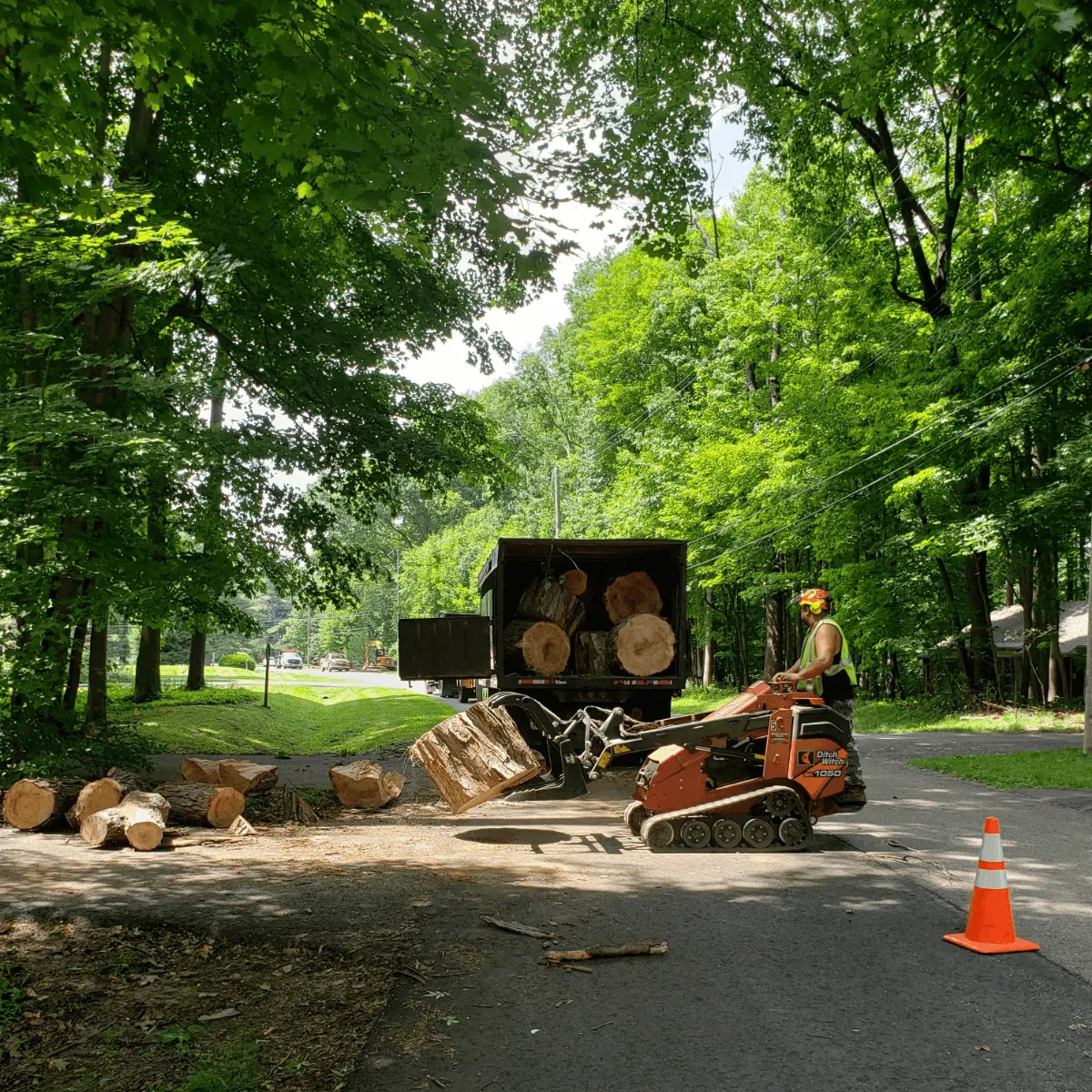
When a dead or hazardous tree stands close to one that needs to remain, careful removal planning becomes especially important. Professional tree removal may involve sectional dismantling, ropes, rigging, or crane assistance, depending on the tree and the site. These methods can help control how branches and trunk sections are lowered, but the right technique depends on the specific risks and available access.
After clearing, selective tree trimming and pruning may help address damaged or poorly positioned branches. However, retained trees can experience greater wind exposure when nearby vegetation is removed. An arborist can assess whether additional care is appropriate rather than assuming every tree will need pruning.
What Are the Cost Benefits of Selective Clearing?
Selective clearing can preserve established shade, reduce the need to replace mature landscape trees, and retain some of the property’s existing character. However, the total cost depends on the acreage, vegetation density, tree size, site access, disposal requirements, and equipment needed.
Selective clearing may require more planning and precise work than clearing an open area. Clear-cutting may be faster in some conditions, but the overall project budget should also account for grading, debris disposal, erosion control, and future landscaping.
| Clearing Method | Cost Considerations | Potential Long-Term Impact |
| Clear-cutting | Depends on the number and size of trees, site access, and disposal needs. | Removes most existing tree cover and may increase the need for new landscaping. |
| Selective clearing | May require additional planning and careful work around retained trees. | Preserves selected mature trees and some of the site’s established landscape. |
| Forestry mulching | Depends on vegetation density, terrain, equipment access, and the area being cleared. | Processes suitable brush and vegetation into mulch on site, reducing the need to haul some material away. |
There is no single cost per acre that applies to every property. Get an itemized estimate based on an on-site assessment rather than relying on broad price ranges alone.
Stumps from removed trees can also affect the project budget and the property’s future use. Targeted stump grinding and removal can help prepare selected areas for landscaping or other uses. Before grinding or excavating near a retained tree, make sure the work will not unnecessarily damage its roots.
How Clean Cut Tree Experts Handle Selective Lot Clearing
Selective lot clearing requires careful planning to remove unwanted vegetation while limiting unnecessary disturbance to trees that will remain. Clean Cut Tree Experts provides lot clearing services across Southeast Michigan for residential, commercial, and other properties.
Our team assesses the property, discusses your clearing goals, and determines an approach based on the terrain, vegetation, access, and scope of work. Depending on the job, we can use professional equipment and controlled removal techniques to clear trees, brush, and stumps while working carefully around designated areas.
When an unwanted or hazardous tree stands close to a mature tree you want to preserve, sectional dismantling and controlled rigging may help lower branches and trunk sections in a planned manner. The appropriate method depends on the site’s conditions, tree size, and available equipment. We aim to reduce avoidable damage to surrounding trees, structures, and landscaping while creating usable space.
Whether you are preparing a property for construction or reclaiming an overgrown lot, Clean Cut Tree Experts can help you assess your options and plan the work. Visit our lot clearing service page to learn more or contact our team to discuss your property.
Frequently Asked Questions
Can you build a house near a mature tree?
Yes, it may be possible to build near a mature tree if the building layout and construction methods account for the tree’s root system and growing needs. Have the site assessed before construction begins, and follow applicable building requirements and tree-protection rules.
Does clearing underbrush hurt mature trees?
Not necessarily. Removing selected underbrush can reduce competition from invasive plants and improve access to the property. However, machinery, careless cutting, or damage to roots and bark can harm mature trees. The method matters.
What happens if tree roots are compacted?
Compacted soil has less space for air and water, which can restrict root growth and affect a tree’s ability to take up water and nutrients. Severe or repeated compaction can contribute to declining tree health, sometimes over an extended period.
Do I need a permit for selective lot clearing?
Permit requirements vary by municipality and property. Local rules may cover tree removal, protected species, wetlands, grading, or construction activities. Check with the relevant local authority before starting work, especially if the project involves development.
How do you remove a tree surrounded by other trees?
Tree-care professionals assess the tree, surrounding canopy, access, and nearby structures before selecting a removal method. Sectional dismantling, rigging, or crane assistance may be appropriate when a tree cannot safely fall in one direction. No method can guarantee zero impact, so planning and controlled work are essential.
How long does selective lot clearing take?
The timeline depends on the property’s size, vegetation density, number and size of trees, site access, weather, and disposal requirements. A smaller residential lot may take less time than a heavily wooded property or a site with complex access. An on-site assessment is the best way to estimate the schedule.
Does Clean Cut Tree Experts offer selective lot clearing?
Yes. Clean Cut Tree Experts provides lot clearing services across Southeast Michigan. Visit our lot clearing service page to learn about the service and discuss your property’s needs with the team.