July 21, 2026
Quick Answer: Oak wilt is a fatal fungal disease caused by Bretziella fagacearum that kills red oaks by blocking water movement inside the tree. It is confirmed in both Oakland and Wayne Counties, putting oaks in Livonia and Farmington Hills at direct risk. It spreads through fresh pruning wounds and root grafts, mainly between April 15 and July 15. The most effective protection is simple: never prune oaks during that window, and seal any accidental wounds immediately.
In This Article
- What is oak wilt
- How it spreads in Southeast Michigan
- Symptoms to watch for
- Safe pruning times
- What to do if you suspect infection
Key Takeaways
- Oak wilt is confirmed in Oakland and Wayne Counties.
- Never prune oaks between April 15 and July 15.
- Red oaks can die within 4 to 6 weeks of infection. There is no cure.
- The fungus spreads via sap beetles attracted to fresh cuts and underground through root grafts.
- Winter (November to early March) is the safe pruning season in Michigan.
- Seal storm wounds on oaks within minutes during the risk window.
What Is Oak Wilt?
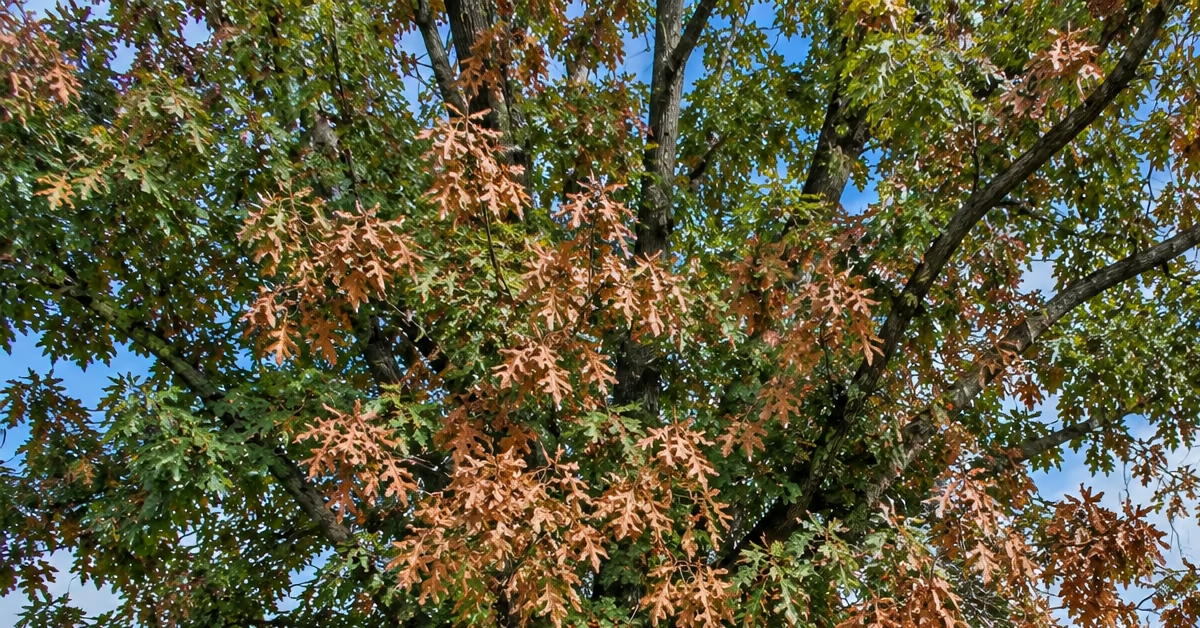
Oak wilt is caused by the fungus Bretziella fagacearum, which invades a tree’s vascular system. The tree responds by plugging its own water-conducting vessels, cutting off the canopy’s water supply. Leaves wilt, turn brown, and drop, often while still partly green.
You can read more about oak wilt disease transmission and symptoms for the full pathology, but the local reality is blunt: once a red oak is infected, nothing saves it. The Michigan Department of Agriculture and Rural Development (MDARD) treats oak wilt as a managed invasive disease, and the USDA Forest Service ranks it among the most destructive diseases of oaks in the eastern United States. Management is entirely prevention and containment.
Oak Wilt by the Numbers
- Red oaks can die within 4 to 6 weeks of infection.
- Oak wilt spreads through root grafts to oaks up to 50 feet away.
- The high-risk pruning season runs April 15 to July 15.
- Sap beetles can reach a fresh wound within 15 minutes.
- One infected oak can spread the disease to an entire street of root-connected trees.
Why Oakland and Wayne County Homeowners Should Pay Attention
The neighborhoods of Livonia and Farmington Hills were built around mature oak populations, many planted in rows along streets and property lines decades ago. Oaks of the same species standing this close together are usually root-connected, which gives the fungus a highway from yard to yard. Add southeast Michigan’s storm-heavy springs, which wound trees exactly when beetles are flying, and the conditions for spread are all here. Prevention in this area isn’t optional maintenance. It’s neighborhood defense.
How Oak Wilt Spreads in Southeast Michigan
Above ground: sap beetles and fresh wounds
Sap-feeding nitidulid beetles pick up Bretziella fagacearum spores from fungal mats on wilt-killed trees, then fly to the scent of fresh sap. A pruning cut, storm wound, or mower scrape produces exactly that scent.
Below ground: root grafts
Oaks of the same species within about 50 feet of each other often fuse roots. The fungus travels through these grafts from an infected tree into healthy neighbors, turning one infected oak into a pocket of dead trees over two or three seasons.
Red Oaks vs. White Oaks: Know Which You Have
| Oak Group | Leaf Shape | Infection Speed | Survival Chance |
| Red oak group (red, pin, black oak) | Pointed, bristle-tipped lobes | 4 to 6 weeks | Very low |
| White oak group (white, bur, swamp white oak) | Rounded lobes | Months to years | Moderate |
If your oak has pointed lobes, treat the pruning calendar below as non-negotiable.
Symptoms to Watch For
- Wilting that starts at the top of the canopy and moves down
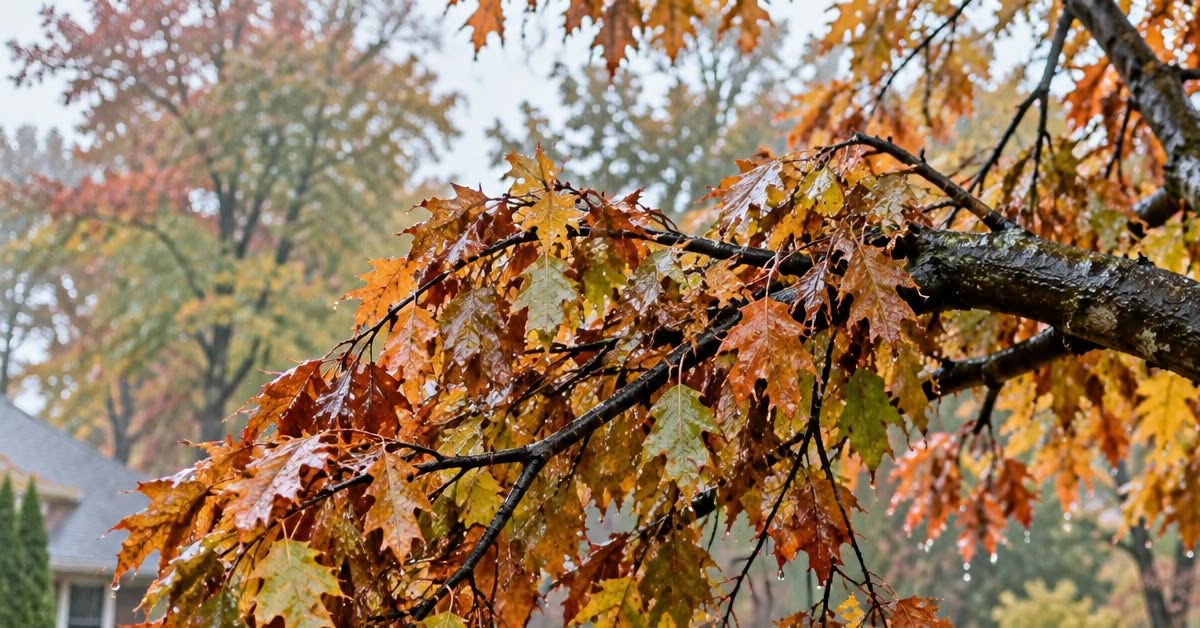
- Leaves turning dull green, bronze, or brown from the outer edge inward
- Heavy leaf drop in June or July, including leaves still half green
- Entire branches dying within days of each other
- Vertical bark cracks with a fruity smell the following season (fungal mats)
“Most oak wilt calls we receive start with a homeowner noticing sudden leaf drop in early summer. By then, the disease has usually been active for weeks, and the question shifts from saving that tree to protecting its neighbors.”
Sudden summer leaf drop is the red flag. Drought stress browns leaves gradually and evenly. Oak wilt moves fast and top-down.
The Pruning Window That Matters: April 15 to July 15
The Michigan oak wilt management guidelines published by MDARD identify mid-April through mid-July as the high-risk period: spore mats are mature, beetles are flying, and oaks are pushing sap.
Do not prune, wound, or cut oaks between April 15 and July 15. Many southeast Michigan arborists extend that caution from first thaw through late July. The safe window is the dormant season, roughly November through early March. Our tree trimming and pruning calendar is built around this window.
What if an oak is wounded during the risk period?
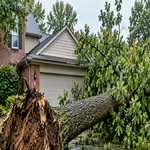
Storms don’t check the calendar. If a limb breaks between April and July, seal the wound immediately with tree wound paint or latex paint. This is the one case where wound dressing is strongly recommended, because it masks the sap odor that attracts beetles. Our storm damage cleanup crews carry sealant in season for this reason.
What We Commonly See in the Field
Summer pruning by well-meaning homeowners. A low oak limb gets trimmed over the driveway in June; by August the canopy is browning.
Construction and utility damage. Trenching and grading near oaks in summer opens wounds above and below ground. Fence off the root zone and push unavoidable cuts to winter.
The one dead oak that becomes five. Removing a wilt-killed oak without severing root grafts lets the fungus keep moving underground. Containment trenching follows International Society of Arboriculture standards and belongs with an experienced tree care team, not a general landscaper.
What to Do Now
- Identify your oaks: red group or white group.
- Put oak pruning on the winter calendar. Nothing between April 15 and July 15.
- Seal in-season wounds within minutes, not hours.
- Don’t move oak firewood. The Michigan State University tree health resources from MSU Extension cover safe handling.
- Call a professional at the first sign of rapid summer wilt. If the tree is already dying, prompt tree removal with proper sanitation protects the rest of your yard.
Seeing top-down wilt on an oak in Livonia or Farmington Hills right now? Contact us. June and July are when infections reveal themselves.
Frequently Asked Questions About Oak Wilt
Can oak wilt spread through firewood?
Yes. Oak firewood from infected trees can produce fungal mats that attract sap beetles and spread oak wilt to healthy trees. Never move untreated oak firewood. Debarking, chipping, or tarping wood through the following summer reduces the risk.
What should I do if I suspect my oak has oak wilt?
Contact a professional as soon as possible. Rapid leaf drop, browning from the leaf edges inward, and sudden canopy decline in spring or summer are warning signs. Early diagnosis can confirm the disease and determine whether nearby trees need protective treatment or root-graft disruption.
Can oak wilt be cured?
No. Infected red oaks cannot be saved. High-value white oaks and uninfected neighbors can sometimes be protected with propiconazole injections by a licensed professional, but that is prevention, not a cure.
When is it safe to prune oaks in Michigan?
November through early March. MDARD and MSU Extension both point to dormant-season pruning as the safe window.
How fast does oak wilt kill a tree?
Red oaks typically die within 4 to 6 weeks of symptom onset. White oaks may decline over several years.
My neighbor’s oak died of oak wilt. Is mine at risk?
If it’s the same species group within about 50 feet, yes. Root grafts carry the fungus, and a vibratory plow line to sever connections may be warranted.
Can I keep wood from a removed oak?
Only if debarked, chipped, or tightly tarped through the following summer. Intact logs can produce spore mats that infect nearby trees.
Protect Your Oaks Before Oak Wilt Has a Chance to Spread
Oak wilt moves quickly, especially through red oaks. Once symptoms appear, the focus often shifts from saving the infected tree to protecting nearby healthy oaks. In Oakland and Wayne Counties, prevention remains the most effective strategy.
If you have mature oaks on your property, avoid pruning between April 15 and July 15, watch for sudden leaf drop and canopy browning, and address storm damage immediately. Small mistakes during the high-risk season can create entry points for a disease that spreads through both fresh wounds and connected root systems.
The good news: most infections are preventable with proper pruning timing, prompt wound treatment, and early intervention. If you’re concerned about an oak in Livonia, Farmington Hills, or the surrounding area, request a free estimate. Early action is often the difference between losing one tree and protecting an entire landscape