April 5, 2026
In power outage-prone Michigan, when a tree strikes a power line, it instantly creates a dangerous situation on your property. This isn’t just a nuisance; it’s a hazardous emergency that demands immediate, careful attention. Understanding the right steps can prevent serious injury, protect your home, and ensure a quicker resolution.
Key Takeaways
- Always maintain a minimum distance of 30-35 feet from the fallen tree and power lines due to electrocution risk.
- Immediately call the emergency line for your provider—such as the DTE Energy Outage Center at 800-477-4747 or the Consumers Energy emergency line at 800-477-5050—then dial 911 if there is sparking, fire, or injury.
- Never attempt to move or cut the tree yourself before utility crews confirm the power is safely off.
- Utility companies handle line repairs and initial clearing, while homeowners are responsible for subsequent tree removal and debris cleanup.
- Homeowner’s insurance may cover removal costs if a structure is damaged, but policies vary.
- Once lines are de-energized, engage professional arborists who are specifically trained to handle the unique structural tensions and hazards of trees involved with utility lines
Immediate Dangers of a Tree on a Power Line
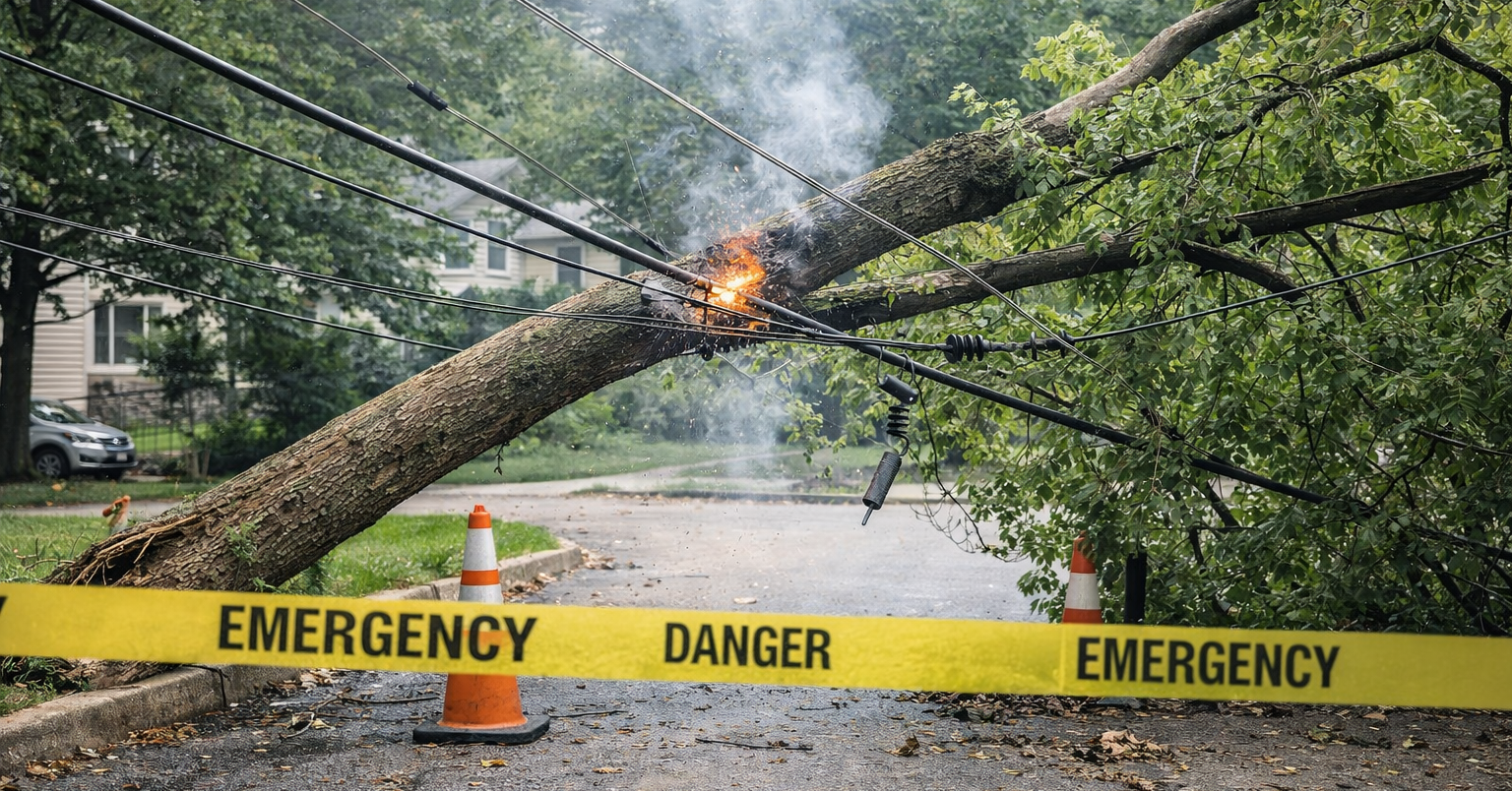
A tree on a power line presents an immediate and severe risk of electrocution. This isn’t just a concern if you touch the wires directly; electricity can travel through the tree itself, the surrounding ground, or even standing water. This makes the entire area around the fallen tree and the lines incredibly dangerous. The danger is often invisible, as power lines can remain energized even if they appear down or inactive. Even a slight current can be lethal, making a strict safety protocol essential.
Your First Steps: Prioritizing Safety
Keep 30-35 Feet Away
The most critical step is to establish a safe zone. Keep yourself, your family, and any pets at least 30 to 35 feet away from the fallen tree and power lines. This distance helps protect you from potential electrocution, especially if electricity is arcing or traveling through the ground. Warn neighbors and passersby to stay clear. Your safety is not negotiable in this situation.
Call Utility First, Then 911
After securing the area, your next action is to alert the proper authorities. Don’t delay. The utility company needs to address the power lines, and emergency services can assist with immediate hazards.
- Call Your Electric Utility Company First: Locate their emergency number (often on your bill or their website). Report the exact location and describe the situation clearly. They are responsible for de-energizing the lines and making the area safe.
- Call 911 Second (If Necessary): If you see sparks, fire, smoke, or if someone has been injured, call 911 immediately after contacting the utility company. Emergency responders can provide medical aid and fire suppression.
Warn Family, Pets, Neighbors
It’s easy for people, especially children and pets, to wander into a dangerous zone unknowingly. Ensure everyone understands the risk.
- Inform Family: Clearly instruct everyone in your household to stay away from the affected area.
- Contain Pets: Keep pets indoors or securely leashed, away from the hazard.
- Alert Neighbors: If the incident affects public areas or neighbors’ property, alert them to the danger.
Understanding Roles: Utility vs. Homeowner Responsibilities
| Responsibility | Electric Utility Company | Homeowner |
| Power Line Safety | De-energizes power lines and repairs electrical infrastructure | Stay clear of the area and report the incident |
| Tree Clearing | Removes branches blocking access to power lines | Responsible for removing the remaining tree and debris |
| Cost Coverage | Pays for electrical line repair and related clearing | Pays for tree removal, often through homeowner insurance |
| Expertise Required | Utility line workers and electricians | Licensed arborists and professional tree service crews |
What the Utility Company Does
The electric utility company has specific responsibilities when a tree impacts its infrastructure. Their primary goal is to ensure public safety and restore power efficiently.
- De-energize Lines: Their first priority is to shut off power to the affected lines, eliminating the immediate electrocution risk.
- Repair Damaged Lines: Utility crews will work to fix any broken or damaged power lines and poles.
- Initial Vegetation Clearing: They will clear enough of the tree to safely access and repair their equipment. This is typically a functional cut, not a full aesthetic removal.
Your Role as a Homeowner
Once the utility company has made the power lines safe and restored service, the remaining tree debris usually becomes the homeowner’s responsibility. This is where professional help is often needed.
- Remaining Tree Cleanup: You are generally responsible for removing the rest of the tree from your property.
- Debris Removal: This includes hauling away branches, logs, and other organic debris.
- Property Damage Assessment: Inspect your property for any damage caused by the fallen tree.
Why Professional Tree Removal is Non-Negotiable
Risks of DIY Removal (Even After Power is Off)
Even after power lines are de-energized, removing a large, fallen tree is complex and hazardous. It’s not a DIY project. The tree might be under tension, branches can spring back unexpectedly, and heavy sections require specialized equipment to handle safely.
- Falling Debris: Unstable limbs can shift or fall, causing injury.
- Property Damage: Improper cuts or handling can lead to further damage to your home or landscape.
- Hidden Dangers: Trees can be heavier and more awkward to move than they appear, leading to strains or crushing injuries.
- Incomplete Cleanup: Without the right tools, you might leave hazardous stumps or debris.
Navigating Costs and Insurance Coverage
Typical Costs for Tree Removal After a Power Line Incident
The cost of professional tree removal after a power line incident can vary significantly. Factors include the tree’s size, location, accessibility, and the complexity of the removal. Emergency services might incur higher fees.
- Tree Size: Larger trees require more equipment and labor.
- Location & Accessibility: Trees in tight spaces or near structures increase complexity.
- Debris Hauling: Included in most quotes, but verify.
- Stump Grinding: Often an additional service, typically costing $150-$500 depending on stump size.
Homeowner’s Insurance: What’s Covered?
Understanding your homeowner’s insurance policy is crucial. Most policies offer some coverage for tree removal, especially when the tree causes damage or poses a clear hazard.
- Damage to Insured Structures: If the fallen tree damages your house, garage, fence, or other insured structures, the cost of removal is usually covered.
- Blocked Driveway/Access: Some policies cover removal if the tree blocks your driveway or prevents access to your property.
- Neighbor’s Property: If your tree falls on a neighbor’s insured property, their policy typically covers the damage and removal, but liability can be complex.
- Deductibles Apply: Remember that your deductible will apply, and it might not always be financially advantageous to file a claim for smaller removal costs.
Timeline Expectations: From Incident to Resolution
Utility Response Time
When a tree hits a power line, the utility company’s response time is critical. In Michigan, trees and branches cause 40% of all power interruptions. The state also ranked second nationally for power outages affecting at least 50,000 customers. While utilities prioritize safety and power restoration, their response can vary.
- Emergency Situations (Fire, Injury): Expect a rapid response, often within minutes to a few hours.
- Non-Emergency Outages: Response times can be longer, especially during widespread outages. According to 2024 Michigan Public Service Commission (MPSC) data, Michigan utilities face significant pressure to improve reliability, with DTE and Consumers facing new financial penalties in 2026 if restoration times do not improve.
- Weather Impact: Severe storms can overwhelm utility resources, leading to extended waits.
Professional Tree Service Scheduling
Once the power lines are safe, contacting a professional tree service like Clean Cut Tree Experts is the next step. We understand the urgency of these situations.
- Emergency Service: Clean Cut Tree Experts offers emergency services for hazardous situations, often dispatching crews within hours.
- Standard Scheduling: For less urgent removals, scheduling depends on current workload, but we strive for prompt service.
- Estimate Process: We provide transparent estimates quickly, detailing the scope of work and costs.
- Efficient Execution: Our experienced crews and advanced equipment ensure the removal is completed efficiently, minimizing disruption.
Avoiding Common Mistakes During a Power Line Incident
In the chaos of a fallen tree and downed power lines, it’s easy to make mistakes that can put you or others at risk. Avoid these common pitfalls:
- Approaching the Scene Too Soon: Never assume lines are dead. Stay at least 30-35 feet away until utility personnel confirm it’s safe.
- Attempting to Move the Tree Yourself: Even a small branch can conduct electricity. This is a job for trained professionals.
- Ignoring Downed Wires: Even if you don’t see sparks, downed wires are live and extremely dangerous.
- Driving Over or Around Downed Lines: This can cause further damage, ignite fires, or energize your vehicle.
- Calling Only 911 (for non-emergency power issues): Your utility company is the primary contact for power line issues. Call 911 only for immediate life threats.
- Waiting to Call for Professional Tree Removal: Once lines are safe, delaying tree removal can prolong property hazards.
Preventative Measures to Protect Your Property and Power Lines
Proactive tree care significantly reduces the risk of future power line incidents. Investing in regular maintenance can save you stress and money in the long run.
- Regular Tree Trimming: Schedule routine pruning for trees near power lines. This removes weak or overgrown branches before they become a hazard.
- Identify Hazardous Trees: Look for trees with dead, diseased, or overhanging limbs. These are prime candidates for falling during storms.
- Proper Tree Selection: When planting new trees, choose species appropriate for your yard size and proximity to power lines. Opt for smaller, ornamental varieties near utility infrastructure.
- Professional Assessments: Have a licensed Arborist from Clean Cut Tree Experts inspect your trees periodically to identify potential issues.
- Report Utility Line Conflicts: If you notice tree branches growing into power lines, report it to your utility company. They often have programs for line clearance pruning.
- Schedule tree trimming of power lines with pros to avoid outages.
Local Considerations for Southeast Michigan Homeowners
Southeast Michigan’s climate and diverse municipalities present unique challenges and regulations for tree care. Understanding these local factors is crucial for homeowners.
- Varied Local Regulations: Tree removal permits vary by city. Local ordinances vary strictly; for example, the Canton Township Forest Preservation Ordinance requires permits for trees 6 inches DBH or greater, while Rochester’s tree removal rules set the threshold at 7 inches, and Northville requires a permit for anything 8 inches or larger. Always check your local municipality’s ordinances. In Howell, permits are typically not needed unless the tree is in a public easement.
- Climate Impact: Michigan’s climate is experiencing more extreme weather, including high winds and severe thunderstorms. These events increase the likelihood of trees falling on power lines, accounting for nearly 70% of DTE Energy customer outage time.
- Utility Investment: Utility companies like Consumers Energy are investing heavily in vegetation management, planning to clear trees along over 8,000 miles of power lines in 2025 to reduce outage frequency.
- Hiring Licensed Professionals: Ensure any tree service you hire is licensed, bonded, and insured, especially in areas like Farmington Hills, Livonia, and Novi. This protects you and ensures compliance with local standards.
Frequently Asked Questions
How far should I stay away from a tree that has fallen on a power line?
You should stay at least 30 to 35 feet away from the fallen tree and power lines. Electricity can travel through the tree, the ground, or standing water, posing a severe electrocution risk. Do not touch anything involved, even if lines appear inactive.
Who should I call first if a tree falls on a power line?
First, call your electric utility company’s emergency number immediately. Then, call 911 if there’s sparking, fire, injury, or any immediate life-threatening situation. Always wait for utility crews to confirm power is off before any other action.
Is the utility company responsible for removing the tree from the power line?
The electric utility company is responsible for repairing the power lines and restoring power. They will also clear enough vegetation to safely access and repair the lines. Homeowners are typically responsible for the remaining tree cleanup and debris removal on their property.
Can I remove a tree from a power line myself?
Attempting DIY removal is extremely dangerous and can result in electrocution, severe injury, or death. Electricity can travel unpredictably. Always wait for utility professionals to de-energize lines and then hire ISA licensed Arborists like Clean Cut Tree Experts for safe tree removal.
Does homeowner’s insurance cover tree removal after a power line incident?
Homeowner’s insurance may cover tree removal if the tree damages an insured structure (like your house or garage) or if it’s blocking a driveway. Policies vary, so review your specific coverage or speak with your insurance provider immediately after securing the scene.
Do I need a permit to remove a tree that hit a power line in Michigan?
In Southeast Michigan, permits for tree removal vary by municipality. They are often required for trees on public property or large trees on private property (e.g., 6-8 inch diameter). Always check with your local city or township office before planning any tree work.
Safety Comes First When Trees Contact Power Lines
When a tree hits a power line, your immediate actions dictate safety and recovery. Always prioritize safety, contact the right authorities, and trust professional arborists for the removal. For expert, safe, and efficient tree removal services in Southeast Michigan, remember to contact Clean Cut Tree Experts. We’re here to help you restore safety and peace of mind.