April 23, 2026
A tree incident, whether it’s a fallen limb or an entire tree, can be sudden and incredibly stressful. Beyond the immediate safety concerns and property damage, knowing what to document is critical for a smooth recovery process. Proper documentation protects your interests, simplifies insurance claims, and ensures you meet local regulations. Let’s explore the essential steps.
Key Takeaways
- Immediate and thorough documentation (photos, videos, notes) is crucial for any tree incident, especially for insurance claims.
- Understanding your homeowners’ insurance policy, including covered perils and exclusions, is vital before filing a claim.
- A professional arborist report provides objective, expert evidence that significantly strengthens your insurance claim.
- Familiarize yourself with local regulations, like the Farmington Hills Tree Ordinance, regarding tree removal permits and replacements.
- Proactive documentation, such as regular tree health assessments, can demonstrate due diligence and prevent future issues.
- Professional tree services like Clean Cut Tree Experts offer essential support for both post-incident cleanup and expert documentation.
What is Tree Incident Documentation?
Tree incident documentation refers to the systematic collection of evidence and information following any event where a tree causes damage, falls, or is deemed hazardous. Its primary purpose is to create an accurate record for insurance claims, legal disputes, and future preventative measures. This process helps you prove the extent of damage, the cause of the incident, and that you acted responsibly.
Why Documentation Matters for Insurance Claims
Insurance adjusters rely on verifiable evidence, not assumptions. Clear documentation helps establish cause, timing, and responsibility. Without it, even valid claims can be delayed or denied.
Immediate Steps After a Tree Incident
After a tree incident, your priority is always safety. Once the area is secured, immediate documentation begins. This initial evidence forms the backbone of your claim.
Prioritizing Safety and Damage Assessment
Before you even think about cleanup, ensure everyone is safe and the immediate area is free from hazards. Assess the damage visually, but do not approach downed power lines or unstable structures. Your safety comes first.
Initial Photo and Video Evidence
The most powerful evidence you can gather immediately is visual. Use your smartphone to capture comprehensive photos and videos from multiple angles. This creates an undeniable record of the scene.
- Date and Timestamp: Ensure all photos and videos are timestamped. Many phone cameras do this automatically.
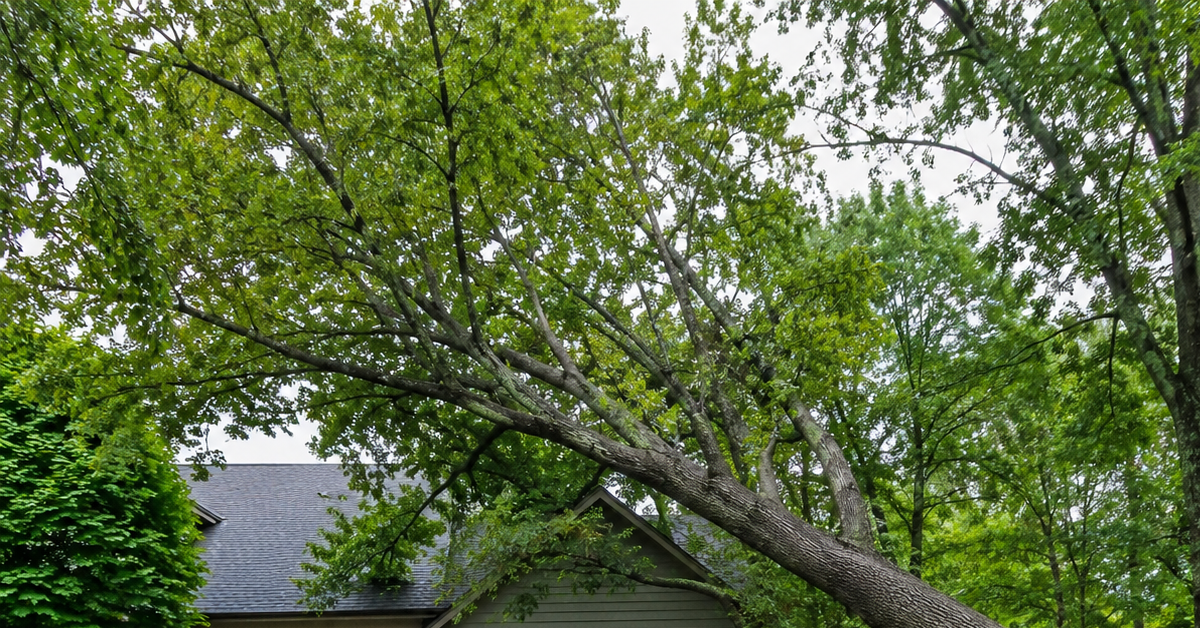
- Wide Shots: Capture the overall scene, showing the tree’s position relative to your property and any damaged structures.
- Close-Ups: Zoom in on specific damage to your home, vehicle, or landscaping. Document broken branches, torn siding, or crushed fences.
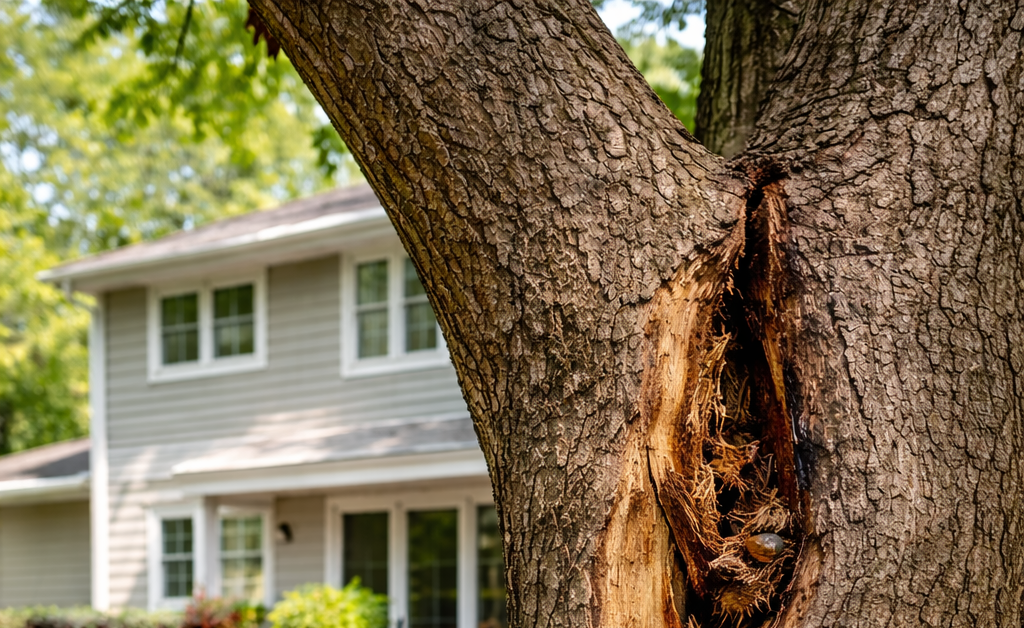
- Tree Condition: Photograph the fallen tree itself. Look for signs of decay, disease, or prior damage if visible. This helps establish if the tree was healthy or compromised.
- Neighboring Properties: If the tree affected a neighbor’s property, document that as well. Note any shared property lines.
- Weather Conditions: Briefly record the weather at the time of the incident, especially if it was a storm.
Understanding Your Insurance Coverage
Your homeowners’ insurance policy is your go-to resource after a tree incident. Understanding your policy is critical. According to the Michigan Department of Insurance and Financial Services (DIFS), standard HO-2 and HO-3 policies cover tree damage from specific perils like wind and lightning, but exclude damage caused by owner negligence.
Covered Perils vs. Exclusions (Negligence)
Most policies cover damage from a tree falling due to ‘covered perils’ like windstorms, lightning, or the weight of snow/ice. However, if the tree was clearly diseased, rotting, or improperly maintained, your insurer might deny the claim, citing negligence. This distinction makes thorough documentation even more important.
The Role of Homeowners Insurance in Tree Damage Claims
Homeowners insurance typically covers the cost of removing a tree if it falls on an insured structure (like your house or garage) or blocks a driveway. Some policies offer limited coverage for landscaping damage. The average cost for settled tree claims can be substantial, around $4,110, highlighting the need for robust documentation. Always contact your insurance provider promptly to understand your specific coverage and the claim process.
The Crucial Role of an Arborist Report
While your photos provide visual proof, an arborist report offers expert, unbiased documentation. This professional assessment is often the most critical piece of evidence for insurance claims and legal situations.
What an Arborist Report Entails
A qualified arborist’s report goes beyond simple observations. It’s a detailed document that identifies the tree, assesses its health, and explains why it failed. This objective analysis is invaluable.
- Tree Identification: Species, size (diameter at breast height – DBH), and exact location.
- Pre-Damage Health: An assessment of the tree’s condition before the incident, noting any pre-existing issues like decay, disease, or structural weaknesses.
- Damage Description: A detailed account of the damage observed post-incident, including the specific part of the tree that failed and the direction of its fall.
- Photographic Evidence: Professional photos taken by the arborist, often with specific markers or measurements.
- Cause Analysis: An expert opinion on the likely cause of the tree’s failure (e.g., strong winds, disease, root rot).
- Recommendations: Suggestions for remedial actions, such as removal, pruning, or treatment.
- Tree Valuation: In some cases, an appraisal of the tree’s monetary value, especially for significant specimen trees.
When to Call a Licensed Arborist
You should call a licensed arborist as soon as possible after ensuring the immediate area is safe. Their timely assessment can capture critical details before cleanup alters the scene. A professional arborist can provide the necessary documentation to support your claim, particularly after major storms in Southeast Michigan.
How an Arborist Report Helps Insurance Claims
- Confirms the tree was not neglected.
- Explains why failure occurred.
- Supports payout amounts.
- Reduces dispute risk.
Navigating Local Regulations: Farmington Hills Tree Ordinance
Beyond insurance, local regulations play a significant role in how you handle a tree incident. In Farmington Hills, specific ordinances govern tree removal and care, making local knowledge essential.
Tree Removal Permits and Replacements
The City of Farmington Hills has a Tree Ordinance designed to protect its urban canopy. For any tree removal involving trees six inches (6″) or more DBH, you must obtain a Tree Removal Permit from the Farmington Hills Planning Office as required by Zoning Chapter 34-5.18. If a tree needs to be removed, especially one indicated on an approved landscape plan, it often requires replacement or a fee in lieu of replacement. Permit requirements can vary based on tree size, location, and zoning. Always confirm with the city before any removal to avoid fines or complications.
Public vs. Private Property Trees
The city manager oversees trees on public streets, parkways, and other publicly owned lands. If a tree on public land falls or is damaged, different procedures apply than for trees on private property. For trees in the street area abutting your land, you need prior written permission from the director of public services to prune, spray, plant, or remove them. Knowing who owns the tree impacting your property is a crucial first step.
Proactive Documentation: Before an Incident Occurs
The best defense against a tree incident is a good offense. Proactive documentation and maintenance demonstrate due diligence, which can significantly benefit you if an incident occurs.
Regular Tree Health Assessments
Regular tree health assessments by a qualified professional can identify potential hazards before they become problems. An arborist can spot signs of disease, decay, or structural weaknesses, allowing you to address them proactively.
Maintaining Tree Service Records
Keeping a record of all tree services performed on your property is smart. This includes pruning, treatments, cabling, or removals. These records show that you’ve been actively maintaining your trees, which can be a strong argument against claims of negligence by an insurance company. Reputable tree service providers can furnish detailed records of all services rendered, ensuring you have the documentation needed.
Costs Associated with Tree Incident Documentation and Cleanup
Dealing with a tree incident involves various costs, from cleanup to professional reports. Understanding these potential expenses helps you plan and manage your recovery effectively.
Estimating Cleanup and Removal Costs
Cleanup and removal costs vary widely based on the tree’s size, location, and the complexity of the job. For an average tree, removal can range from a few hundred to several thousand dollars. Storm damage cleanup, especially for large, fallen trees, often falls into the higher end of this spectrum. Insurance might cover these costs if the incident is due to a covered peril.
Cost of Professional Arborist Reports
As mentioned, a professional arborist report typically costs between $200 and $600 for a standard assessment. While an upfront cost, this investment often saves you money in the long run by providing the definitive proof needed for insurance claims, potentially recovering thousands in damages. It’s a small price for significant peace of mind and financial security.
Common Mistakes to Avoid During Documentation
Even with the best intentions, homeowners can make mistakes during the documentation process that jeopardize their claims. Knowing these pitfalls helps you avoid them.
Neglecting Timely Documentation
Delaying documentation is a common error. The longer you wait, the harder it becomes to accurately capture the scene and its context. Evidence can be lost, altered, or simply less compelling over time. Act fast!
Skipping Professional Assessments
Relying solely on your own photos, while helpful, isn’t always enough. Insurance adjusters and legal professionals often require a licensedarborist’s expert opinion to validate the cause and extent of damage. Skipping this step can weaken your claim significantly.
DIY vs Professional Tree Incident Documentation
When faced with a tree incident, you have choices. Understanding the benefits of professional assistance compared to a DIY approach can save you time, stress, and money.
| Feature | DIY Documentation | Professional Documentation |
| Evidence Quality | Basic photos or videos with subjective notes that may miss critical details | High-resolution photos, measurements, and expert analysis of tree health and failure cause |
| Insurance Claim Strength | Weaker documentation may lead to disputes or reduced payouts | Credible documentation that supports claims and speeds up approvals |
| Local Ordinance Compliance | Higher risk of missing permit requirements or local regulations | Documentation prepared with full awareness of local ordinances and permit requirements |
| Cost | Low immediate cost but higher risk of denied claims or additional expenses | Upfront cost for professional reports that often helps recover insurance coverage |
| Expertise | Limited to homeowner knowledge and available tools | Certified arborist with expertise in tree biology, disease, and risk assessment |
| Peace of Mind | Uncertainty about documentation quality and claim outcome | Clear documentation and professional guidance throughout the process |
Your Partner in Post-Incident Recovery
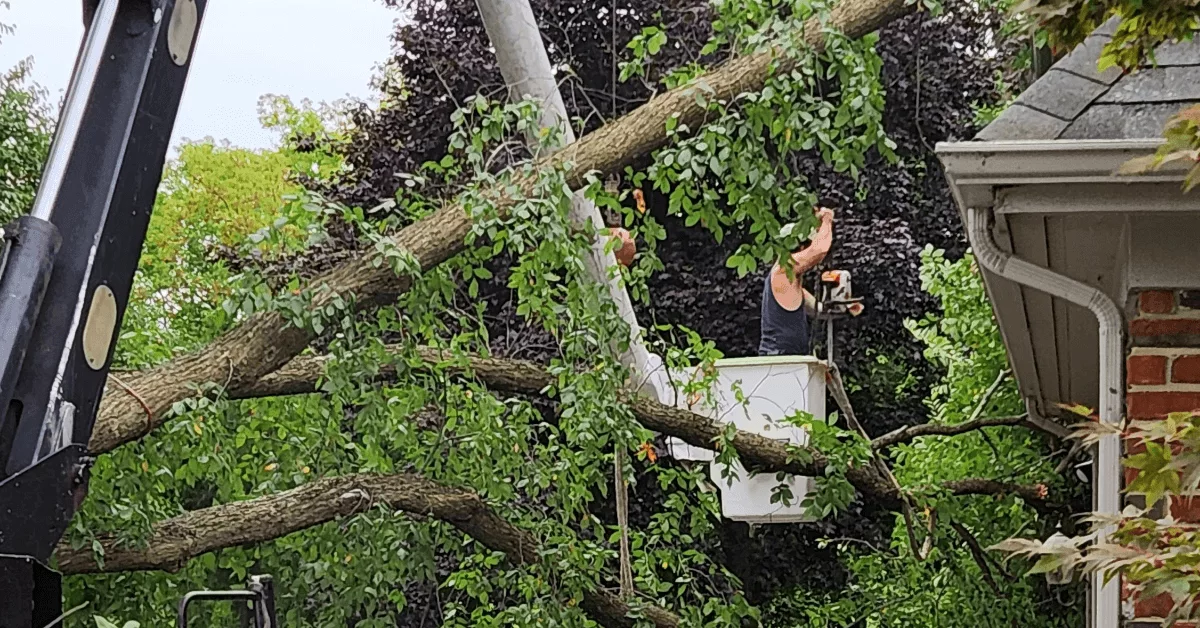
When a tree incident strikes, you need a reliable partner. Clean Cut Tree Experts provides comprehensive storm damage cleanup, tree removal, and expert guidance throughout the documentation process. As a family-owned and operated business serving Farmington Hills and Southeast Michigan, we understand the local nuances, including the Farmington Hills Tree Ordinance. Our licensed and fully insured team ensures safe, efficient, and professional service, helping you navigate the aftermath with confidence. From initial assessment to complete cleanup, we’re here to restore your property and peace of mind.
Frequently Asked Questions
Does homeowners’ insurance cover tree damage?
Homeowners insurance typically covers tree damage if it’s caused by a ‘covered peril’ like wind, lightning, or the weight of ice. However, it usually won’t cover damage from a tree known to be diseased or neglected, as this may be considered homeowner negligence. Always review your specific policy details.
What is an arborist report and why is it important?
An arborist report is a professional assessment by a licensed arborist detailing a tree’s health, structural integrity, and the cause of its failure. It provides objective evidence crucial for substantiating insurance claims, proving damage wasn’t due to neglect, and determining appropriate remedial actions.
Do I need a permit to remove a fallen tree in Farmington Hills?
In Farmington Hills, a Tree Permit is required from the Planning Office for removing any tree six inches or more in diameter at breast height (DBH). Permits are also needed for trees in public areas. Always check with the city before removing a tree to avoid fines or complications.
How much does a professional arborist report cost?
The cost of an arborist report varies based on complexity and location, generally ranging from $200 to $600 for a standard assessment. More detailed reports for legal disputes or extensive property damage can cost more. This investment often pays off in successful insurance claims.
What is proactive tree documentation?
Proactive documentation includes maintaining records of routine tree maintenance, annual health assessments, and any preventative measures taken. This demonstrates due diligence and can significantly strengthen your position if an incident occurs and you need to file an insurance claim.
Can insurance deny a claim due to poor documentation?
Yes. Incomplete or delayed documentation can make it difficult to prove cause or timing, which may lead to claim denial or reduced payouts.
Protect Your Property and Insurance Claim After Tree Damage
Documenting a tree incident correctly protects your property, your claim, and your future liability. Clear photos, professional assessments, and ordinance awareness make the difference between delays and resolution. Contact us today for reliable storm damage cleanup and professional tree care in Southeast Michigan.