August 19, 2026
Key Takeaways
- Small tree defects rarely stay small; most worsen predictably over time if left unaddressed.
- A minor crack, a bit of included bark, or a small area of deadwood are all early warning signs, not cosmetic issues.
- Waiting to address a small defect often turns a low-cost pruning job into an expensive, high-risk removal later.
- Michigan’s freeze-thaw cycles and heavy wet snow accelerate the progression of existing defects.
- Insurance claims for tree damage are far more complicated after the fact than a proactive fix would have been.
- Regular inspection catches defects while they’re still cheap and easy to correct.
It’s easy to walk past a small crack in a tree’s bark, a bit of dead wood near the top of the canopy, or a branch that seems to be growing at an odd angle and decide it’s not worth worrying about. Most of the time, nothing dramatic happens the week after you notice it. That’s exactly the problem. Small tree defects rarely announce themselves as urgent, and the gap between “minor issue” and “major hazard” often closes quietly, over several seasons, until a homeowner is suddenly dealing with an emergency that could have been a routine, inexpensive fix years earlier.
Why Small Defects Don’t Stay Small
Trees are living structures under constant mechanical stress from wind, the weight of their own canopy, snow and ice loads, and, in Michigan, repeated freeze-thaw cycles that expand and contract water trapped in cracks and wounds. A small defect isn’t a static problem sitting quietly in place. It’s a weak point that every subsequent stress event has the chance to worsen, whether that’s a windstorm, a heavy wet snowfall, or simply another year of the tree’s own growth adding weight to an already compromised area.
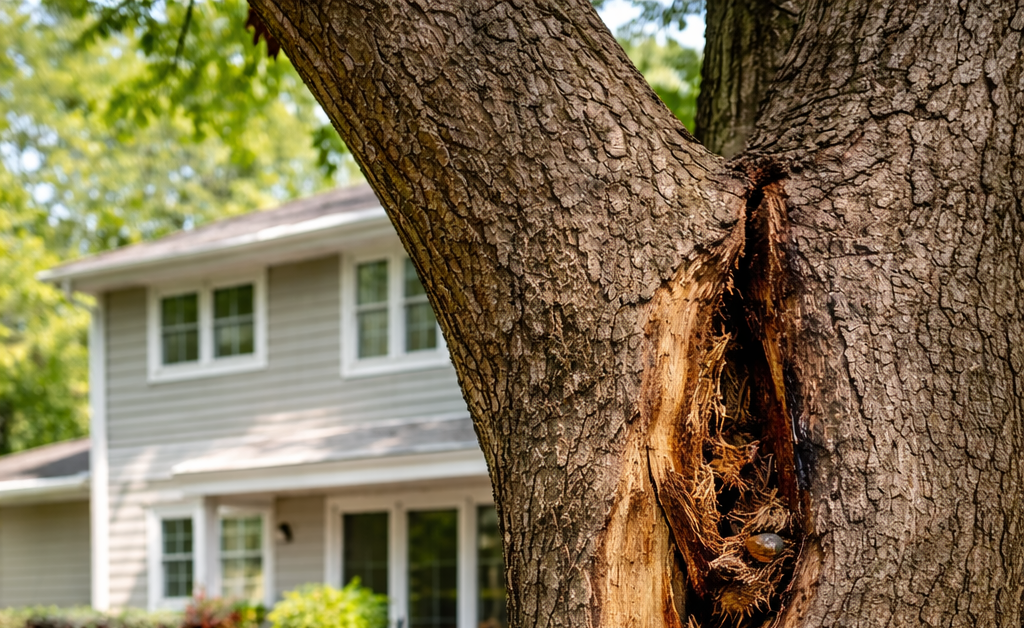
A hairline crack in a branch union, for example, doesn’t heal itself. Each time the wind flexes that branch, the crack has an opportunity to extend slightly further. Each winter, water gets into the crack and expands as it freezes, widening it a little more. What started as a barely visible line can, over two or three years, become a structural failure point capable of dropping a large limb without much additional warning.
The Financial Math of Waiting
There’s a real cost difference between addressing a defect early and waiting until it becomes an emergency, and it’s rarely in the homeowner’s favor to wait.
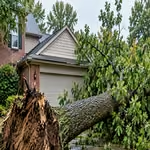
- A small area of dead wood or a minor structural issue caught early is usually a straightforward pruning job, a relatively low-cost, planned visit. The same issue, left unaddressed for a few years, often escalates into one of two more expensive outcomes: emergency storm damage cleanup after the defect finally fails, or a full tree removal once the structural problem has progressed too far for pruning alone to correct.
- Emergency work costs more than planned work almost universally, both because of the urgency involved and because emergency situations often come with additional complications, like a downed limb on a roof, a fence, or a vehicle, that turn a tree problem into a property damage problem. What would have been a modest pruning invoice becomes a much larger bill that includes debris removal, structural repair, and sometimes an insurance claim process that adds its own delays and complications.
Common Small Defects That Escalate
A few specific issues show up repeatedly in our work as problems that started small and grew into something much more serious by the time we were finally called out.
- Included bark at branch unions is one of the most common: This occurs when two branches grow so closely together that bark gets pinched between them rather than forming a normal, strong branch union. From the ground, it can look like a fairly minor cosmetic quirk. Structurally, included bark creates one of the weakest points a tree can have, since the two branches are never truly fused together the way a healthy union would be. Over time, especially under wind or ice load, this type of union is significantly more prone to splitting, sometimes catastrophically
- Minor deadwood in the upper canopy is another defect that’s easy to dismiss. A small dead branch doesn’t seem urgent, especially if it’s high up and easy to ignore from the ground. But dead wood doesn’t get stronger with time, it gets weaker, more brittle, and more likely to break free during wind or heavy snow, at which point it becomes a falling hazard rather than a simple pruning task.
- Small cracks or splits at the base of the trunk or at major limb attachments often start as barely visible lines. Left unaddressed, particularly in a climate with Michigan’s freeze-thaw cycles, these cracks tend to widen gradually until they represent a genuine structural failure risk.
- Early signs of girdling roots, where a root has begun wrapping around the base of the trunk or around other roots, are another defect that’s easy to miss because the effects happen slowly, underground, over years. By the time a girdling root has visibly restricted a tree’s growth or caused a lean, the fix is far more complex than it would have been if caught in the tree’s early years.
Why Michigan’s Climate Accelerates the Timeline
Southeast Michigan’s weather patterns are particularly unforgiving toward existing tree defects.
- The freeze-thaw cycle that repeats through much of the fall, winter, and early spring is especially effective at widening existing cracks, as water seeps into small openings and expands roughly 9% in volume when it freezes, exerting real mechanical force on already weakened wood.
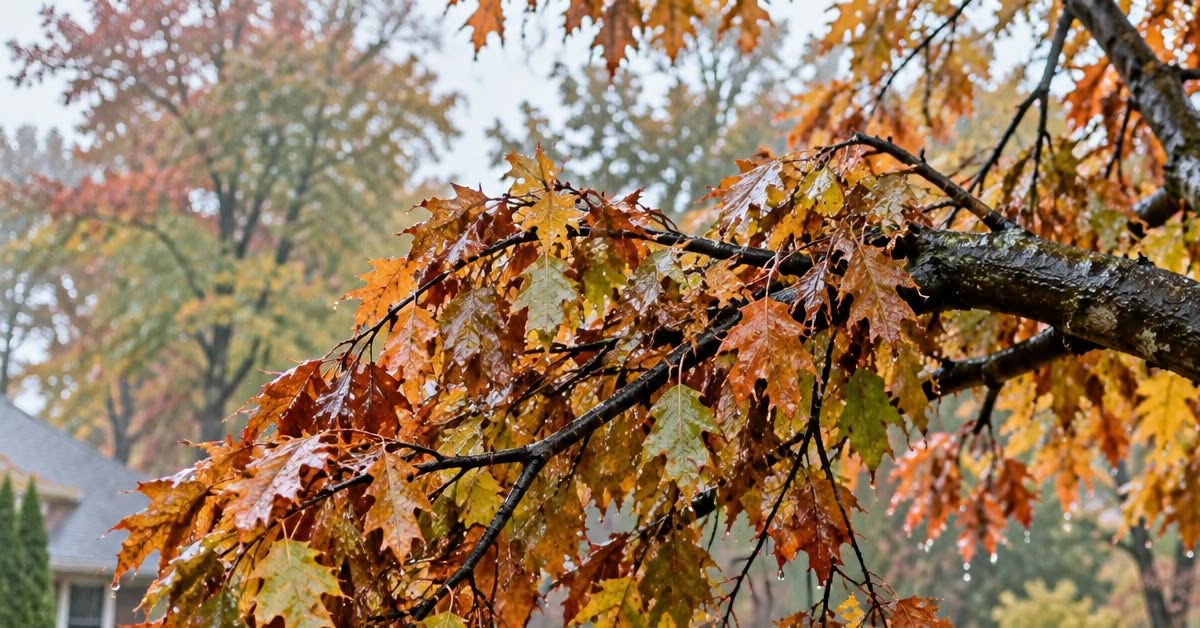
- Heavy, wet snow, common in the region, adds substantial weight to a canopy already carrying structural weak points, and that added weight is often exactly what pushes a marginal branch union past its breaking point. This means the same small defect that might progress relatively slowly in a milder, drier climate can worsen considerably faster here, which makes early attention even more valuable for homeowners in our service area.
Insurance Complications After the Fact
When a neglected tree defect finally fails and causes property damage, homeowners are often surprised by how complicated the aftermath can be.
- Insurance companies may ask about the tree’s prior condition, and documentation, or the lack of it, matters.
- A tree with a known, unaddressed defect that eventually causes damage can sometimes raise questions about whether the homeowner exercised reasonable care, which can complicate a claim in ways that simply wouldn’t have been an issue if the defect had been professionally corrected beforehand.
- Proactive tree care sidesteps this entire category of headache. A pruning job completed before a defect causes damage is simply a maintenance expense. The same defect addressed only after it causes damage becomes an insurance claim, a repair project, and often a considerably larger bill.
What Early Intervention Actually Looks Like
Addressing a small defect early is often far less dramatic than homeowners expect. In many cases, it’s a single pruning visit to remove a weak or dead limb before it becomes a hazard, or cabling and bracing to reinforce a structurally weak branch union without needing to remove the branch entirely. These interventions are quick, relatively affordable, and dramatically reduce the odds of an expensive emergency down the line.
Since 2010, Clean Cut Tree Experts has helped homeowners throughout Farmington Hills, Howell, and Southeast Michigan catch small tree defects before they become expensive, dangerous problems. As a company with more than 25 years of hands-on experience, Clean Cut Tree Experts has watched the same pattern play out enough times to know that early attention almost always costs less, in both dollars and risk, than waiting. Our team looks past the obvious issues during every visit, checking for the kind of small, easy-to-miss defects, included bark, early cracking, minor deadwood, that tend to escalate if left alone.
Clean Cut Tree Experts is fully licensed and insured, and for covered insurance work, we bill your provider directly. We also offer a senior discount and pay-it-forward savings for teachers, first responders, and military families. If something on your property has been nagging at you, a small crack, an odd-looking branch union, a bit of deadwood you’ve been meaning to deal with, it’s worth having us take a look before Michigan’s next freeze-thaw cycle or heavy snowfall makes the decision more urgent than it needs to be. Call Clean Cut Tree Experts at (734) 290-3370 for a free estimate.
Frequently Asked Questions About Small Tree Defects by Homeowners in Michigan
How do I know if a small crack in a tree is serious?
Any crack, even a small one, is worth having assessed, particularly if it’s widening, located at a major branch union, or found on a mature tree. A professional can determine whether it’s a minor cosmetic issue or an early structural concern.
Can cabling or bracing fix a weak branch union?
In many cases, yes. Cabling and bracing can reinforce a structurally weak union, like one with included bark, reducing the risk of failure without requiring the branch to be removed entirely.
Why does Michigan weather make small defects worse faster?
Freeze-thaw cycles push water into small cracks, where it expands as it freezes and gradually widens the crack. Heavy, wet snow adds significant weight to an already weakened structure, both of which accelerate the progression of existing defects.
Is it cheaper to fix a tree defect now or wait until it’s a bigger problem?
It is almost always cheaper to address it early. Emergency tree work, especially work involving property damage, typically costs significantly more than a planned, proactive pruning visit.
Do Clean Cut Tree Experts check for minor defects during a routine visit?
Yes, our crews look beyond the obvious request during every visit, since catching a small defect early is one of the most valuable things a professional inspection can offer.
Summary Checklist: Managing Small Tree Defects
| Step | Key Consideration | Action Item |
| Identify the Defect | Look for cracks, included bark, deadwood | Note location and whether it appears to be worsening |
| Assess Urgency | Consider tree size and defect location | Prioritize defects near structures, driveways, or walkways |
| Consider Climate Impact | Account for Michigan freeze-thaw stress | Address defects before winter whenever possible |
| Weigh Repair Options | Compare pruning versus cabling and bracing | Get a professional recommendation based on the specific defect |
| Document Condition | Keep records for insurance purposes | Photograph and note any professional assessments |
| Schedule Follow-Up | Track defects over time | Reassess previously noted issues during future visits |
Final Advice
Small tree defects are often early indicators of larger structural problems rather than isolated cosmetic concerns. Addressing issues such as minor cracks, included bark, deadwood, or early signs of decay while they are still manageable can significantly reduce the risk of property damage, personal injury, and costly emergency tree work. In Michigan, where freeze-thaw cycles, high winds, and heavy snow place additional stress on trees, even minor defects can worsen more quickly than many homeowners expect.
- Scheduling periodic inspections, particularly for mature trees or those located near homes, driveways, and walkways, allows potential hazards to be identified before they become serious.
- Early intervention, whether through selective pruning, cabling, or other corrective measures, is typically more effective and far less expensive than dealing with a tree failure after the fact.
- Proactive tree care not only protects your property but also helps preserve the long-term health, stability, and value of your landscape. Call Clean Cut Tree Experts at (734) 290-3370 to book a free assessment of any tree defect on your property.