May 10, 2026
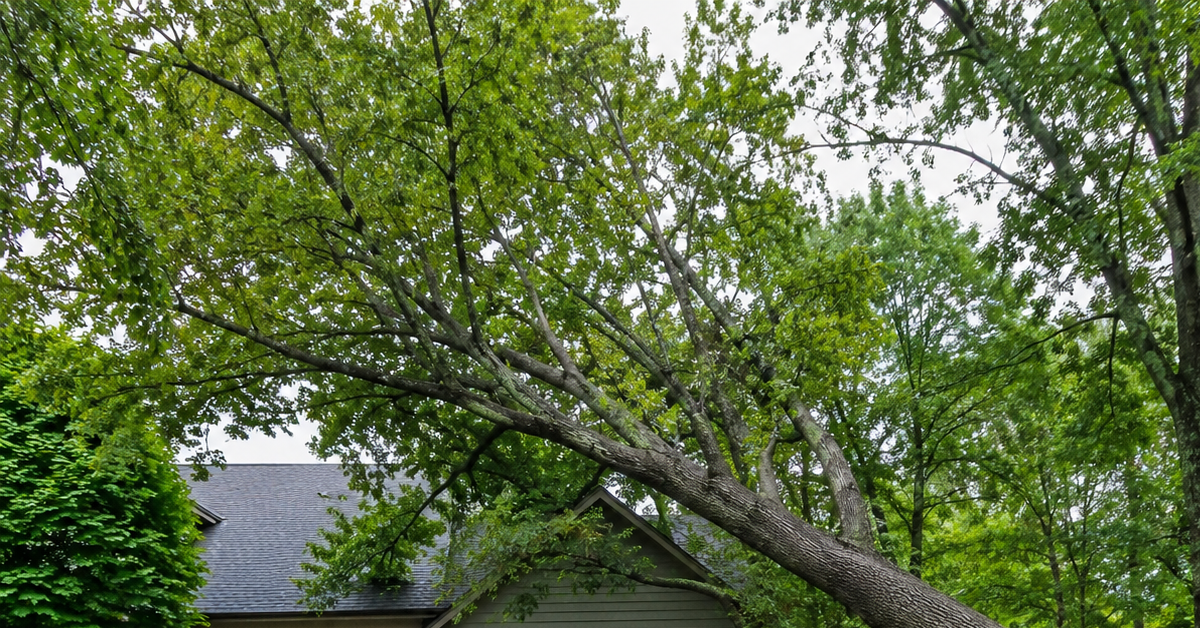
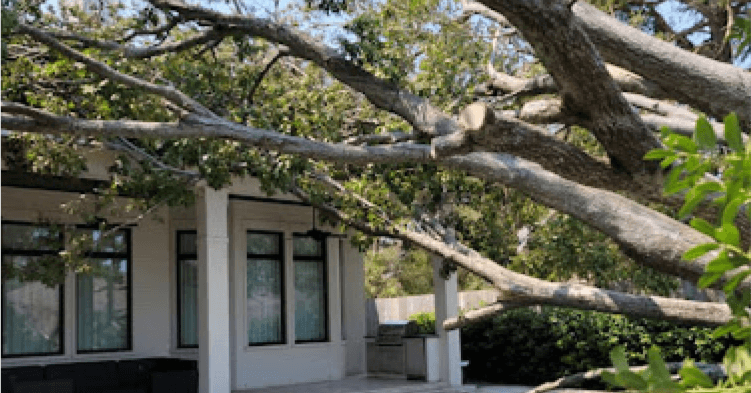
Storms in Michigan can be brutal. One night of high winds, heavy ice, or lightning can leave your yard looking like a disaster zone. The next morning, you step outside to find broken limbs, leaning trunks, and debris scattered across the lawn. The question hits fast: should you prune the storm-damaged tree and try to save it, or remove it completely?
That decision matters more than most people realize. A storm-damaged tree can pose serious safety risks, even when it looks stable. It can also affect property value, insurance claims, and long-term landscape health. This guide explains how to tell whether a tree can recover after storm damage, when removal is the safer choice, and how to handle the cleanup responsibly.
The First Step: Assess the Extent of Damage
Before deciding between pruning and removal, take a close look at what the storm actually did. Start from a safe distance. If the tree is near power lines or hanging over a structure, call a professional immediately. Do not touch or inspect it up close.
If the area is safe, look for these key signs:
- Broken or hanging limbs
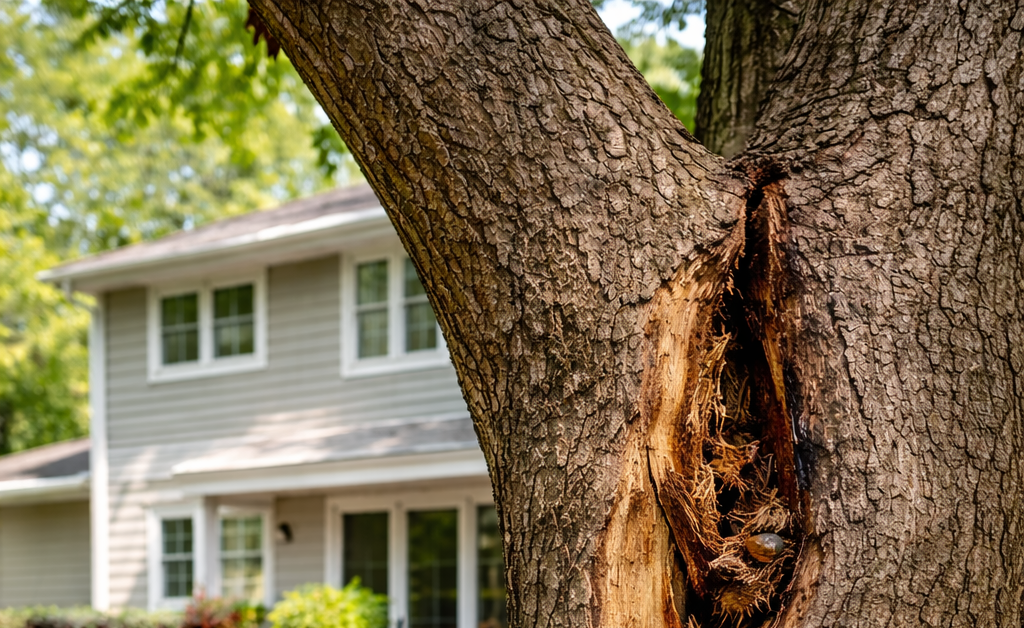
- Cracked or split trunk
- Uprooted or leaning base
- Torn bark exposing inner wood
- Damage to more than 25% of the canopy
Trees can survive some level of damage, but as the University of Missouri Extension notes, once the main trunk or root system is compromised, recovery becomes unlikely. Resisting the urge to cut down the tree immediately is important; careful assessment often reveals that trees can be saved with proper pruning.
When Pruning Can Save the Tree
If the damage is limited, pruning can help the tree heal and return to full strength over time. You may be able to prune instead of removing when:
- The trunk is intact and straight
- Only small to medium-sized branches are broken
- The canopy is less than 25% damaged
- There are no deep vertical cracks
- The root system feels solid in the ground
A skilled tree professional can make precise cuts that encourage regrowth and reduce stress. At Clean Cut Tree Experts, we often see homeowners assume a tree is beyond saving when, in reality, careful pruning can restore its health and balance.
What Proper Pruning Involves
Pruning storm-damaged trees is not just about cutting away broken limbs. It’s about helping the tree heal without opening it up to disease or decay. A professional tree care team will:
- Make clean cuts just outside the branch collar to allow natural healing
- Remove torn or jagged branches that can attract pests
- Thin, heavy, or unbalanced sections to restore structure
- Avoid cutting too much at once, which can shock the tree
This type of pruning, sometimes called restorative or corrective pruning, can stabilize a tree for decades if done correctly.
When Removal Is the Only Safe Option
Some damage is simply too severe. In those cases, pruning would only delay the inevitable and leave you with a serious safety risk. A tree should be removed if:
- The trunk has a vertical split or multiple cracks
- The main stem or structural limbs are broken
- More than half the canopy is lost
- The tree is leaning significantly
- Roots are lifting or have pulled out of the soil
- There is visible decay or fungus at the base
Even if a damaged tree looks stable, internal fractures can make it unpredictable. A small breeze or another storm could bring it down.
At Clean Cut Tree Experts, our professionals inspect the internal wood structure and root anchoring before making a recommendation. If a tree poses any chance of falling on a home, road, or power line, removal is the responsible choice.
Common Types of Storm Damage in Michigan
Our weather in Southeast Michigan can throw almost anything at your trees. Each type of storm damage leaves different clues about the tree’s health and stability.
- Wind Damage
High winds twist and snap branches, especially in fast-growing species like silver maples or willows. - Ice Damage
Ice buildup adds heavy weight to limbs, causing bending or sudden breaks. Pines, spruces, and ornamentals often suffer the most. - Lightning Strikes
A lightning strike can explode bark and boil moisture inside the trunk. Even if the tree stays upright, internal wood may be burned and weakened. - Soil Saturation and Uprooting
After long rains, the soil loosens and roots lose grip. Large trees can tilt or uproot entirely, leaving unstable mounds of earth.
Each of these conditions requires a different professional response. In many cases, Clean Cut Tree Experts can save the tree with pruning and bracing, but when stability is gone, removal protects your property and family.
The Cost Factor: Pruning vs. Removal
Cost plays a role in the decision, too. Generally, pruning a storm-damaged tree costs less than full removal, but the price depends on:
- Tree height and spread
- Location and access for equipment
- Proximity to buildings or power lines
- Level of risk and labor required
Minor pruning can range from a few hundred dollars, while large removals involving cranes or emergency response can exceed a thousand. But paying for removal now is often cheaper than repairing roof or fence damage later.
Clean Cut Tree Experts offers transparent estimates before any work begins, so you know exactly what you’re paying for.
Why You Should Avoid DIY Tree Work
After a storm, it can be tempting to grab a saw and start cutting. That’s one of the biggest mistakes homeowners make. Storm-damaged trees are unpredictable. Tension in branches can cause them to snap without warning. Roots and soil can shift underfoot. Hidden power lines may be entangled in the debris.
Our crews at Clean Cut Tree Experts use professional-grade gear, harnesses, cranes, and safety systems to handle this kind of work safely. Each member is trained in hazard recognition and carries full insurance coverage. That means you stay protected from injury and liability while your property is restored properly.
Preventing Future Storm Damage
Healthy trees are less likely to fail during storms. Preventive care is your best defense. Regular trimming strengthens structure, improves airflow, and reduces weight on heavy limbs.
Here are simple steps to reduce future damage:
- Schedule professional pruning every 2 to 3 years for mature trees
- Remove deadwood and weak branches before winter
- Avoid topping, which makes trees unstable
- Water deeply during dry spells to maintain strong roots
- Have large trees inspected yearly for internal decay
Clean Cut Tree Experts offers year-round maintenance programs to keep trees healthy, balanced, and storm-ready.
Signs a Tree Is Still Dangerous After a Storm
Even after cleanup, some trees remain hazardous. Look for these signs in the days or weeks after a storm:
- Cracks forming in the trunk or large limbs
- Fungal growth or sawdust near the base
- Sudden leaning or soil lifting
- Bark falling off or new wounds appearing
- Sections of the canopy are dying back
A follow-up inspection can detect internal damage that wasn’t visible immediately. Our team uses specialized tools to check for decay or instability inside the trunk.
How Storm Cleanup Services Work
When you call Clean Cut Tree Experts for storm cleanup, here’s what to expect:
- Emergency Response: Our crew arrives quickly, day or night, to secure the site and remove hazards.
- Assessment: A licensed arborist evaluates the tree’s structure and safety.
- Recommendation: We discuss whether pruning, cabling, or removal is best.
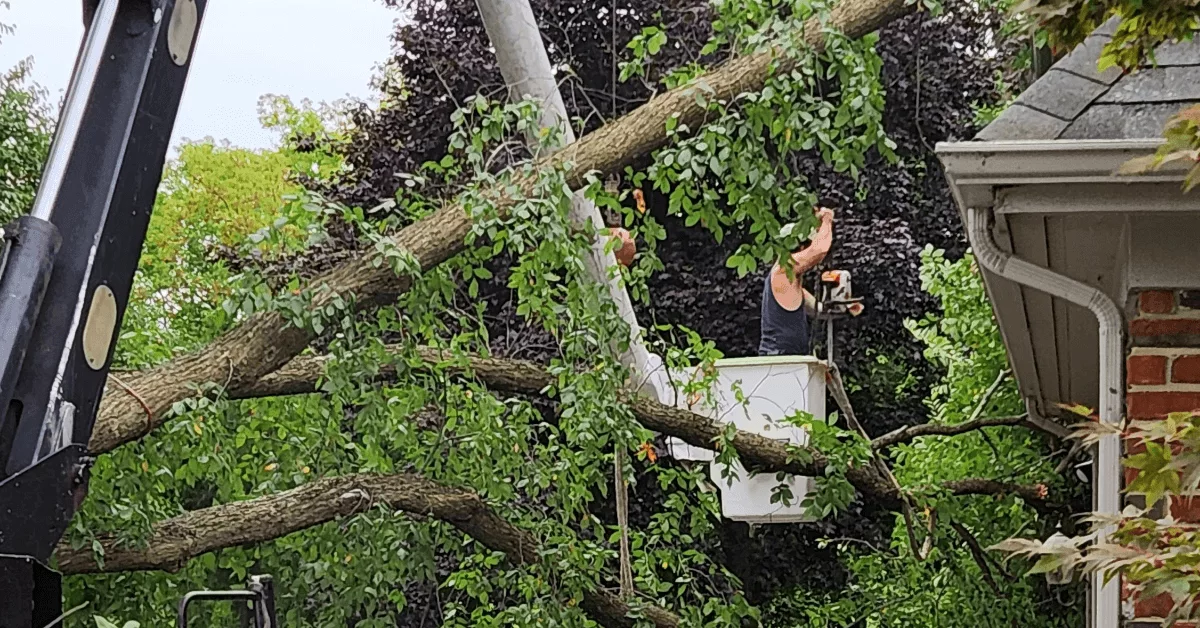
- Action: Using cranes, bucket trucks, and advanced rigging, we remove or trim safely.
- Cleanup: All branches, logs, and debris are cleared and recycled responsibly.
- Prevention Plan: We suggest future trimming or inspections to reduce risk.
We serve homeowners and property managers across Farmington Hills, Birmingham, Bloomfield Hills, Novi, Livonia, Franklin, and West Bloomfield.
Michigan Tree Species Most Prone to Storm Damage
Some species simply handle Michigan storms better than others. Knowing which trees are more vulnerable can help you plan.
High-Risk Trees:
- Silver Maple: Fast-growing and brittle, branches snap easily
- Bradford Pear: Beautiful but structurally weak at branch junctions
- Willow: Flexible but often splits under ice weight
- Pine and Spruce: Shallow roots increase the risk of uprooting
- Ash is often weakened by past pest infestations
Lower-Risk Trees:
- Oak: Strong wood and deep roots
- Sugar Maple: Dense and resilient
- Ginkgo: Flexible branches that withstand high winds
- American Elm (disease-resistant varieties): Adapted to urban stress
Clean Cut Tree Experts tailors pruning and maintenance for each species based on its unique weaknesses.
Can a Tree Heal Itself Naturally?
Trees have a remarkable ability to compartmentalize wounds, a process explained by the CODIT model (Compartmentalization of Decay in Trees) developed by plant pathologist Alex Shigo. Trees form chemical and physical ‘walls’ around damaged tissue to slow or prevent the spread of decay. However, this natural healing only works when the wound is clean and not infected. Large, torn branches or exposed heartwood often invite rot and insects, which slow healing.
Proper pruning after storm damage gives the tree the best chance to recover naturally. The key is to make cuts that protect the branch collar and avoid leaving open stubs. Done correctly, new tissue forms and seals the wound within months.
Insurance and Tree Removal After Storms
According to the Insurance Information Institute, homeowners’ insurance typically covers tree removal if the tree caused property damage during the storm. If it falls on your house, fence, garage, or driveway, your policy usually pays for both removal and repair, generally up to $500 to $1,000 per tree, depending on your insurer.
Clean Cut Tree Experts works directly with insurance providers to document damage, provide estimates, and handle emergency removals quickly. Even if the fallen tree didn’t damage a structure, we can still assist with debris removal and disposal at a fair rate.
Why Homeowners Across Metro Detroit Trust Clean Cut Tree Experts
We’ve been helping Michigan homeowners recover from storm damage for over a decade. People choose us because we bring expertise, reliability, and genuine care to every job.
Here’s what sets us apart:
- 24/7 emergency storm response
- Crane-assisted removals for large or hazardous trees
- Full licensing and insurance for complete peace of mind
- Clean, thorough job sites after every service
- Local knowledge of Michigan tree species and weather patterns
We understand how stressful storm damage can be. Our goal is to restore safety quickly and leave your property looking cared for, not chaotic.
What to Do Right After a Storm
If a major storm just passed through, take these steps before making any decisions:
- Stay away from fallen trees near power lines.
- Don’t try to move large limbs or debris on your own.
- Take photos of the damage for your insurance company.
- Check for signs of leaning trees or soil upheaval.
- Call a trusted local professional to assess safety.
Clean Cut Tree Experts offers 24-hour emergency response across Farmington Hills, Birmingham, Bloomfield Hills, Novi, Livonia, Franklin, and surrounding communities.
Call us at (734) 290-3370 for immediate help or to schedule an inspection.
Save It or Cut It Down? How to Make the Right Call After Storm Damage
Here’s a simple rule of thumb.
If your storm-damaged tree has a healthy trunk, solid roots, and less than a quarter of the canopy lost, pruning is likely the right choice.
If it has deep cracks, a split trunk, heavy leaning, or root damage, removal is the safest path.
A professional inspection removes the guesswork. Clean Cut Tree Experts can tell you in minutes whether the tree can be saved or needs to come down. Acting quickly prevents injury, property damage, and future headaches.
Frequently Asked Questions About Storm-Damaged Trees
How do I know if my storm-damaged tree can be saved?
You can usually save a tree if the trunk is intact, the roots are stable, and less than 25% of the branches are broken. If the trunk is split, leaning, or the canopy is severely damaged, it’s safer to remove it. A Professional arborist can confirm the tree’s structural health.
When should a storm-damaged tree be removed?
A tree should be removed if it’s leaning, cracked through the trunk, uprooted, or has major limb loss. These signs indicate the structure is no longer safe. Even a tree that looks stable can collapse without warning, so a professional inspection is essential.
Is pruning cheaper than removing a damaged tree?
Yes. Pruning generally costs less than removal since it requires less labor and equipment. However, if the tree poses any danger to your property or power lines, removal is the more responsible and cost-effective choice in the long run.
Can a tree recover naturally after storm damage?
Minor damage can heal on its own if cuts are clean and the tree is healthy. But deep wounds, torn branches, or bark loss need professional pruning to prevent decay. Without help, the damaged areas can attract pests and weaken the tree over time.
Does homeowners’ insurance cover storm-related tree removal?
Most insurance policies cover tree removal if it causes property damage, such as hitting your home, garage, or fence. If it falls without damaging anything, coverage depends on your policy. Clean Cut Tree Experts can assist with documentation for insurance claims.
Who provides emergency tree service in Farmington Hills, MI?
Clean Cut Tree Experts offers 24/7 emergency tree removal and storm damage cleanup in Farmington Hills, Birmingham, Bloomfield Hills, Novi, Livonia, and nearby Michigan cities. Call (734) 290-3370 for immediate help.
Ready for Expert Help?
If you’re facing storm damage in Farmington Hills or anywhere in Metro Detroit, call the professionals at Clean Cut Tree Experts. We provide:
- Emergency tree removal
- Precision pruning and trimming
- Storm damage cleanup
- Stump grinding and removal
- Crane-assisted service for large trees
We’re based in Farmington Hills and also serve Birmingham, Bloomfield Hills, Franklin, Novi, Royal Oak, Southfield, West Bloomfield, Detroit, Livonia, Northville, and Plymouth.
Clean Cut Tree Experts
📍 30660 W 8 Mile Rd, Farmington Hills, MI 48336
📞 (734) 290-3370
Your trees deserve expert care. Let us help you restore safety, beauty, and peace of mind after the storm.