April 14, 2026
Key Takeaways:
- Overwatering and shallow watering are both harmful to trees during droughts.
- Trees in Michigan droughts require deep, infrequent watering to develop strong roots.
- Fertilizing during drought or watering at the wrong time can worsen stress.
- Mulching and soil care improve moisture retention and reduce evaporation.
- Proper irrigation timing and technique prevent long-term tree damage.
Trees in Michigan provide shade, beauty, and environmental benefits, but drought stress can quickly turn them into a maintenance headache. Michigan drought tree care refers to the methods and practices used to keep trees healthy when rainfall is insufficient, soil dries quickly, or temperatures spike. During a drought, trees face water deficits that impact root growth, nutrient uptake, and overall stability. Many homeowners unknowingly worsen the problem with common watering mistakes.
Overwatering: When Too Much Is a Problem
Contrary to popular belief, too much water can be as dangerous as too little. Overwatering during drought may seem counterintuitive, but it can suffocate roots and increase susceptibility to fungal diseases. Michigan soils, which range from sandy near the lakes to clay inland, react differently:
Effects of Overwatering
- Saturated soils prevent roots from accessing oxygen.
- Excess water encourages shallow root growth, making trees less stable.
- Overwatering can wash away vital nutrients, weakening tree health.
How to Avoid It
- Check soil moisture before watering; the top 2–3 inches should be dry.
- Use a deep-soak approach rather than frequent light sprinkling.
- Adjust watering based on rainfall, temperature, and tree size.
Shallow or Frequent Watering
Many homeowners think sprinkling for a few minutes each morning is sufficient. Shallow watering promotes surface roots, leaving trees vulnerable in Michigan’s drought-prone summers.
Why Shallow Roots Are Risky
- Surface roots dry out faster, especially in heat waves.
- Trees become prone to toppling in strong winds or saturated soil.
- Drought-stressed trees are more likely to develop cracks or branch failures.
Best Practices for Deep Watering
- Water slowly and deeply at the drip line, where feeder roots are concentrated.
- Apply 10 gallons per inch of trunk diameter once or twice per week.
- Use soaker hoses or drip irrigation rather than sprinklers for maximum efficiency.
Fertilizing During Drought
Fertilizing during drought pulls water from the roots and forces the tree to expend energy processing the fertilizer, which is an additional stressor. It may also push growth that the tree will then have to maintain. – University of Florida IFAS Extension
Fertilizer Risks
- Encourages leaf and shoot growth that requires more water.
- Salt buildup damages roots and soil structure.
- May exacerbate drought stress rather than relieve it.
Safe Fertilizing Practices
- Delay fertilization until normal rainfall resumes or supplemental irrigation is stable.
- Use slow-release fertilizers in early spring before drought conditions peak.
- Focus on soil health through organic mulch instead of chemical nutrients during drought.
Watering at the Wrong Time
Timing matters more than many homeowners realize. Watering during the heat of the day can cause evaporation, sun scald, or even leaf burn.
Optimal Watering Times
- Early morning or late evening to minimize evaporation.
- Avoid watering in direct midday sun.
- Deep-soak once or twice per week, rather than daily shallow watering.
Mulching and Soil Care
Proper mulch placement is a simple yet often overlooked solution to drought stress.
Benefits of Mulching
- Reduces soil temperature by up to 15°F. Research on soil health and moisture retention practices shows that mulch helps regulate soil temperature and protect root systems.
- Slows evaporation and retains moisture.
- Protects roots and promotes long-term health.
Mulching Guidelines
- Apply 3 inches of organic mulch in a 3-foot radius around the trunk.
- Keep mulch 3 inches away from the bark to avoid rot (“no mulch volcanoes”).
- Replenish mulch each year to maintain soil benefits.
First-Hand Field Insight
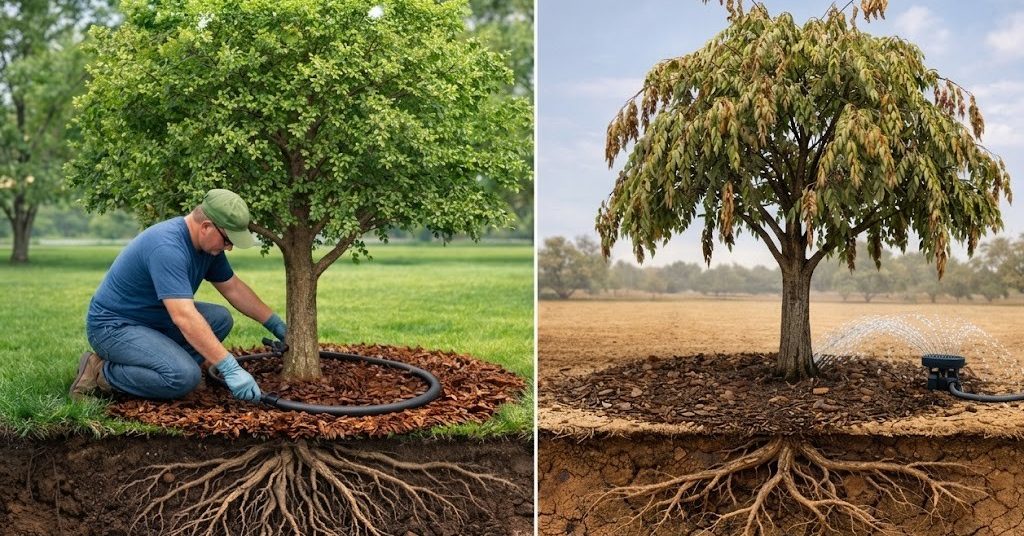
Last summer, our team visited a Lansing property with two identical Red Maples. One was watered lightly for 10 minutes each morning, while the other received a weekly deep soak with mulch around the base. By mid-July, the lightly watered tree showed wilting leaves and exposed shallow roots, while the deeply watered, mulched tree remained healthy and stable.
This aligns with established tree watering guidelines during drought conditions, which emphasize deep, infrequent watering to support stronger root systems and improve drought resistance.
Lesson: Proper technique matters more than watering frequency. Deep, infrequent watering paired with mulch saves trees during prolonged droughts.
When to Call a Professional
If drought stress leads to branch dieback, cracking, or leaning, professional tree services can help prevent emergencies. Services may include:
- Health assessments for drought-stressed trees.
- Pruning to reduce canopy weight and prevent limb failure.
- Supplemental irrigation plans for established trees.
- Emergency removal if the tree is too damaged to save.
Local Michigan companies, like Clean Cut Tree Experts, offer assessments, drought management, and safe tree care services.
Frequently Asked Questions
1. How much water does a Michigan tree need during drought?
A general rule is about 10 gallons of water per inch of trunk diameter per week. Adjust based on soil type, temperature, and tree species. Sandy soil needs more frequent watering, while clay retains moisture longer.
2. Can I save a tree that is already wilting?
Yes, in many cases. Start deep watering at the drip line and apply mulch around the base. Check buds or scratch the bark slightly. If you see green tissue, the tree is still alive and can recover.
3. Is using a sprinkler enough during a drought?
No. Sprinklers provide shallow watering, which encourages weak surface roots. Trees need slow, deep soaking so moisture reaches the root zone.
4. Should I fertilize during a drought?
No. Fertilizing forces new growth that the tree cannot support under stress. This can worsen damage and reduce recovery chances.
5. Can mulch really help during dry conditions?
Yes. Mulch helps retain soil moisture, lowers soil temperature, and supports deeper root growth. Apply 2 to 4 inches and keep it a few inches away from the trunk.
6. How often should I inspect drought-stressed trees?
Inspect weekly during dry periods. Look for signs like leaf scorch, wilting, early leaf drop, cracks, or branch dieback.
7. When is professional help necessary?
Call a professional if you see severe wilting, trunk cracks, leaning, or large dead branches. These are signs that the tree may become hazardous and needs expert evaluation.
Conclusion
Michigan trees require thoughtful care during drought. Avoid shallow watering, overwatering, and fertilizing at the wrong time. According to Michigan State University Extension, deep, infrequent watering helps roots grow stronger and more drought-resistant. Proper timing, mulching, and soil care also play a key role in retaining moisture and reducing stress, as supported by guidance from the USDA Forest Service. Early attention reduces long-term risk, protects property, and prevents costly emergency interventions.
Reviewed by Clean Cut Tree Experts
This safety analysis has been reviewed by the team at Clean Cut Tree Experts to ensure accuracy based on real-world tree care experience and site conditions.