July 22, 2026
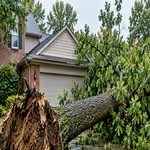
Most homeowners do not notice an overgrown tree until something forces the issue: a branch scrapes the roof every time the wind picks up, or a storm drops a limb in the yard. By that point, the tree has usually been sending signals for a year or more.
Howell’s older neighborhoods carry decades of growth. Mature oaks and maples along streets near downtown and around the Howell Nature Center put on new wood every year, and most homeowners never prune to keep pace with it. The five signs below are the ones we see most often on calls across Livingston County, and each one tells you something specific about what the tree needs.
1. Branches are touching your roof, gutters, or siding
This is the easiest sign to spot and the one most homeowners wait too long to act on.
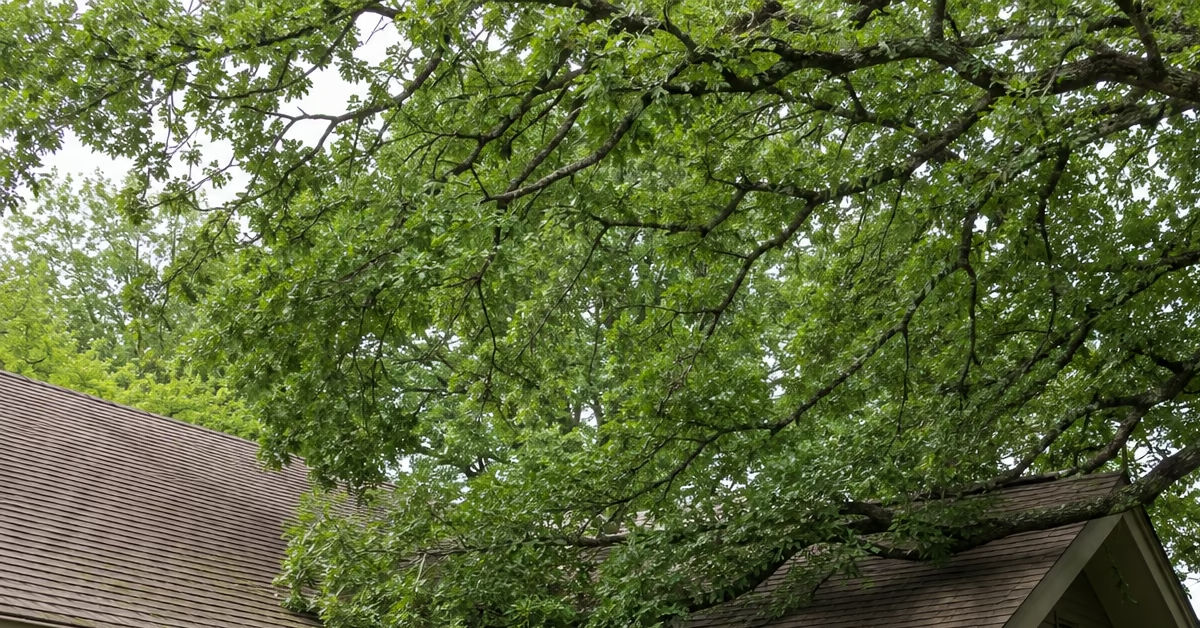
When a branch rests on a roof, every gust of wind grinds bark and twigs against the shingles. Over a season or two, that wear can lift shingle edges and create small gaps where water gets in. Branches against siding hold moisture against the wall, which is exactly the damp, shaded condition that invites rot and pests.
There is also a more direct cost: any limb resting on your roof is a limb that can fall on your roof. Healthy trees do not need to touch a structure to thrive. Clearance pruning pulls the canopy back a safe distance and stops the slow wear before it turns into a repair bill.
2. The canopy is thick enough to block out summer sunlight
Stand under the tree at midday. If the ground underneath stays shaded and damp even on a sunny afternoon, the canopy has gotten denser than it should be.
A dense, overgrown canopy is not just a shade problem. It is a wind problem. University of Florida’s Extension research on hurricane damage found that older trees with denser canopies took significantly more storm damage than trees with thinner, more open canopies, because a fuller canopy catches more wind and puts more strain on the branch structure. Howell sees its share of summer thunderstorms and winter ice loads, and a tree that has not been thinned in years is carrying more wind resistance than it was built for.
Crown thinning removes select interior branches so air and light move through the tree again. It is not the same as cutting the tree shorter. The goal is a canopy that lets wind pass through instead of catching it.
3. You can see branches crossing or rubbing against each other
Look up into the canopy on a still day. If you see two branches crossing, especially ones that touch when the wind moves them, that is a structural problem the tree cannot fix on its own.
Rubbing branches wear through bark at the contact point. Bark is the tree’s outer defense, and once it is gone, the wood underneath is exposed to insects and decay fungi the same way a cut on skin is exposed to infection. Left alone, that wound point often becomes the spot where a branch eventually fails, usually during the next big wind or ice event.
This is a sign that shows up most in trees that have never been structurally pruned when young. Without early shaping, branches grow toward each other and create these conflict points years later. Removing the weaker of the two branches now is a much smaller job than dealing with a split limb after a storm.
4. Dead or broken branches are hanging in the canopy
Dead wood looks different from live wood even from the ground. No leaves in season, bark that has gone gray or is peeling, or a branch that hangs at an odd angle instead of following the natural line of the canopy.
Arborists call a broken branch still caught in the tree a hanger, and it is one of the more dangerous things to have overhead. A hanger can hold for months and then drop without warning, often during the exact conditions that put most people outside: a calm day after a storm, when everyone is out cleaning up.
In Howell, dead ash from emerald ash borer is a common source of this sign specifically, since the wood goes brittle fast once the tree dies. Maple and oak limbs killed by storm damage or disease show the same hazard. Any dead limb above a driveway, patio, or walkway should come out before it falls on its own schedule instead of yours.
5. Branches are crowding your driveway, walkway, or sightlines
This sign is less about tree health and more about how much the tree has outgrown the space it was planted in.
Low branches that force you to duck on the front walk, limbs that scrape a vehicle pulling into the driveway, or growth that blocks the view at a corner or mailbox all point to a canopy that has not been raised in years. Crown raising lifts the lower branches to a clean height, usually well above head and vehicle clearance, without changing the overall shape or health of the tree.
This is also a liability issue worth taking seriously if you run a business or rent out a property. A branch low enough to hit a delivery truck or block a stop sign is a problem that gets more expensive to ignore the longer it sits.
What We Commonly See in the Field
Most of the overgrown trees we get called out for in Howell fall into one of two patterns. The first is a mature oak or maple on an older lot that has simply never been pruned, where every one of the five signs above shows up at once. The second is a younger tree that was planted too close to the house or driveway and has now grown into the space it was never given room for.
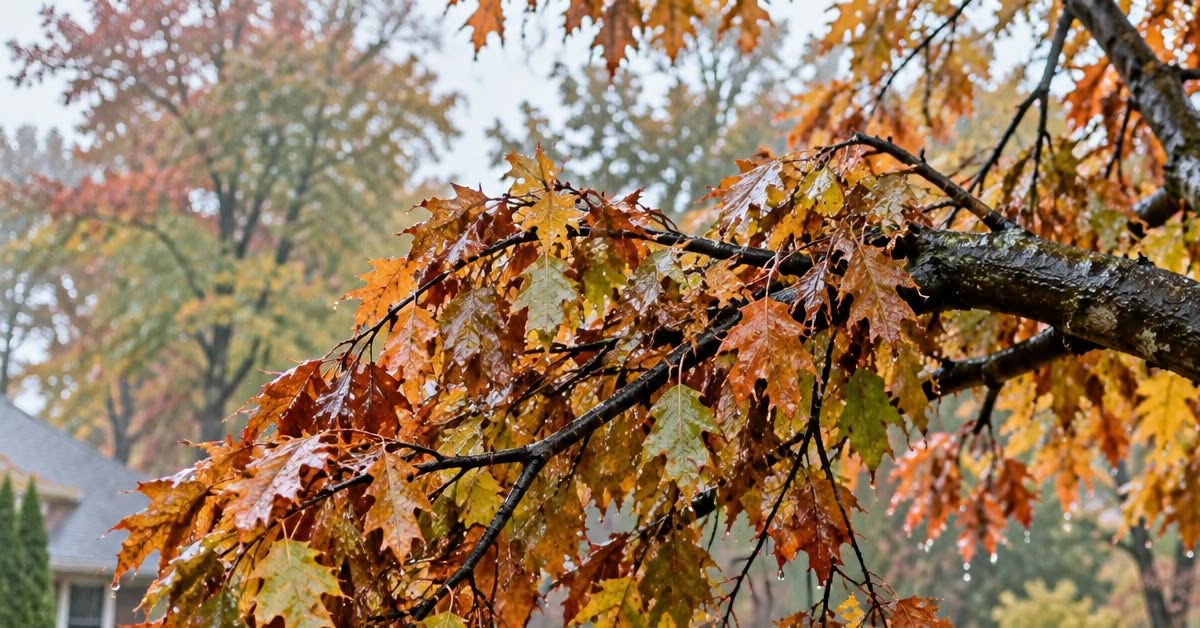
The timing question comes up on almost every oak job. Homeowners often want overgrown oak branches cut back in spring, right when the new growth makes the problem most visible, which is unfortunately also the start of Michigan’s high-risk window for oak wilt, roughly April 15 to July 15. Pruning or wounding an oak during that stretch gives the disease’s beetle carriers a fresh wound to land on. We push non-urgent oak trimming into late summer, fall, or winter for this reason, even when the homeowner is ready to schedule it sooner.
What to Do Now, and What to Avoid
If you recognize two or more of the signs above, here is how to approach it:
- Get the canopy looked at before the next storm season, not after a branch has already come down. Deadwood and crossing branches only get more expensive to deal with the longer they sit.
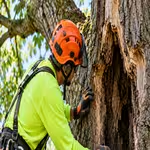
- Do not climb up to handle it yourself. Most of the calls we get for injuries involve a homeowner with a ladder and a chainsaw going after a branch that was higher, heavier, or more awkward to reach than it looked from the ground.
- Do not top the tree if the goal is to control size. Cutting main branches back to stubs forces weak, fast regrowth that is more likely to fail later, not less. The International Society of Arboriculture’s research on topping documents this clearly, and it is one of the most common mistakes we see corrected on a property after a previous trim.
- Call a professional once a branch is over your head or over anything you care about. A free assessment will tell you whether the tree needs a light trim, a full structural prune, or removal, before you spend money guessing.
Clean Cut Tree Experts prunes to ANSI A300 standards, is licensed and fully insured, and is a family-owned, locally-owned company with 90+ years of combined crew experience. Crews use ground protection mats on every job, so getting the canopy back under control does not cost you your lawn or driveway in the process.
Frequently Asked Questions About Overgrown Trees in Howell, MI
How do I know if my tree is overgrown or just healthy and full?
A healthy, full canopy still lets some light through and has clear separation between major branches. If the canopy blocks out midday sun entirely, branches are rubbing against each other, or anything is touching your house, that is overgrown, not just full.
How often should mature trees be trimmed in Howell?
Most mature shade trees do well with a structural trim every three to five years. Young trees benefit from lighter shaping more often, every one to two years, while the branch structure is still easy to correct. Dead or hazardous limbs should come out as soon as you notice them, regardless of schedule.
Can I trim an overgrown tree myself?
Light work on small branches within easy reach from the ground is reasonable for most homeowners. Anything that requires a ladder, a chainsaw overhead, or work near a power line should go to a professional. The risk is not just to the tree.
Is it bad to wait a year or two before trimming an overgrown tree?
It is not dangerous to wait, but it is rarely free. Deadwood gets more brittle, crossing branches wear deeper wounds, and a tree that has gone several years without structural pruning usually needs more aggressive, more expensive work to correct than it would have a year or two earlier.
Will trimming an overgrown oak in spring hurt the tree?
It can do more than hurt the tree. Pruning oaks between roughly April 15 and July 15 raises the risk of oak wilt, a disease that can kill the tree and spread to nearby oaks through connected roots. If an overgrown oak needs work and it is spring, the safest move is to schedule it for late summer or winter instead.
How much does it cost to trim an overgrown tree in Howell?
Cost depends on the tree’s size, how overgrown it is, and how much access the crew has. A young tree needing light shaping costs far less than a mature oak that has gone a decade without a trim and needs a full structural prune. A free on-site estimate is the only way to get an accurate number for your specific tree.
Get Your Howell Trees Looked At
If you spotted one or more of these signs in your own yard, the next step is a free assessment, not a guess. Clean Cut Tree Experts handles tree trimming in Howell, MI across Livingston County, from light shaping to full structural pruning on mature canopies.
Call (734) 290-3370 to schedule your free estimate. If a branch is already down or actively hazardous, see our 24/7 emergency tree service in Howell instead.