April 15, 2026
Key Takeaways
- Trees can recover from severe drought stress, but recovery depends on timing, species, and root damage.
- While damage can appear in months, research from Purdue Extension confirms a “biological lag effect” where the full impact on canopy density and branch extension may not be fully realized for 2 to 3 years after the drought ends.
- Leaf loss does not always mean a tree is dead.
- Proper watering, mulching, and patience are critical to recovery.
- The USDA Forest Service recommends professional removal if more than 50% of the crown is lost or if the trunk has a crack extending deeply into the wood, as drought-weakened wood is significantly more prone to “sudden failure” during subsequent storms.
What Is Severe Drought Stress in Trees?
Severe drought stress occurs when a tree experiences prolonged water shortage that disrupts its ability to transport nutrients, regulate temperature, and maintain structural strength. During drought, trees close their stomata to conserve moisture, reducing photosynthesis and energy production. If this condition persists, internal systems begin to fail.
In regions like Michigan, drought stress is especially damaging because trees are adapted to consistent seasonal moisture. When rainfall disappears, and temperatures rise, the tree’s root system may no longer supply enough water to support the canopy, leading to a decline that is not always immediate.
Can Trees Actually Recover from Severe Drought Stress?
Yes, trees can recover from severe drought stress, but recovery is not guaranteed. It depends on how long the drought lasted, how badly the root system was damaged, and whether secondary issues like pests or decay have taken hold.
A tree that lost leaves but retained living buds and flexible twigs still has a chance. A tree with dead roots, brittle branches, or internal decay may not.
Signs a Tree Can Recover
- Buds are green and pliable when gently scratched
- Branches bend instead of snapping
- Some leaf regrowth appears the following season
- No major trunk cracks or root heaving
Signs Recovery Is Unlikely
- More than 50% of the canopy fails to leaf out
- Twigs snap cleanly and are dry inside
- Large dead limbs continue to fall
- Fungal growth or boring insects appear
Why Drought Damage Often Shows Up Late
One of the most confusing aspects of drought stress is delayed decline. Trees may appear to survive the drought year, only to deteriorate months later.
This happens because trees rely on stored energy reserves. During drought, those reserves are depleted to survive. When the next growing season arrives, the tree may not have enough energy left to produce leaves, defend against pests, or heal wounds.
Secondary Killers After Drought
Drought rarely kills trees outright. Instead, it weakens them, allowing:
- Borers like the two-lined chestnut borer
- Fungal pathogens such as Hypoxylon canker
- Root rot organisms in stressed soil
According to university extension research, drought-stressed trees emit chemical signals that attract insects from long distances.
What Homeowners Should Do Immediately After Drought
If your area experienced severe drought, action matters more than optimism.
Step-by-Step Recovery Support
- Purdue and MSU both recommend the 5+5 Rule: Apply 5 gallons of water plus 5 gallons for every diameter inch of the tree trunk, distributed evenly under the dripline.
- Apply 2–4 inches of mulch, keeping it off the bark
- Avoid fertilizing until the tree shows recovery
- Do not heavily prune stressed trees
- Monitor canopy regrowth over the next growing season
Deep, infrequent watering encourages roots to recover downward instead of staying near the surface.
When Drought Stress Becomes a Safety Issue
Not all drought-damaged trees are just health concerns. Some become structural hazards.
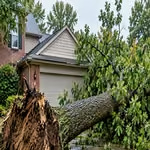
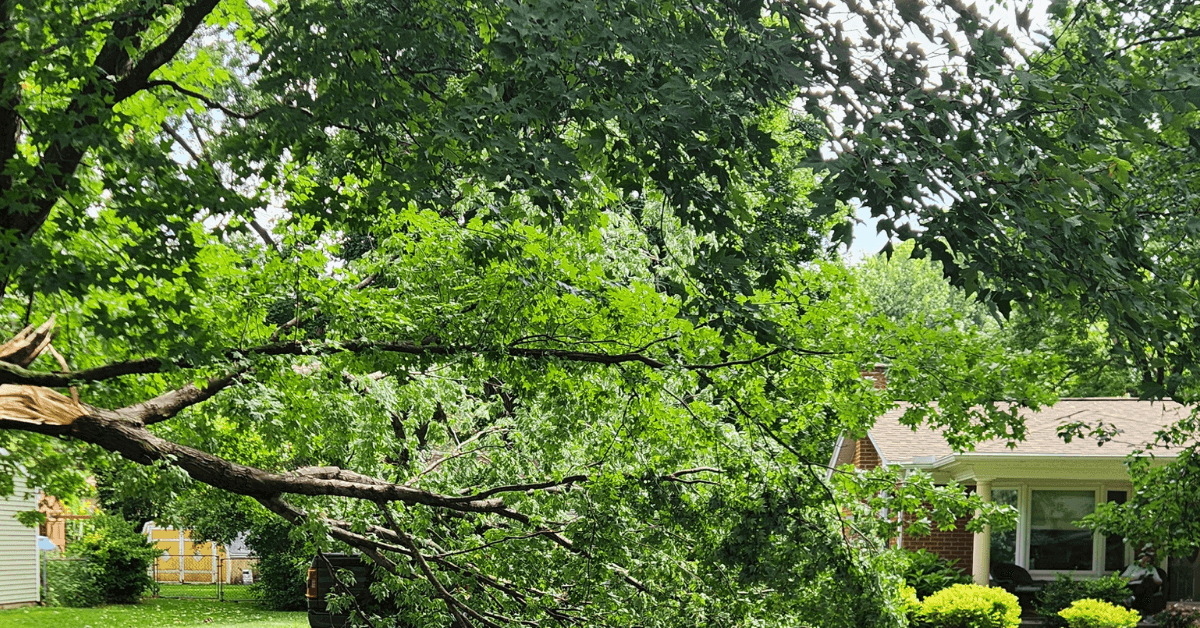
Drought weakens wood fibers and root anchoring. When storms return after dry periods, trees may fail suddenly due to compromised strength.
Red Flags Near Homes
- Large dead limbs over roofs or driveways
- Leaning trees after soil rehydrates
- Cracks are forming in the trunk
- Root plate lifting or soil cracking
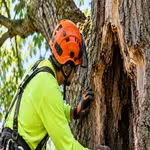
In these cases, a professional tree service company should assess the risk before storms or winter snow loads arrive.
Real-World Field Insight
After the 2022 Michigan drought, we inspected a mature White Oak in Kalamazoo that appeared “fine” through the summer. The following spring, only half the canopy leafed out. Sounding tests revealed internal decay that had accelerated due to drought stress.
The homeowner waited another season, hoping for recovery. During a windstorm, a major limb failed and damaged the roof. Earlier intervention could have reduced risk with selective pruning or proactive removal.
Lesson: Waiting too long after drought often turns a manageable decline into emergency removal.
Can Proper Care Reverse Severe Drought Damage?
Proper care can support recovery, but it cannot undo structural damage that has already occurred.
What Care Helps
- Consistent deep watering
- Mulching to stabilize soil moisture
- Patience over multiple growing seasons
- Monitoring for pests and disease
What Care Cannot Fix
- Dead structural roots
- Internal trunk rot
- Severe canopy dieback
- Major cracks or splits
At that stage, it is important to contact a professional tree removal firm to prevent property damage.
Frequently Asked Questions
Can a tree come back after losing all its leaves during drought?
Yes, leaf loss is a survival response. If buds remain alive, regrowth may occur the next season.
How long does drought recovery take for trees?
Recovery can take 1–3 years depending on severity, species, and care.
Should I prune dead branches right after a drought?
Light pruning is okay, but heavy pruning can further stress the tree.
Is watering every day better during drought recovery?
No. Daily shallow watering weakens roots. Deep watering once or twice per week is better.
Can drought kill roots without killing the tree immediately?
Yes. Root death often leads to delayed failure months later.
When should I call an arborist after a drought?
If more than 30% of the canopy fails to recover, or the tree is near a structure.
Does mulch really make a difference?
Yes. Mulch reduces evaporation, cools soil, and supports root recovery.
Are some trees more drought-resistant than others?
Yes. Oaks and hickories recover better than species like birch, willow, and maple.
Conclusion
Trees can recover from severe drought stress, but recovery is not automatic or guaranteed. The key factors are early intervention, proper watering, patience, and knowing when damage has crossed from a health issue to a safety risk. Watching how a tree responds over the next growing season is critical.
If drought-stressed trees are near your home, proactive evaluation is always safer than waiting for the next storm.