April 21, 2026
If your ash tree in Farmington Hills is thinning at the top or showing bark cracks, it might be under attack from the Emerald Ash Borer (EAB), an invasive beetle that has killed tens of millions of ash trees across Michigan. Once this pest moves in, the damage spreads fast.
Ash trees are part of the charm of Farmington Hills. They bring shade, beauty, and value to local neighborhoods. But when EAB infestation begins, even a healthy-looking ash tree can turn hazardous in just a few seasons.
This guide explains how to spot early signs of Emerald Ash Borer, when treatment can still save a tree, and when removal is the safest choice for your property and nearby trees.
Understanding the Emerald Ash Borer: Michigan’s Most Destructive Tree Pest
The Emerald Ash Borer, often called EAB, is a small metallic-green beetle native to Asia. It first appeared in Michigan around 2002 and spread rapidly. The adult beetle itself does not do much harm, but its larvae cause severe damage. They tunnel under the bark and feed on the tissue that carries nutrients and water inside the tree.
Once that inner layer is destroyed, the tree cannot move food and moisture from roots to leaves. Over time, the upper branches die, leaves thin out, and the entire tree starts to fail. According to the USDA Animal and Plant Health Inspection Service, the EAB is now considered the most destructive forest insect to ever invade North America.
The pest has been responsible for the death of tens of millions of ash trees across Michigan. Farmington Hills was hit early, and the effects can still be seen in neighborhoods, parks, and wooded areas.
How to Identify Emerald Ash Borer Damage on Ash Trees
Early detection is key to saving an ash tree, but the symptoms can be subtle at first. As the infestation grows, the signs become clearer.
1. Thinning at the Top of the Tree: The upper canopy is the first area to decline. You will notice fewer leaves, smaller growth, and dead branches forming near the top.
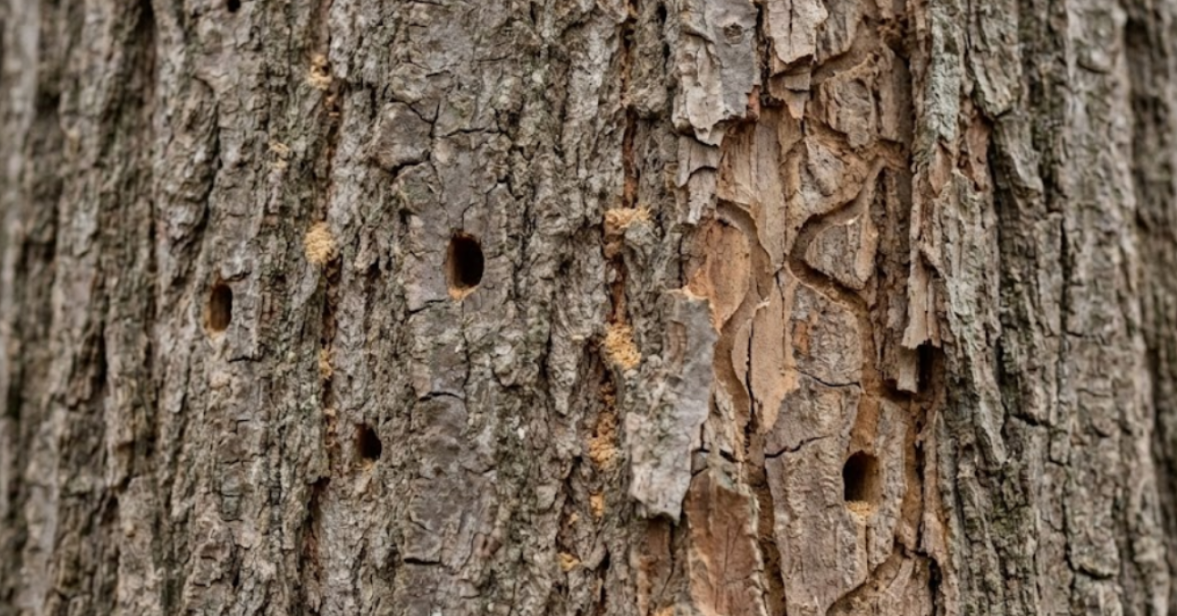
2. Small D-Shaped Exit Holes: Adult beetles leave tiny D-shaped exit holes when they emerge from the bark. These holes are about one-eighth of an inch wide and flat on one side.
3. Bark Splitting and Winding Tunnels: If bark begins to split or flake, you may see winding, S-shaped tunnels underneath. These galleries are made by larvae feeding inside the tree.
4. Shoots or New Growth on the Trunk: The tree may try to survive by growing new shoots or small branches from the base or along the trunk. This is a stress reaction and a sign that the canopy is no longer functioning properly.
5. Increased Woodpecker Activity: Woodpeckers feed on EAB larvae. If you see fresh holes or bark missing in patches, that usually means the tree is already heavily infested.
If you spot two or more of these symptoms, the infestation has likely begun, and you should act quickly.
How Quickly Emerald Ash Borer Can Kill an Ash Tree
Once the larvae enter the tree, they can kill it within two to four years. Smaller trees may die even faster. The longer the larvae feed under the bark, the less chance the tree has to recover.
Even large, mature ash trees cannot survive without intervention. Once about half of the canopy is lost, it is usually too late for treatment.
Can Ash Trees Be Saved from Emerald Ash Borer?
Yes, but only in the early stages of infestation. Treatment involves applying insecticides that target the larvae before they cause too much damage. The product is absorbed through the roots or trunk and kills the insects as they feed.
Main Treatment Methods
- Trunk Injection: Insecticide is injected directly into the base of the tree. This method delivers the most accurate dose and is commonly used for moderate infestations.
- Soil Drench or Soil Injection: The insecticide is applied to the soil around the roots, where it is taken up by the tree. This is effective for small or medium-sized trees with healthy roots.
- Basal Bark Spray: A spray is applied to the lower bark. It can be used for younger trees or as preventive protection.
When Treatment Works Best
- The canopy still has 70 percent or more of its leaves.
- There are a few exit holes or bark cracks.
- The tree shows no major structural weakness or rot.
Healthy ash trees can be protected with preventive treatments every one to two years before an infestation begins. For more detailed technical specifications on chemical options, the Michigan State University Extension provides a comprehensive insecticide guide for homeowners and professionals.
Typical Cost of Treatment
Most tree services in Farmington Hills charge between 8 and 12 dollars per inch of trunk diameter. For example, a 14-inch tree may cost around 120 to 170 dollars for one round of treatment.
Signs It’s Too Late to Treat an Infested Ash Tree
If the tree has already lost more than half its canopy or shows significant bark loss, treatment will not help. The damage beneath the bark is already too severe.
Common signs that it is too late include:
- Deep cracks or missing bark sections
- Large dead branches
- Bark splitting down the trunk
- Fungal growth or visible rot near the roots
At that stage, removal is the only practical option.
Why Ash Tree Removal Is Often the Safest Option
Removing an infested or dead ash tree is not only about appearance. It is about safety and preventing further spread. Once the tree dies, its wood dries out quickly and becomes brittle. Dead ash trees can fall without warning, even in calm weather.
Reasons to Remove the Tree
- Prevents Emerald Ash Borer from spreading to nearby trees
- Protects your home, car, and power lines from falling limbs
- Reduces liability if the tree drops branches onto a neighbor’s property
- Allows you to replant with a resistant tree species
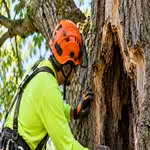
Professional tree removal teams use cranes, ropes, and protective equipment to remove infested trees safely. Because ash trees decay fast, it is important to remove them before they become too unstable to climb or cut safely.
Average Cost of Removal
Removal costs in Farmington Hills generally range from 500 to 1,500 dollars, depending on the tree’s size, condition, and location. Trees close to houses or power lines require more careful removal, which increases cost.
Why Delaying Ash Tree Removal Can Be Dangerous
Many homeowners hope a declining tree might recover. Unfortunately, once an ash tree shows major decline, it rarely comes back. Waiting too long can create serious risks.
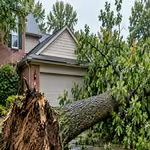
Dead ash trees become brittle and unpredictable. Branches can snap or entire trunks can break, especially during Michigan storms. A falling branch can easily damage roofs, vehicles, or nearby trees.
Delaying removal also gives Emerald Ash Borer more time to spread to other trees in your area. Acting early prevents larger problems and helps keep your property safe.
Best Trees to Plant After Removing an Ash Tree in Farmington Hills
If you remove an ash tree, consider replacing it with a species that is resistant to Emerald Ash Borer and suited to Michigan’s weather.
Recommended Replacement Trees
- Red Maple
- Tulip Tree
- Northern Red Oak
- Honeylocust
- Serviceberry
- Hackberry
- Kentucky Coffeetree
These trees provide good shade, adapt well to local soil, and resist most pests common in Southeast Michigan. You can find a complete list of recommended alternatives on the Michigan Department of Natural Resources website to ensure your new landscape remains resilient.
How to Prevent Future Emerald Ash Borer Infestations in Farmington Hills
Even after removal, prevention is essential. Stopping the spread of Emerald Ash Borer depends on how infested wood is handled and how healthy trees are maintained.
1. Do Not Move Firewood: EAB larvae can hide under the bark of logs. Moving firewood spreads them to new areas. Always buy and burn firewood locally.
2. Dispose of Ash Wood Properly: Farmington Hills requires that infested wood be chipped or burned within the local area. Never transport it out of the city or to other parts of Michigan.
3. Schedule Regular Tree Checks: Inspect your trees every year. Many professional tree care companies offer health evaluations that can identify early signs of infestation.
4. Apply Preventive Treatment: If you still have healthy ash trees, preventive trunk injections every one or two years will keep them protected.
What Farmington Hills Homeowners Should Know
Farmington Hills experienced heavy losses during the first wave of Emerald Ash Borer infestations. Today, residents are encouraged to monitor their remaining ash trees closely.
City officials recommend removing infested trees quickly and replanting with a mix of species to prevent future widespread damage. If you are unsure about your tree’s condition, a local tree service can help confirm whether it is still healthy or should be removed.
What to Do if You Suspect Emerald Ash Borer Damage
1. Inspect the Tree Carefully
Look for D-shaped exit holes, canopy thinning, bark cracks, and new growth on the trunk.
2. Document What You See
Take photos of the symptoms for records and possible insurance or city reporting.
3. Call a Local Tree Removal Service
Get a professional opinion on whether the tree can still be treated or needs to be removed.
4. Act Quickly
If the infestation is early, treatment can still work. If not, plan for safe removal before it becomes hazardous.
Why Professional Tree Services Are the Right Choice
Removing or treating an infested tree requires skill, proper tools, and safety measures. Trying to handle it yourself can be dangerous. Professional teams bring:
- Equipment for safe removal of large or unstable trees
- Experience in identifying Emerald Ash Borer symptoms accurately
- Knowledge of city disposal rules and permit requirements
- Access to effective insecticide treatments
Working with professionals ensures the job is done safely and correctly, protecting both your property and nearby trees.
Key Points for Farmington Hills Homeowners
- Treat healthy ash trees early to prevent infestation.
- Remove any trees that have lost half or more of their canopy.
- Dispose of ash wood locally and never transport it.
- Replace dead trees with diverse, pest-resistant species.
- Take quick action if you see warning signs of EAB damage.
Frequently Asked Questions
Can an ash tree survive Emerald Ash Borer without treatment?
No. Once Emerald Ash Borer larvae infest a tree, they cut off its ability to move water and nutrients. The tree will steadily decline and die within a few years. Preventive or early insecticide treatments are the only reliable way to stop the damage. Without them, recovery is not possible.
How often should I treat a healthy ash tree?
Most treatments last one to two years, depending on the method used. In areas like Farmington Hills, where EAB is active, trees should be treated regularly. Skipping a cycle leaves them vulnerable to reinfestation. Consistent protection gives the best long-term results.
How can I tell if treatment will work?
Treatment is worth trying if 70 percent or more of the canopy is still alive and the bark is mostly intact. Once branches die back or bark splits deeply, it’s usually too late. Early detection makes all the difference in saving the tree.
How soon should a dead ash tree be removed?
As soon as possible. Dead ash trees dry out fast and become brittle, which makes them dangerous. They can snap or fall even in light winds. The longer you wait, the harder and more expensive the removal becomes.
Can I use the wood from a removed ash tree?
Yes, but keep it on your property. Moving ash wood spreads Emerald Ash Borer larvae to new areas. You can burn it or have it chipped, but never transport it out of the city. Proper disposal keeps nearby trees safe.
Trusted Emerald Ash Borer Removal in Farmington Hills
When it comes to Emerald Ash Borer, time matters. Treat early if your ash tree still has a healthy canopy. Remove it quickly if the damage has gone too far. Waiting too long risks safety hazards, costly storm damage, and the loss of other trees on your property.
If you suspect Emerald Ash Borer damage, schedule an inspection with Clean Cut Tree Experts. Our professional team provides fast, safe ash tree removal, insect treatment, stump grinding, and storm cleanup throughout Farmington Hills and surrounding cities, including Novi, Livonia, Birmingham, Bloomfield Hills, Southfield, and West Bloomfield.
We’re fully insured, locally trusted, and experienced in handling hazardous and infested trees with precision.
Call (734) 290-3370 for a free estimate or to get expert help protecting your property from Emerald Ash Borer.