May 6, 2026
Key Takeaways:
- Overhanging branches trap moisture and debris, leading to premature shingle rot and moss growth.
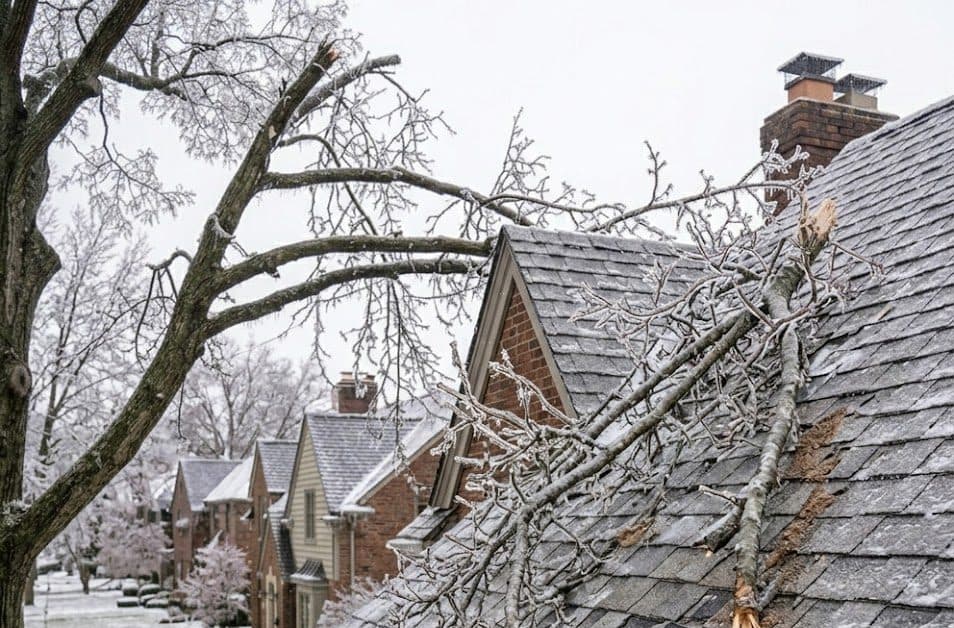
- Michigan’s heavy snow and ice loads can cause limb failure, resulting in catastrophic structural roof damage.
- A minimum clearance of 10 feet between the roofline and tree canopy is recommended for optimal safety.
- Squirrels and raccoons use overhanging limbs as bridges to access attics and cause infestations.
- Professional seasonal inspections are the most effective way to prevent costly emergency repairs.
Living in Michigan means embracing a landscape defined by towering oaks, maples, and pines. While these giants provide shade and undeniable curb appeal, they present a silent threat to one of your home’s most expensive components: the roof. In the Great Lakes State, we don’t just deal with standard rain; we face heavy ice storms, wet spring snows, and high-velocity wind gusts that can turn a beautiful overhanging limb into a battering ram. Protecting your roof from overhanging branches isn’t just about aesthetics; it is a fundamental part of Michigan homeownership and preventative maintenance.
The Hidden Mechanics of Roof Damage
Most homeowners only worry about trees when a massive limb actually breaks and falls. However, the most common forms of damage are much more subtle and happen over the years of neglect.
Mechanical Abrasion
As the wind blows, even small branches can act like sandpaper. They constantly scrape against the protective granules on your asphalt shingles. Once these granules are rubbed away, the underlying fiberglass mat is exposed to UV rays, leading to brittle shingles that crack and leak.
Moisture Traps and Organic Growth
A dense canopy over a roof prevents sunlight from reaching the shingles. This lack of evaporation creates a microclimate where moisture stays trapped. In Michigan’s humid summers, this is the perfect breeding ground for moss, algae, and lichen. These organisms don’t just sit on top; they root into the shingles, lifting the edges and allowing water to seep into the roof deck.
Gutter Congestion
Overhanging branches drop more than just shade. They shed leaves, twigs, seeds, and pine needles directly into your gutter system. When gutters clog, water backs up under the eaves and shingles, leading to ice dams in the winter and rotted fascia boards in the spring.
Michigan’s Unique Climate Challenges
Michigan weather is notoriously unpredictable, and our trees reflect that. During a Polar Vortex event or a standard ice storm, a single limb can accumulate hundreds of pounds of ice weight. When that limb is already hovering over your bedroom, the risk is critical.
Furthermore, our state’s freeze-thaw cycles exacerbate any minor damage caused by branches. If a branch has slightly lifted a shingle, water enters during a daytime thaw, freezes at night, and expands, tearing the shingle further from the roof. This cycle can turn a tiny gap into a major leak within a single season.
Identifying the Warning Signs
Knowing when a tree has transitioned from an asset to a liability is key. Walk the perimeter of your home and look for these specific indicators:
- The 10-Foot Rule: Can you see at least 10 feet of sky between your roof and the lowest branches? If not, the tree is too close.
- Visual Scuffing: Do you see dark patches or bald spots on your shingles? This usually indicates where a limb has been rubbing.
- Critter Pathways: Have you noticed squirrels or raccoons on your roof? They rarely climb straight up the siding; they almost always use a bridge provided by an overhanging branch.
- The Lean: Is the tree leaning toward the house? While a slight lean isn’t always an emergency, a lean combined with overhanging limbs over the roofline is a high-risk scenario.
DIY vs. Professional Intervention
While it might be tempting to grab a pole saw and a ladder, trimming limbs near a roof is one of the most dangerous DIY tasks a homeowner can attempt.
The Danger of Spring-Back
When you cut a heavy limb, it doesn’t always drop straight down. It can kick back toward the operator or spring into the side of the house. Professional crews use rigging and ropes to ensure that every piece of wood is lowered safely away from the structure.
The Health of the Tree
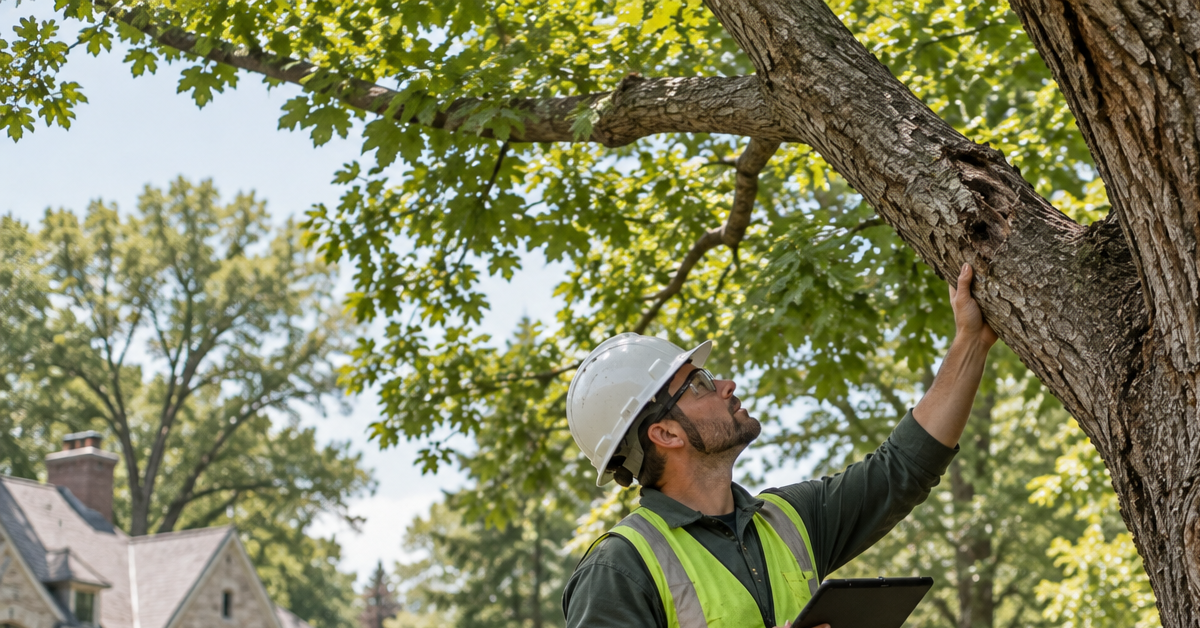
Randomly hacking away at branches can leave a tree vulnerable to pests and disease. To protect the roof long-term, you must also protect the tree. Professional pruning involves thinning and skirting the canopy in a way that preserves the tree’s structural integrity while providing the necessary clearance for the home.
Strategic Solutions for Protection
The best way to protect your roof is through a multi-stage approach. First, prioritize the removal of deadwood, branches that are already dead or decaying and are the first to fall during a Michigan thunderstorm.
Second, consider Crown Reduction. This involves reducing the overall height or spread of the tree’s canopy to move the weight away from the house. This is particularly effective for large oaks and maples that have grown significantly over the last decade.
Finally, install high-quality gutter guards. While they don’t stop branches from falling, they significantly reduce the impact of the organic debris that overhanging limbs drop, ensuring your drainage system remains functional even during the heavy autumn leaf drop.
When it comes to safeguarding your home from the unpredictable Michigan elements, Clean Cut Tree Experts provides the professional precision your property deserves. Based in Farmington Hills and serving Southeast Michigan for over 25 years, our family-owned team understands the unique relationship between local landscapes and residential architecture.
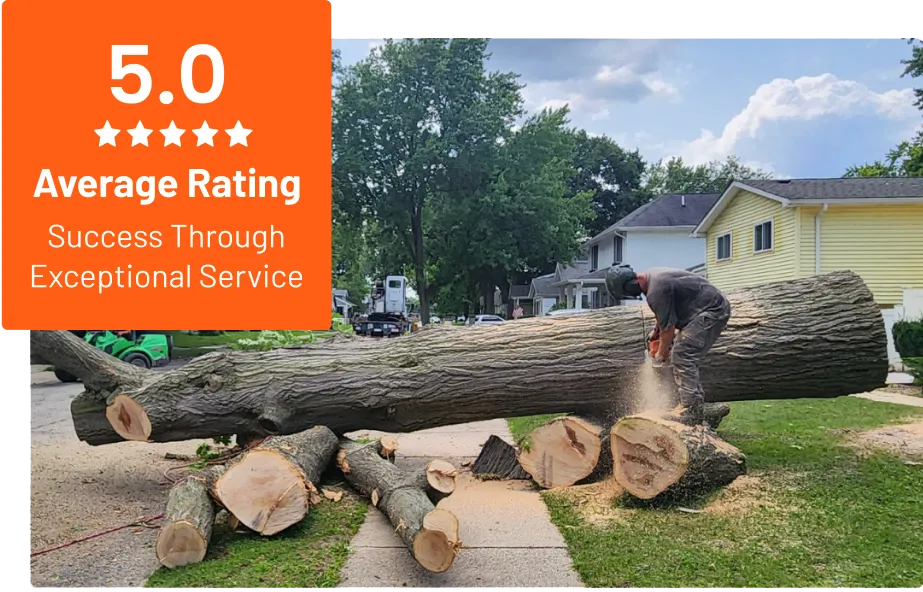
Whether you need delicate pruning of overhanging limbs or crane-assisted removal of a hazardous oak, Jeremy Clarke and his crew bring the expertise needed to protect your roof without damaging your lawn. We are fully licensed, insured, and proud recipients of the Angie’s List Super Service Award for seven consecutive years. From 24/7 emergency storm damage cleanup to senior discounts and stress-free insurance billing with no money up front, we make professional tree care accessible and reliable. Don’t wait for the next Michigan ice storm to test your roof’s limits. Call Clean Cut Tree Experts today at (734) 290-3370 for a free, no-obligation estimate.
Frequently Asked Questions by Homeowners in Michigan
How far should tree branches be from my roof in Michigan?
Ideally, you should maintain a clearance of at least 10 feet. This prevents branches from touching the roof during high winds and reduces the amount of debris and moisture that accumulates on the shingles.
Can overhanging branches cause my roof to leak?
Yes. Branches can scrape away the protective shingle granules, lift shingles during wind, and clog gutters, all of which lead to water backing up and entering your home.
Will my insurance cover damage from a fallen tree limb in Michigan?
In many cases, yes, if the damage was caused by a sudden event like a storm. However, if the damage is the result of long-term neglect (like moss growth or rotting from overhanging limbs), the claim might be denied.
When is the best time of year to trim trees in Michigan?
Late fall and winter are often the best times. During the dormant season, trees are less susceptible to pests and disease, and the lack of leaves allows for a clearer view of the branch structure.
How do I know if a limb is dead and needs removal?
Look for a lack of leaves during the growing season, peeling bark, or fungal growth on the limb. Dead branches are often brittle and lack the flexibility of healthy wood.
Do overhanging trees attract pests?
Absolutely. Squirrels, raccoons, and ants use overhanging branches as a direct highway to your roof, where they often find ways into attics through vents or rotted eaves.
Is it safe to trim large branches myself?
We strongly advise against it. Large limbs are heavy and unpredictable. Working on a ladder with a chainsaw near your home’s structure poses a significant risk of personal injury and property damage.
How often should I have my trees inspected?
For homes with mature trees near the roofline, a professional inspection once every two years, or after any major storm, is recommended to catch potential hazards early.
Summary Checklist: Roof Protection Status
| Condition | Risk Level | Recommended Action |
|---|---|---|
| Branches touching shingles | High | Schedule prompt pruning to prevent shingle abrasion, moisture retention, and roof wear |
| Moss or algae on shaded roof areas | Moderate | Trim overhanging limbs to improve sunlight exposure and airflow across the roof surface |
| Clogged gutters from tree debris | Moderate | Clean gutters thoroughly and prune nearby branches to reduce recurring debris buildup |
| Deadwood hanging over the roofline | Critical | Arrange immediate professional removal to eliminate the risk of falling branch damage |
| Visible shingle scuffing or wear | High | Inspect for roof damage and remove the branch contact point to prevent further deterioration |
Final Advice
Effective roof protection in Michigan requires a fundamental shift in how we view the relationship between the landscape and the structure. Property owners must move beyond reactive maintenance, where action is only taken after a limb strikes a shingle, and toward a philosophy of architectural arboriculture. This means recognizing that a tree’s proximity to a home is a dynamic variable that changes with every growing season and every severe weather event. True thought leadership in home preservation lies in understanding that a roof is not a static object; it is a living system that requires adequate light, ventilation, and physical space to function.
To achieve long-term safety, homeowners should prioritize crown management that favors vertical growth over horizontal spreading toward the home. Furthermore, integrating annual canopy audits into your standard home maintenance schedule is essential. By viewing overhanging limbs through the lens of physics and biology, we can predict failure points before they manifest. The goal is to create a symbiotic environment where majestic Michigan trees can reach their full maturity without compromising the structural integrity or the financial value of the residence beneath them. Vigilance today is the only true insurance against the environmental pressures of tomorrow.