July 22, 2026
Quick Answer: After a storm, check for three hazards before touching anything: downed power lines (stay 30 feet back and call DTE at 800-477-4747), hanging broken limbs overhead, and partially uprooted or cracked trees. Photograph all damage for insurance, then handle only ground-level branches smaller than your wrist. Anything elevated, under tension, or touching a structure needs a professional crew. Most post-storm injuries happen during cleanup, not during the storm.
In This Article
- The three hazards you never touch
- Why does documentation come before cleanup
- What’s safe to DIY and what isn’t
- Whether a damaged tree can be saved
- Your post-storm checklist
Key Takeaways
- Treat every downed line as live. Utility first, cleanup second.
- Hanging limbs (“widowmakers”) can hold for days, then drop without warning.
- A new lean with lifted soil means the tree is actively failing. Cordon off the fall zone.
- Photograph everything before cleanup. It protects your insurance claim.
- Safe DIY: ground-level branches smaller than your wrist, not under tension.
- Never combine a ladder and a chainsaw. It’s the most dangerous pairing in tree work.
Storm Damage by the Numbers
- Chainsaws and falling debris injure tens of thousands of Americans each year, most during cleanup, not the storm itself.
- A hung limb can stay lodged for days before releasing without warning.
- Stay at least 30 feet from any downed line or anything touching it.
- A tree’s fall zone is its full height plus a margin. A 60-foot tree needs more than 60 feet of clearance.
The 3 Most Dangerous Storm-Damaged Tree Hazards
Power lines anywhere near the tree
If a line is down, touching the tree, or close to damaged limbs, stay back at least 30 feet and call DTE Energy (800-477-4747) before anything else. A limb resting on an energized line can carry current through wet wood into the ground around it.
Hanging limbs overhead
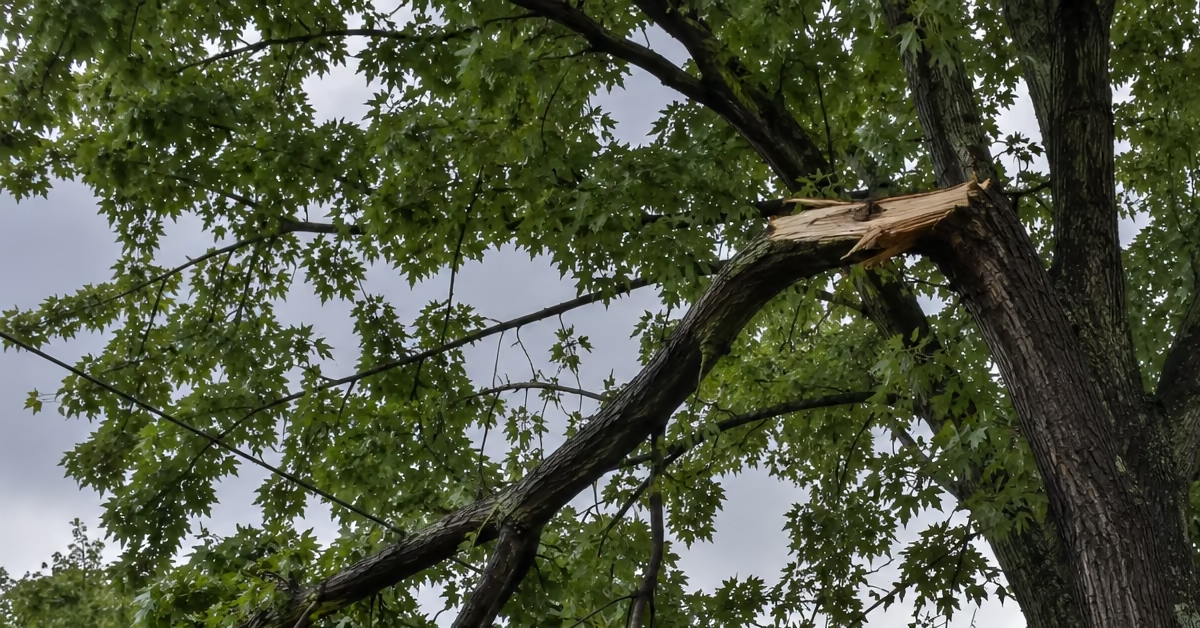
A broken limb caught in the canopy is the most underestimated danger in a storm-damaged yard. Loggers call them widowmakers and dangerous hanging limb hazards after storms kill experienced professionals every year. A hung limb can hold for days, then release from a gust or the vibration of someone working below it. Hangers come down with ropes, lifts, and rigging, not by waiting.
Partially uprooted or cracked trees.
A leaning tree with lifted soil on one side is a loaded spring. So is a trunk with a fresh vertical crack. These trees have already failed; they just haven’t finished falling. Cordon off the full fall zone and call our 24/7 emergency tree service.
Why You Should Document Storm Damage Before Cleanup
Once the three hazards are ruled out, photograph everything from multiple angles: the tree, the roof, fences, and vehicles. Most homeowner policies cover removal when a tree strikes a covered structure, and before photos make claims dramatically smoother. Our guide to tree removal insurance claims in Metro Detroit walks through the full claims process.
What Storm Damage Is Safe to Handle Yourself?
| Situation | DIY or Pro? | Why |
|---|---|---|
| Ground branches smaller than your wrist | DIY | Low energy, low height |
| Raking and hauling debris on open ground | DIY | No cutting required |
| Reachable twigs via pole pruner, feet on ground | DIY | No ladder involved |
| Anything needing a ladder plus a saw | Pro | Highest injury combination in tree work |
| Limbs on a roof | Pro | Unstable wood plus fall risk plus shingle damage |
| Wood under tension or compression | Pro | Stored energy whips or splits when cut |
| Leaning or partially failed trees | Pro | Unpredictable movement during cutting |
| Large trunk sections, even on the ground | Pro | Rolling, settling, saw pinch |
The storm-damaged tree safety recommendations from the USDA Forest Service repeat one theme: most post-storm fatalities involve homeowners doing work that looked simpler than it was. Our crews use a shorter version: if the wood is bigger than your arm, above your head, or bent under load, put the saw down.
Common Storm Damage Mistakes Homeowners Make
“At least once per storm season, we’re called to finish a job that started with a ladder, a chainsaw, and a trip to the ER. The limb was never the expensive part.”
The half-failed silver maple. Silver maples, common across our older neighborhoods, have weak branch unions and shed massive limbs in straight-line wind. The remaining half often looks fine but carries fresh cracks. Always have the whole tree inspected, not just the broken part.
The “it can wait” hanger. A homeowner decides a hanging limb is stuck firmly and mows under it for two weeks. Then it drops. Hangers are the call we most wish people made sooner.
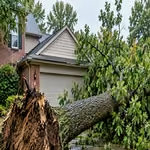
The tree on the house at 2 a.m. When a trunk rests on a structure, the weight must come off in controlled sections so the tree doesn’t shift on the way out. That’s why crane-assisted removal is the standard for house strikes. If you’re facing this right now, our guide on who to call first when a tree falls on your roof covers the first hour step by step.
Signs a Storm-Damaged Tree Needs Immediate Professional Attention
Call a professional immediately if you notice:
- Power lines touching the tree
- Large hanging branches in the canopy
- Fresh cracks in the trunk
- A newly leaning tree
- Uprooted roots or lifted soil
- A tree resting on a house, garage, fence, or vehicle
- Significant canopy loss after a storm
These warning signs indicate a higher risk of sudden failure and should never be ignored.
Can a Storm-Damaged Tree Be Saved?
- Less than a third of the canopy lost, trunk intact: usually saveable with proper pruning to clean up torn wood.
- Split trunk or more than half the canopy gone: removal is usually the realistic answer.
- Oak caution: torn stubs need clean cuts at the branch collar, and between April and July, every oak wound needs immediate sealing because fresh cuts invite oak wilt.
When in doubt, get an assessment first. The certified arborist safety guidance from the International Society of Arboriculture is the standard we work to, and an honest inspection sometimes saves a tree the homeowner assumed was gone.
Your Post-Storm Checklist
- Walk the property from a distance. Check for lines, hangers, and leaners.
- Call DTE if any line is involved. Cordon off unstable trees.
- Photograph all damage for insurance.
- Handle ground-level, wrist-sized debris yourself.
- Call for storm damage cleanup on anything elevated, loaded, or large.
- Have the remaining trees inspected. Hidden damage shows up in the next storm.
Common Questions About Storm-Damaged Trees
Who do I call first when a tree falls on my house?
If wires are involved, DTE (800-477-4747). Otherwise: get everyone out of the affected rooms, call your insurer to open a claim, then call an emergency tree service. Photograph throughout.
Does homeowner’s insurance cover storm tree removal?
Generally, yes, when the tree damages a covered structure. A tree down in the open yard often isn’t covered. Check your debris removal limits.
How fast should a hanging limb be removed?
Same day or next day. Keep everyone out from under it until it’s down.
Is a leaning tree always an emergency?
A long-standing lean may be stable. A new lean after a storm, especially with lifted soil, is an active failure. Keep clear and call immediately.
Can I cut up a tree once it’s fully on the ground?
Ground bucking is safer but not risk-free. Trunks settle, roll, and pinch saws. Large or unevenly resting trunks belong to a crew with the right equipment.
When the Storm Passes, Slow Down Before You Clean Up
The storm does its damage in minutes. Most injuries happen in the hours and days after, when the yard looks calm, and the saw comes out. The wood hasn’t gotten safer. It’s just gotten quieter.
Walk the property, rule out the three hazards, take your photos, and handle only what’s small, grounded, and tension-free. Everything else is a phone call, not a project.
We run priority storm response across Livonia and Farmington Hills. If something’s down, hanging, or leaning, contact us before you pick up a saw.