August 19, 2026
Key Takeaways
- The decision to trim, treat, or remove a tree comes down to a structured evaluation, not a quick guess.
- A tree’s overall health, structural integrity, and location all factor into the final recommendation.
- Treatment is usually reserved for trees with identifiable, correctable issues like pests, disease, or nutrient deficiency.
- Removal is recommended when a tree’s structural risk outweighs its remaining value and recovery potential.
- The same defect can lead to different recommendations depending on the tree’s location and what’s nearby.
- A second opinion is always reasonable, especially before a costly removal.
One of the questions we hear most often from homeowners is some version of, “How do you actually decide?” It’s a fair question. From the outside, a recommendation to trim a tree, treat it for a specific issue, or remove it entirely can look like a judgment call made in the first few minutes of looking at a tree. In reality, it’s a structured process built on decades of combined experience, and the same visible symptom can lead to three very different recommendations depending on a handful of other factors we’re always weighing at the same time.
We Start with the Whole Tree, Not the Complaint
Homeowners usually call us about one specific thing: a dead branch, a lean that’s gotten worse, leaves that look off this year. That initial concern is our starting point, but it’s rarely the whole picture. Before making any recommendation, Clean Cut Tree Experts assess the tree as a complete system, including –
- canopy density and color
- trunk condition
- visible root flare
- any signs of pest activity or fungal growth, and
- the tree’s relationship to its surroundings, including structures, power lines, and other trees nearby.
This matters because a single symptom in isolation can be misleading. Thin canopy alone might point to drought stress, root damage, disease, or simple old age, and the right response is completely different depending on which of those is actually driving the symptom. Skipping straight from “the canopy looks thin” to a recommendation without checking the rest of the tree is how bad recommendations happen, in either direction, unnecessary removal or a missed hazard.
When Clean Cut Tree Experts Recommend Trimming
Trimming is our default recommendation whenever a tree’s core health and structure are sound, and the issue is limited to specific branches or general shape and density. This covers a wide range of situations:
- removing deadwood before it becomes a falling hazard
- correcting weak branch structure while a tree is still young enough to respond well
- thinning a dense canopy to improve airflow and light penetration, or
- restoring shape to a tree that’s outgrown its space.
The common thread across all trimming recommendations is that the tree’s fundamental health and structural integrity aren’t in question. We’re refining what’s already a viable, healthy tree, not trying to rescue one from a serious underlying problem. Trimming decisions also factor in timing, since the right time of year to prune varies by species and by the specific goal of the pruning, whether that’s promoting flowering, correcting structure, or simply managing size.
When We Recommend Treatment
Treatment becomes the right call when a tree has an identifiable, correctable issue that’s driving decline, and the tree’s overall structure is still sound enough to be worth saving. This category covers –
- pest infestations caught early enough to control
- fungal or bacterial disease with an effective treatment protocol
- nutrient deficiencies correctable through soil amendment or fertilization, and
- soil compaction addressed through aeration or air spading.
The key requirement for a treatment recommendation is that we can point to a specific, addressable cause behind the tree’s decline, and that treating that cause has a reasonable chance of restoring the tree to a stable, healthy trajectory. If a tree is showing decline symptoms but we can’t identify a treatable cause, or if the underlying structural damage is too extensive for treatment to meaningfully change the outcome, treatment alone isn’t the right recommendation, even if it sounds like the least drastic option.
Treatment recommendations also come with realistic expectations about timeline. Recovery from something like soil compaction or a nutrient deficiency typically plays out over one to two growing seasons, not overnight, and we make sure homeowners understand that upfront so a treatment plan isn’t judged as a failure simply because a tree doesn’t look dramatically different a month later.
When We Recommend Removal
Removal is the recommendation we take most seriously, since it’s irreversible, and we don’t arrive at it lightly. A handful of factors consistently point us toward removal rather than trimming or treatment.
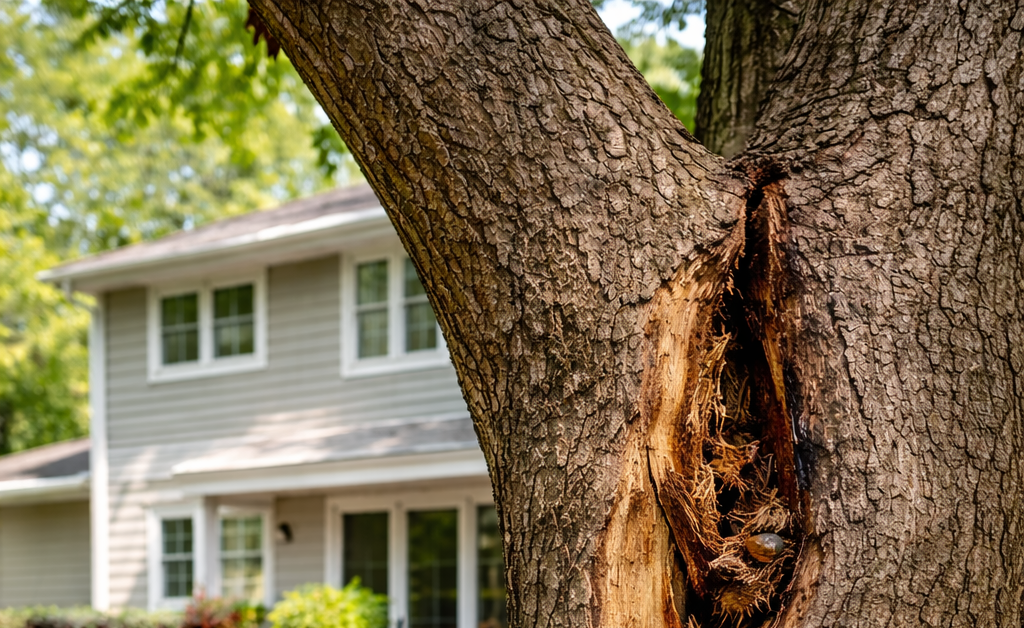
- Significant structural compromise, such as a major trunk crack, extensive internal decay confirmed through inspection, or a substantial cavity relative to the tree’s overall diameter, generally can’t be corrected through pruning or treatment. These are structural realities, not symptoms of a treatable condition, and no amount of trimming or soil amendment changes the tree’s underlying stability.
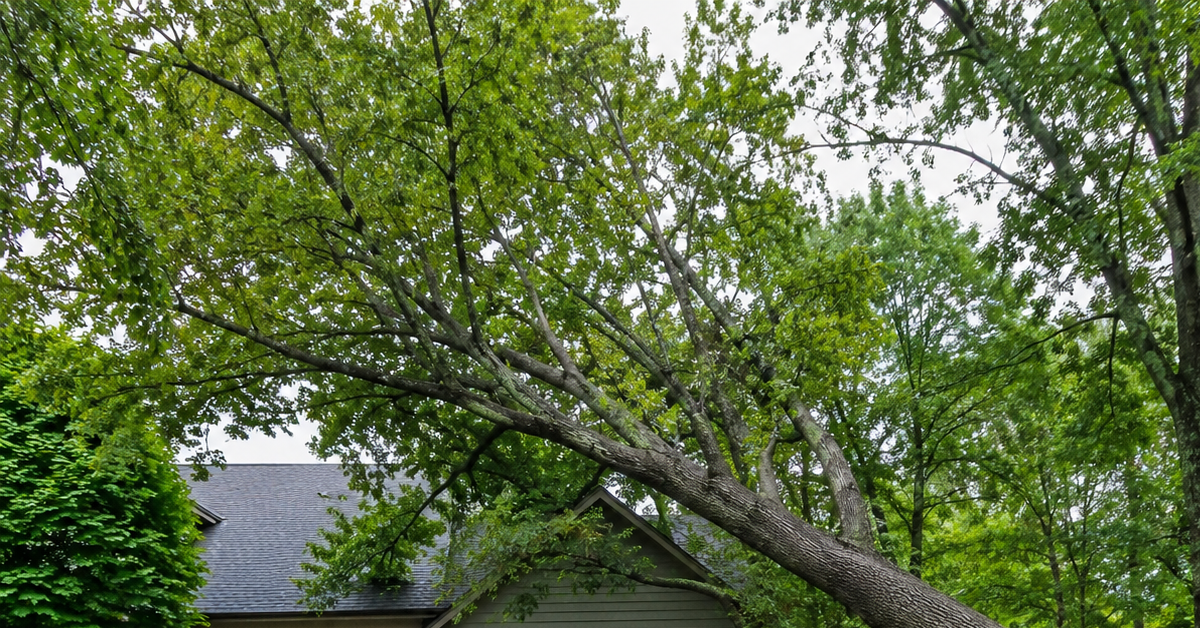
- A tree’s location relative to targets, meaning structures, driveways, power lines, or areas where people regularly walk or park, raises the stakes considerably. A tree with a moderate structural issue growing in an open field poses a very different level of risk than the same tree growing directly over a home or a busy walkway. We factor target proximity heavily into removal recommendations, because the consequence of a failure, not just its likelihood, matters to overall risk.
- Extensive, irreversible decline, whether from advanced disease, severe and longstanding root damage, or simply advanced age combined with declining vigor, sometimes means a tree has passed the point where treatment offers a meaningful return. In these cases, continued investment in trimming or treatment isn’t really extending the tree’s healthy life, it’s delaying an outcome that’s already been decided by the tree’s underlying condition.
- Tree’s overall value to the property against the ongoing cost and risk of trying to maintain it. A tree providing significant shade, screening, or aesthetic value might be worth more aggressive treatment efforts than a similarly declining tree that isn’t providing much benefit relative to the risk it poses.
The Same Symptom, Three Different Outcomes
To make this concrete: thinning canopy on three different trees can lead to three different recommendations.
- A young, otherwise healthy tree with thinning canopy from being planted too close to a larger, competing tree might simply need trimming, both of itself and possibly the competing tree, to restore adequate light.
- A mature tree with thinning canopy caused by a diagnosed nutrient deficiency in compacted soil might be a strong candidate for treatment, provided the rest of the tree’s structure checks out.
- A mature tree with thinning canopy, a large trunk cavity, and a location directly over a home might be a removal recommendation, because the underlying cause isn’t correctable and the risk to a nearby structure is significant.
Same starting symptom, three different underlying situations, three different recommendations. This is exactly why a thorough assessment matters more than a quick look from the driveway.
Why Getting a Second Opinion Is Always Reasonable
Removal recommendations, in particular, are worth a second opinion if a homeowner has any doubt, especially for a large, mature, or otherwise valued tree. A good second opinion doesn’t just repeat the first assessment, it should walk through the same reasoning: what’s the tree’s structural condition, is there an identifiable and treatable cause behind any decline, and what’s the actual risk given the tree’s location. We’re always comfortable having our assessments checked, because a tree removal is a permanent decision, and homeowners deserve confidence in that call either way.
Since 2010, Clean Cut Tree Experts has built its reputation across Farmington Hills, Howell, and Southeast Michigan on exactly this kind of thorough, honest assessment process. As a company with more than 25 years of combined experience, Clean Cut Tree Experts don’t default to the most profitable recommendation, we default to the right one, whether that means a simple trim, a treatment plan, or, when it’s truly necessary, removal. Our holistic approach to tree care means we’re looking at the whole tree and its surroundings on every visit, not just the specific concern that prompted the call.
Clean Cut Tree Experts is fully licensed and insured, and for insurance-covered work, we bill your provider directly with no money required upfront. If you’ve gotten a removal recommendation elsewhere and want a second opinion, or you’re not sure whether that struggling tree in your yard needs a trim, a treatment plan, or something more, we’d welcome the chance to walk you through our full assessment. Call Clean Cut Tree Experts at (734) 290-3370 to book a free assessment
Frequently Asked Questions About Trim, Treat, or Remove Decisions by Homeowners in Michigan
How do you decide if a tree can be saved with treatment instead of removal in Michigan?
We look for a specific, identifiable, and correctable cause behind the decline, such as a pest, disease, or soil issue, combined with a structurally sound trunk and root system. If both are true, treatment is usually a viable path.
Is removal always the safest option for a tree with problems?
Not necessarily. Removal is appropriate when structural damage is severe, irreversible, or located near people and structures, but many tree issues are fully addressable through trimming or treatment without needing to remove a healthy, structurally sound tree.
Can a tree with a trunk cavity ever be saved?
Sometimes, depending on the size and location of the cavity relative to the tree’s overall diameter and its structural role. A professional assessment can determine whether the remaining healthy wood is sufficient to support the tree safely.
Should I get a second opinion before agreeing to a tree removal?
Yes, especially for a large, mature, or valuable tree. Removal is permanent, and a thorough second assessment can confirm whether it’s truly the best option.
Do Clean Cut Tree Experts offer treatment options, or only trimming and removal?
Yes, our services include addressing correctable issues like soil health and pest concerns in addition to trimming and removal, and we’re happy to walk homeowners through all the options available for a specific tree.
Summary Checklist: How the Trim, Treat, or Remove Decision Gets Made
| Step | Key Consideration | Action Item |
| Whole-Tree Assessment | Look beyond the initial complaint | Evaluate canopy, trunk, roots, and surroundings together |
| Identify the Cause | Determine what’s driving any decline | Distinguish treatable causes from structural realities |
| Check Structural Integrity | Assess trunk, cavities, and root plate | Flag any irreversible structural compromise |
| Evaluate Location and Targets | Consider proximity to structures and people | Weigh consequence of failure, not just likelihood |
| Weigh Tree Value | Consider shade, screening, and aesthetic value | Balance value against ongoing risk and maintenance cost |
| Confirm the Recommendation | Ensure the plan matches the underlying issue | Get a second opinion for any major removal decision |
Final Advice
Deciding whether a tree needs trimming, treatment, or removal requires a careful evaluation of its overall health, structural condition, and surrounding environment rather than a decision based on one visible symptom. A dedicated tree service firm in Michigan can perform assessment and examine the tree’s canopy, trunk, root system, and proximity to structures or high-traffic areas to determine the safest and most effective solution.
- Trimming is often the right choice for healthy trees with manageable concerns such as deadwood, weak branches, or excessive growth, while treatment may help trees affected by pests, disease, soil issues, or other correctable conditions.
- Removal should only be recommended when structural hazards, irreversible decline, or safety concerns outweigh the tree’s remaining benefits.
- Regular inspections allow homeowners to identify issues early, preserve more treatment options, and avoid unnecessary emergency situations.
When facing a major tree decision, especially involving a mature or valuable tree, obtaining a professional evaluation or second opinion can provide confidence that the recommended action is appropriate. Proper tree care decisions protect your property, improve safety, and help maintain healthy trees whenever possible. Call Clean Cut Tree Experts at (734) 290-3370 for a free, thorough evaluation of any tree on your Farmington Hills or Howell property.