September 8, 2026
Key Takeaways
- Protect the root zone: Compacted soil, construction, trenching and excessive foot traffic can damage the roots of mature trees even when the canopy initially appears healthy.
- Mulch correctly: Apply a broad, moderate layer of mulch over the root zone while keeping it away from direct contact with the trunk.
- Prune for structure and safety: Periodic inspection and selective pruning can address dead, damaged or structurally weak branches before they become larger problems.
- Monitor for pests and disease: Changes such as premature leaf loss, canopy dieback, bark abnormalities and fungal growth can indicate developing health problems that deserve professional evaluation.
- Know when removal is necessary: Severe decay, major structural defects, sudden leaning or extensive dieback can make removal safer than continued preservation.
Bloomfield Hills, Michigan is known for its wooded lots, mature oaks, and tree-lined streets that took decades to grow into the landscape residents value today. A large, established tree adds real value to a property, both in shade and in curb appeal, but age brings its own set of vulnerabilities. Older trees carry more weight in their canopy, more history of storm damage, and more exposure to soil compaction and root disturbance than younger plantings. Keeping a mature tree healthy for another 20 or 30 years takes a different approach than caring for a sapling.
Why Mature Trees Need Different Care
A tree that has been in the ground for decades has already survived droughts, ice storms, and construction projects nearby, but that history leaves marks. Old wounds from pruning cuts, storm breaks, or lawn equipment can become entry points for decay fungi over time. Root systems that were once free to expand may now be competing with driveways, patios, or underground utilities installed after the tree was planted. Because a mature tree’s canopy and root system are so much larger, problems that would be minor in a young tree, like a girdling root or a small area of dieback, can affect the entire structure.
Bloomfield Hills properties also tend to feature a mix of tree ages planted over generations, which means a single yard might have a 50-year-old oak standing near a 20 -year-old maple and a recently planted ornamental. Each of those trees has different needs, and treating them identically, whether in watering, fertilizing, or pruning frequency, tends to shortchange the older specimens that make up the backbone of the landscape. Recognizing which trees on a property are the long-term anchors worth the most investment helps homeowners prioritize care and budget accordingly.
Watch the Soil, Not Just the Canopy
Oakland County’s clay-heavy soils compact easily under regular foot traffic, parked vehicles, or nearby construction, and compacted soil starves roots of the oxygen and water they need. Many homeowners focus entirely on what is happening above ground, but soil health under a mature tree’s canopy often determines how well that tree performs for the next decade. Signs of stressed soil include –
- thinning turf under the drip line
- standing water after rain
- or a canopy that looks sparse compared to nearby trees of the same species and age.
Aerating compacted soil and avoiding new hardscape or heavy equipment within the root zone go a long way toward protecting root health.
Most of a mature tree’s fine feeder roots sit within the top 12 to 18 inches of soil and extend well beyond the edge of the canopy, often 2-3 times the spread of the branches above. That means driveway repaving, new fencing, or utility trenching on a property can damage roots far from the trunk without anyone realizing it until the canopy starts declining a season or two later. Before any digging or grading project near a mature tree, it is worth having the root zone mapped so the work can be routed around the most critical roots.
Mulching the Right Way
A wide ring of mulch, roughly 2 to 4 inches deep and extending out toward the edge of the canopy, insulates roots from summer heat and winter cold while helping the soil retain moisture. Mulch should never be piled against the trunk in a volcano shape, since trapped moisture against bark encourages rot and gives pests an easy path into the tree. For mature trees with established root systems, expanding the mulched area slightly further out each year, rather than digging or tilling near the trunk, protects roots that may already be closer to the surface than expected.
Watering During Dry Stretches
Established trees are more drought-tolerant than young ones, but Michigan summers still bring stretches of several weeks without meaningful rainfall. A mature tree’s extensive root system does not exempt it from stress during those periods. A slow, deep soak at the drip line every week or two during extended dry weather supports the fine feeder roots responsible for most water uptake. Overwatering is just as much of a concern in Bloomfield Hills’ clay soils, since standing water around roots can suffocate them, so watering should track actual rainfall rather than run on a fixed schedule.
Structural Pruning for Long-Term Stability
As a tree matures, its branch structure becomes harder to change without significant impact, which is exactly why periodic structural pruning matters. Removing dead, crossing, or weakly attached limbs before they fail reduces the risk of storm damage and helps the tree direct energy toward healthy growth rather than compartmentalizing wounds from broken branches. Bloomfield Hills sees its share of summer thunderstorms and winter ice, both of which put extra strain on large limbs with poor attachment points. An experienced arborist in Bloomfield Hills, Michigan can identify weak unions and codominant stems that are difficult to spot from the ground but represent real failure risk in a storm.
Cabling and Bracing for Weak Attachments
Some of the most valuable mature trees on a property have a structural flaw that pruning alone cannot fix, such as a codominant trunk with a narrow, weak union or a heavy limb extending far over a roofline. Rather than removing an otherwise healthy tree because of one structural weakness, cabling and bracing systems can provide additional support, reducing the chance that the weak point fails during a windstorm or ice event. This approach is common on legacy oaks and maples throughout Bloomfield Hills where homeowners want to preserve a tree that has real sentimental or historic value on the property. An arborist evaluates whether cabling is appropriate for a given defect, since not every structural issue is a good candidate for this kind of support.
A Seasonal Rhythm for Mature Tree Care
Spreading tree care tasks across the year, rather than trying to address everything at once, keeps a mature tree in steadier condition.
- Late winter and early spring, before buds break, is generally the best window for structural pruning since the tree’s form is easiest to see without leaves in the way.
- Summer is the time to monitor for drought stress and watch for pest activity, since many insects and fungal issues become visible during the growing season.
- Fall is well suited to mulching refreshment and a final deep watering before the ground freezes, and winter is the season to watch for storm damage after ice or heavy snow events common across southeast Michigan.
Watching for Pests and Disease
Mature trees in southeast Michigan face pressure from a range of pests and pathogens, including oak wilt, emerald ash borer, and various fungal cankers that take advantage of stressed or wounded trees. Because symptoms often start high in the canopy or below the soil line, early signs like early leaf drop, unusual bark cracking, or fungal growth at the base can be easy to miss during a casual glance from the yard. Scheduling a periodic health check, especially for oaks during the sensitive spring window when oak wilt spreads most easily, helps catch problems before they spread to neighboring trees.
Oak wilt in particular deserves extra caution on wooded Bloomfield Hills properties, since the fungus can move between neighboring oaks through connected root systems as well as through fresh wounds visited by sap-feeding beetles. For that reason, pruning oaks is best avoided during the active spring and early summer months, and any accidental wounds during that window should be sealed promptly. A tree that has already lost a significant portion of its canopy to oak wilt is usually not salvageable and should be removed to protect the surrounding trees.
When Removal Becomes the Safer Choice
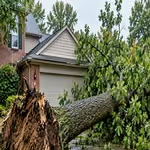
Not every mature tree can be saved, and recognizing that point is part of responsible tree ownership. Extensive trunk decay, a significantly leaning tree with recently exposed roots, or dieback across more than half the canopy are signs that a tree may pose more risk than value going forward. Because large trees are close to homes, driveways, and neighboring properties throughout Bloomfield Hills, a professional risk assessment is worth the cost before storm season arrives, particularly for trees that have shown any of these warning signs.
How Clean Cut Tree Experts Can Help
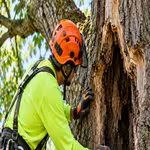
Clean Cut Tree Experts helps Bloomfield Hills homeowners protect mature trees through practical, site-specific care. Our team can assess root-zone conditions, soil compaction, canopy structure, weak branch attachments, pest or disease symptoms, and storm damage, then recommend the appropriate next step. That may include – structural pruning, root-zone protection, or tree removal when severe decay, major structural defects, leaning, or extensive dieback make preservation unsafe. When removal is necessary, stump grinding and removal can complete the job and leave the property ready for future landscaping.
Frequently Asked Questions About Mature Tree Care in Bloomfield Hills, MI
How often should a mature tree be pruned?
Most mature shade trees benefit from a structural pruning check every three to five years, though trees with known weak unions or storm damage may need more frequent attention.
Can compacted soil really affect an old, established tree?
Yes. Even large, well-rooted trees rely on oxygen and water reaching the root zone, and compacted soil from construction or heavy foot traffic can slowly starve roots regardless of the tree’s age.
What are early warning signs a mature tree is declining?
Sparse or undersized leaves, dead branches concentrated in one area of the canopy, fungal growth at the base, and early fall color are all signs worth having evaluated.
Is it safe to plant new landscaping under a mature tree’s canopy?
Digging near a mature tree’s root zone can damage roots that are closer to the surface than expected, so it is best to keep new planting or hardscape work well away from the trunk and have a professional assess the area first.
How do I know if a mature tree needs to come down?
Significant trunk decay, a sudden lean, exposed roots, or dieback across a large portion of the canopy are signs that warrant a professional risk assessment before the tree becomes a hazard to your home or family.
Summary Checklist: Mature Tree Care
| Care Task | Warning Signs | Action Required |
| Root & Soil Care | Compacted soil, standing water, or sparse canopy | Avoid heavy equipment near roots and assess drainage |
| Mulch & Water | Thin/piled mulch or extended drought | Keep a flat mulch ring and perform deep drip-line watering |
| Pruning & Support | Dead limbs, rubbing branches, or weak trunk unions | Schedule arborist inspection for structural pruning or cabling |
| Pest & Oak Wilt | Dieback, unusual leaf loss, or spring oak wounds | Avoid spring oak pruning; arrange a professional health check |
| Storm & Removal | Broken limbs, major lean, or severe trunk decay | Get a prompt tree-risk assessment to ensure property safety |
Final Advice
Mature trees need regular attention to stay healthy and safe for years to come, especially when they face compacted soil, drought, pests, disease, or storm damage. Protecting the root zone, maintaining proper moisture, and scheduling timely pruning can prevent many common problems from becoming serious. Homeowners should also watch for decay, major cracks, unusual dieback, weak branches, or sudden changes in a tree’s condition. When these warning signs appear, a professional assessment can help determine whether the tree can be preserved or needs to be removed.
Clean Cut Tree Experts can inspect mature trees and recommend care based on their health, structure, and location. We provide professional tree care in Bloomfield Hills, with services tailored to the condition and needs of each property. From structural pruning and tree health assessments to safe tree removal and stump grinding, Clean Cut Tree Experts can help protect your trees, property, and landscape for years to come.
Reviewed by Licensed Arborist
This article should be reviewed by a licensed arborist to ensure accuracy with sections covering oak wilt, structural pruning, cabling and bracing, watering, root-zone management and tree removal.