April 24, 2026
Key Takeaways
- Strategic Placement: Planting trees on the west and south sides of your home provides maximum protection from the afternoon sun.
- Energy Savings: Mature shade trees can reduce air conditioning costs by up to 35% by lowering surface temperatures.
- Property Value: Healthy, large-canopy trees increase curb appeal and overall real estate value in Southeast Michigan.
- Microclimate Creation: Transpiration from leaves naturally cools the surrounding air, acting as a natural air conditioner.
- Long-Term Investment: Choosing native or hardy Michigan species ensures longevity and lower maintenance requirements.
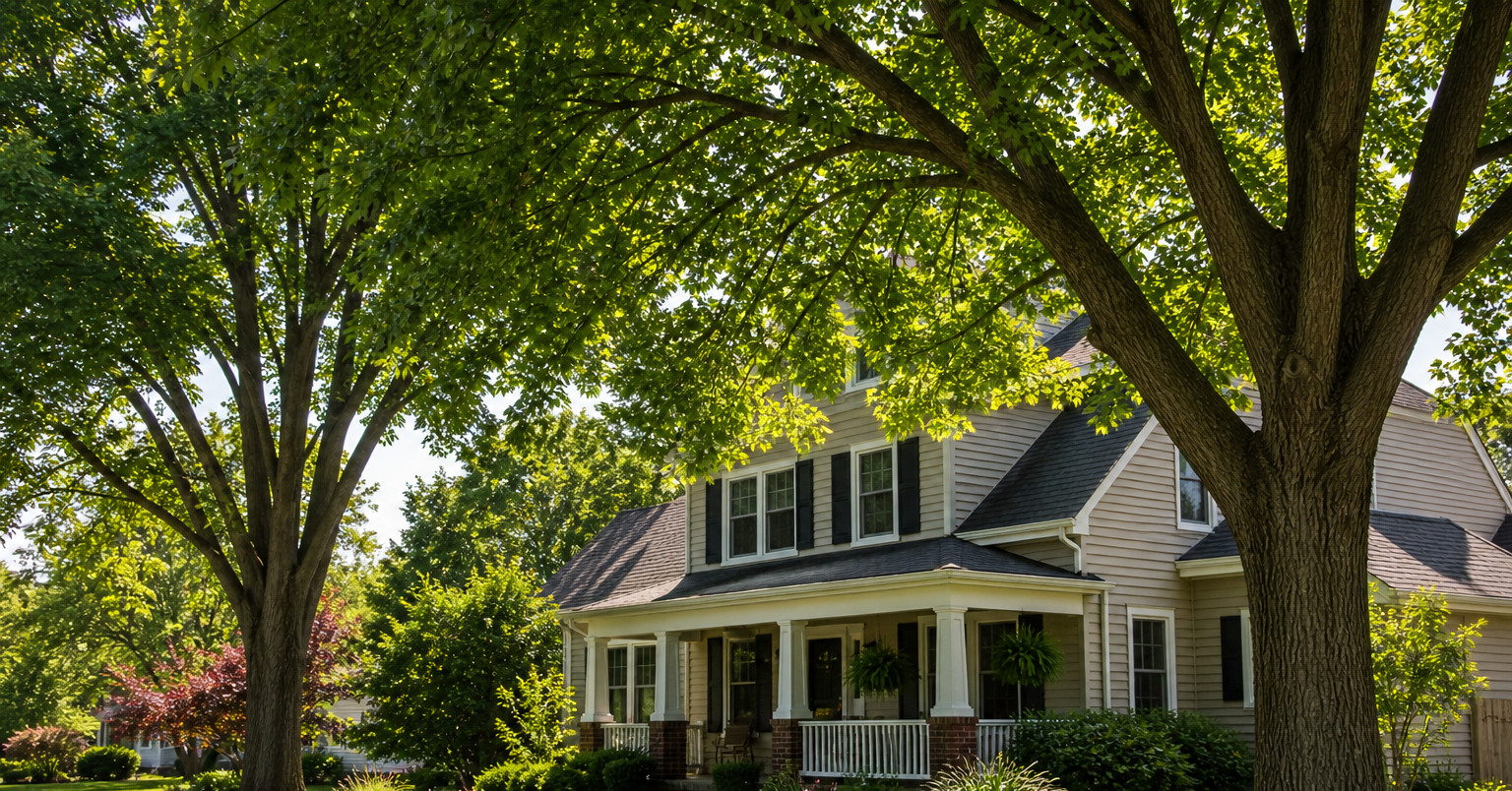
As summer temperatures continue to rise across Southeast Michigan, homeowners from Farmington Hills to Howell are looking for sustainable ways to keep their homes comfortable. While upgrading your HVAC system is one approach, there is a more natural, beautiful, and cost-effective solution: the strategic planting of shade trees.
Research from the USDA Forest Service indicates that the shade from trees, combined with the water vapor they release, can lower local air temperatures by as much as 10°F. For a homeowner in Livonia or Novi, this translates directly into lower electricity bills and a reduced carbon footprint. However, not all trees are created equal when it comes to cooling power. To maximize your investment, you need species that grow well in USDA Zone 6, withstand Michigan winters, and provide a dense enough canopy to block the sun’s thermal energy.
How Shade Trees Lower Your Bills
The cooling effect of a tree happens through two primary mechanisms: shading and evapotranspiration. Shading is straightforward by blocking solar radiation from hitting your roof, windows, and walls, and trees prevent the heat island effect within your own siding. Evapotranspiration is the process by which trees sweat, releasing water vapor through their leaves. This process consumes heat energy from the air, effectively chilling the breeze before it enters your home.
Here are the top 10 shade trees specifically suited for the Southeast Michigan climate to help you slash those cooling costs.
1. Sugar Maple (Acer saccharum)
The Sugar Maple is the quintessential Michigan tree. Known for its spectacular fall colors, it is also one of the most effective shade trees available. It develops a very dense, oval-to-round canopy that creates a blackout level of shade. Because it is native to our region, it handles our soil types and fluctuating moisture levels with ease.
- Cooling Power: High density; excellent at blocking southern exposure.
2. Northern Red Oak (Quercus rubra)
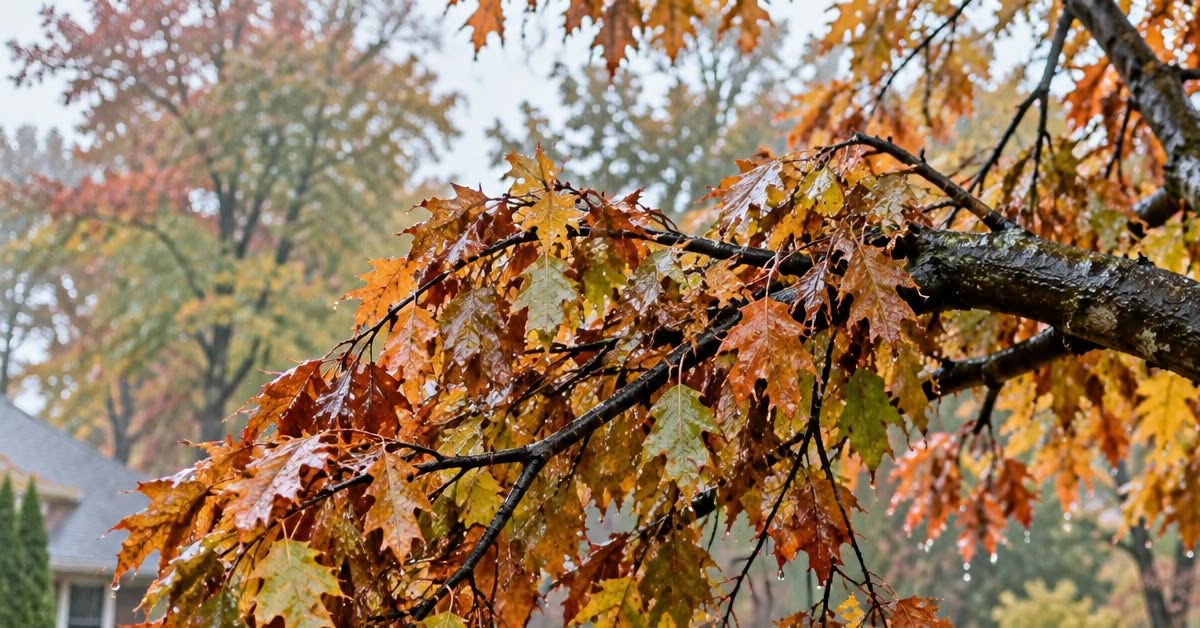
If you want results quickly, the Northern Red Oak is one of the fastest-growing oaks suitable for Michigan. It is a massive tree that can reach 60 to 75 feet in height. Its broad, spreading branches provide a vast cooling zone for large yards. Red Oaks are also incredibly hardy, resisting many of the pests that plague other species.
- Cooling Power: Massive spread; ideal for shading large ranch-style homes.
3. American Linden/Basswood (Tilia americana)
The American Linden is a hidden gem for energy savings. It features large, heart-shaped leaves that overlap significantly, creating a thick screen that the sun cannot penetrate. In the early summer, it produces fragrant flowers that attract pollinators, adding ecological value to its economic benefits.
- Cooling Power: Overlapping leaf structure provides superior thermal blocking.
4. Tulip Tree (Liriodendron tulipifera)
For homeowners with plenty of space in Southfield or West Bloomfield, the Tulip Tree is a magnificent choice. It is one of the tallest native trees in North America and grows remarkably fast. Its unique, tulip-shaped leaves and high canopy allow for great airflow underneath while still shielding the roof from the high noon sun.
- Cooling Power: Height makes it perfect for shading multi-story homes.
5. London Plane Tree (Platanus × acerifolia)
Often seen in urban areas like Detroit or Royal Oak, the London Plane Tree is exceptionally tough. It is highly resistant to air pollution and compacted soil. It has large, maple-like leaves and a spreading habit that makes it a workhorse for residential shade.
- Cooling Power: High tolerance for urban heat, making it perfect for city lots.
6. Ginkgo Biloba (Ginkgo biloba)
The Ginkgo is a living fossil that is virtually pest-free and disease-resistant. While it grows slower than a Tulip Tree, its unique fan-shaped leaves create a beautiful, dappled shade. For cooling purposes, ensure you plant a male cultivar (like ‘Autumn Gold’) to avoid the messy fruit produced by females.
- Cooling Power: Uniform canopy that becomes very dense as the tree matures.
7. White Oak (Quercus alba)
The White Oak is a legacy tree. While it grows more slowly than the Red Oak, it is incredibly strong and long-lived. A mature White Oak on the west side of a property can lower the temperature of a brick wall by twenty degrees on a July afternoon. It is a sturdy investment that will protect your home for generations.
- Cooling Power: Incredible longevity and massive branch structure.
8. Dawn Redwood (Metasequoia glyptostroboides)
If you have a damp area on your property in Northville or Plymouth, the Dawn Redwood is an excellent choice. It is a deciduous conifer, meaning it has needles like a pine but drops them in the winter. It grows incredibly fast, often 2 to 3 feet per year, reaching a height that provides shade for the entire home in a short amount of time.
- Cooling Power: Rapid growth provides energy savings much sooner than other species.
9. River Birch (Betula nigra)
The River Birch is perfect for smaller lots or as a supplemental shade tree. Often planted in multi-stemmed clumps, it provides a soft, filtered shade that is excellent for cooling patios and windows. Its peeling, cinnamon-colored bark also provides beautiful winter interest when the leaves are gone.
- Cooling Power: Dappled shade; great for localized cooling near windows.
10. Kentucky Coffeetree (Gymnocladus dioicus)
Kentucky Coffeetree is one of the hardiest trees for the Michigan climate. It features bipinnately compound leaves, which means one leaf is made up of many smaller leaflets. This creates a massive surface area for evapotranspiration, making it a biological air conditioner during our humid Michigan Augusts.
- Cooling Power: Superior air-cooling through high transpiration rates.
Where to Plant for Maximum Savings
To see a real difference in your utility bill, you cannot just plant a tree anywhere. You must consider the sun’s path during the hottest months of the year.
- The West Side: This is the most critical area. The late afternoon sun (between 2:00 PM and 6:00 PM) is the most intense and is responsible for most of the heat gain in your home. Shading windows on the west side is priority number one.
- The South Side: While the sun is higher in the sky during the day, shading the southern roofline can significantly reduce the temperature of your attic, preventing heat from radiating down into your living spaces.
- Air Conditioning Units: Shading your outdoor AC condenser unit can increase its efficiency by up to 10%. However, be sure to leave at least 3 feet of clearance for airflow.
Strategic planting is only half the battle; maintaining the health and structural integrity of your shade trees is essential to keep them saving you money.
Clean Cut Tree Experts is Southeast Michigan’s premier choice for comprehensive tree care, serving Farmington Hills, Livonia, Novi, Howell, and beyond. As a family-owned business with over 25 years of experience, we specialize in everything, such as tree removal, precision trimming, and pruning to promote canopy growth, stump grinding & removal, lot clearing services, and crane-assisted removal of hazardous limbs that may threaten your home. We are fully licensed and insured, offering 24/7 emergency service and a pay-it-forward discount for seniors, veterans, and first responders.
Whether you need to clear a lot for new energy-saving plantings or require storm damage cleanup to protect your existing canopy, our team delivers high-quality work at fair, competitive prices. Call Clean Cut Tree Experts at (734) 290-3370 today for a free quote and let us help you grow a cooler, more beautiful property.
Frequently Asked Questions
1. How close to my house should I plant a shade tree?
For large canopy trees like Oaks or Maples, you should plant at least 15 to 20 feet away from the foundation. This protects your plumbing and foundation from root intrusion while still allowing the canopy to overhang and shade the roof.
2. How long does it take for a tree to start saving me money?
Fast-growing species like the Tulip Tree or Dawn Redwood can begin providing significant shade within 5 to 7 years. Slower species like the White Oak may take 10 to 15 years to reach energy-saving size.
3. Will the roots damage my Michigan basement?
If you follow proper spacing guidelines and choose the right species, root damage is rare. Avoid planting water-seekers like Willows or Silver Maples near your sewer lines or foundation.
4. Do I need to prune my shade trees regularly?
Yes. Structural pruning by a professional ensures the tree develops a strong central leader and removes competing branches. This makes the tree more wind-resistant during Michigan summer storms.
5. What is the best time of year to plant trees in Southeast Michigan?
Early spring (before the leaves bud) or late fall (after the leaves drop) are the ideal times. This allows the roots to establish without the stress of the summer heat.
6. Do shade trees attract pests to my home?
When properly maintained, trees do not increase pest pressure. However, you should ensure branches do not touch your siding or roof, as this can provide a bridge for ants or squirrels.
7. Can I get a discount for planting trees?
Many municipalities in Southeast Michigan have re-leaf programs or local grants that provide discounted trees to homeowners to increase the local canopy. Check with your city hall in places like Novi or Royal Oak.
8. What happens if my shade tree is damaged in a storm?
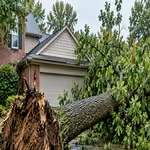
You should contact a professional immediately. Clean Cut Tree Experts offers 24/7 emergency service to safely remove storm-damaged limbs and perform restorative pruning to save the tree if possible.
Summary Checklist: Shade Tree Planning
| Planning Phase | Key Task | Action Required |
| Site analysis | Identify west and south sun exposure | Track where afternoon sun hits your home, especially around peak heat hours |
| Tree species selection | Match species to soil conditions | Choose River Birch for wet areas and Oaks for well-drained soil conditions |
| Utility line inspection | Call 811 before digging | Verify underground gas, water, electrical, and communication lines before planting |
| Structural pruning plan | Schedule an arborist evaluation | Arrange an early structural pruning plan to support healthy long-term canopy growth |
| Mulching and root care | Apply organic mulch properly | Use a 2–3 inch mulch layer to retain moisture and protect young root systems |
Final Advice
Investing in shade trees is one of the few home improvements that actually increases in value over time. While an air conditioner begins to lose efficiency the moment it is installed, a Northern Red Oak or Sugar Maple becomes more effective at cooling your home every single year. For residents in the Farmington Hills, Livonia, and Howell areas, the right tree can transform a sweltering July afternoon into a comfortable breeze-filled experience. However, the key to long-term success is proper care. A dangerous or poorly maintained tree can quickly become a liability during a Michigan storm. By choosing the right species for your specific lot and partnering with a licensed professional for regular maintenance, you ensure that your natural air conditioner remains a safe, beautiful, and money-saving asset for decades to come.