April 27, 2026
Key Takeaways
- Fungal Prevalence: Metro Detroit’s humid springs create the perfect breeding ground for Venturia inaequalis (Apple Scab) and Gymnosporangium juniperi-virginianae (Cedar-Apple Rust).
- Early Identification: Spotted leaves, premature yellowing, and orange fungal horns are the primary indicators of infection.
- Vascular Stress: Repeated fungal infections weaken a crabapple’s immune system, making it more susceptible to wood-boring pests.
- Cultural Controls: Pruning for airflow and removing fallen leaf debris are essential non-chemical steps to reduce spore counts.
- Professional Timing: Effective treatment relies on preventative fungicide applications during the bud break and petal fall stages.
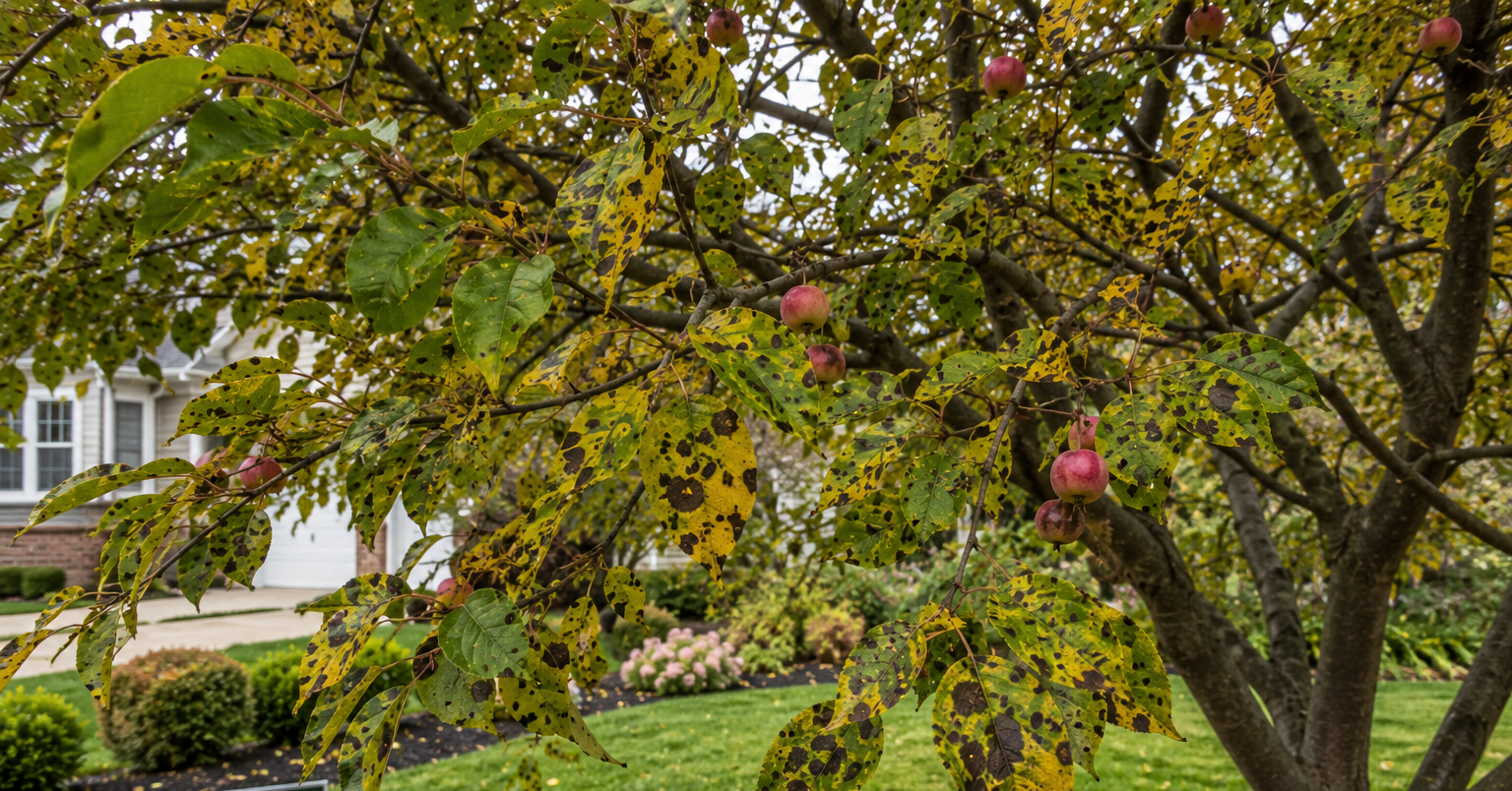
In the residential neighborhoods of Farmington Hills, Livonia, and Birmingham, the Flowering Crabapple (Malus) is a prized centerpiece. In early May, these trees erupt in a cloud of white, pink, and red blossoms that signal the true arrival of spring in Southeast Michigan. However, as the humidity rises and the spring rains settle in, many homeowners notice a troubling change. By July, their once-vibrant crabapples are dropping yellowed, spotted leaves, leaving the canopy thin and the tree looking sick.
If your crabapple looks like it belongs in late autumn while your neighbors’ trees are still lush and green, you are likely dealing with the two most common fungal pathogens in Metro Detroit: Apple Scab and Cedar-Apple Rust. While these diseases are rarely death sentences in a single season, left unchecked, they can strip a tree of its vigor, ruin its aesthetic value, and eventually lead to a secondary decline that invites lethal pests.
1. Understanding Apple Scab: The Mid-Summer Defoliator
Apple Scab is perhaps the most widespread disease affecting crabapples in Southeast Michigan. It is caused by the fungus Venturia inaequalis, which overwinters in the fallen leaves beneath your tree. When the spring rains arrive, spores are launched into the air and land on the tender new growth of your crabapple.
The Symptoms
In the early stages, you will notice olive-green to black, velvety spots on the leaves. As the infection progresses, these spots become more distinct and scabby.The tree reacts to the fungal invasion by shutting down the affected leaves, causing them to turn yellow and drop prematurely. By August, a heavily infected tree may be 70% defoliated.
Why Metro Detroit is a Hotspot
The high humidity levels and frequent rainfall in the Great Lakes region provide the exact moisture requirements the fungus needs to infect leaf tissue. Trees planted in tight spaces with poor airflow, common in older neighborhoods like Royal Oak or Southfield, suffer the most because their leaves stay wet longer after a rainstorm.
2. Cedar-Apple Rust: The Strange Two-Host Cycle
If your crabapple leaves are covered in bright, alien-looking orange spots, you are likely looking at Cedar-Apple Rust. This fungus is unique because it requires two different host plants to complete its life cycle: a member of the Malus genus (Crabapple/Apple) and a member of the Juniperus genus (Eastern Red Cedar or various Junipers).
The Symptoms of Crabapples
In late spring, small yellow-orange spots appear on the upper surface of the crabapple leaves. By mid-summer, these spots swell, and if you flip the leaf over, you will see tiny, hair-like tubes (aecia) protruding from the bottom. These tubes release spores that travel back to nearby Junipers.
The Juniper Connection
If you have Junipers or Red Cedars in your landscape or a neighbor’s yard, look for hard, brown, golf ball-sized galls on the branches. After a heavy spring rain, these galls sprout bright orange, gelatinous telial horns that look like sea anemones. These horns release the spores that infect your crabapple. In Southeast Michigan, where Junipers are commonly used in residential landscaping, this disease is nearly ubiquitous.
3. The Long-Term Impact on Tree Health
Many homeowners assume that because the tree grows new leaves the following year, the fungus is merely a cosmetic issue. This is a dangerous misconception. Leaves are a tree’s energy factories; through photosynthesis, they create the starches needed to survive the winter and push out new growth in the spring.
When a crabapple loses its leaves in July or August due to Apple Scab, it is forced to dip into its emergency energy reserves to stay alive. Repeated years of early defoliation lead to a weakened vascular system. A stressed crabapple is far more likely to be attacked by the Roundheaded Apple Tree Borer or succumb to Fire Blight, a bacterial infection that can kill a tree much faster than any fungus.
4. What You Can Do at Home
While professional treatment is the most effective way to manage a severe infection, there are several cultural practices you can implement to reduce the fungal pressure on your landscape.
- Sanitation is Key: Since Apple Scab overwinters in fallen leaves, raking and disposing of leaf litter in the fall is critical. Do not compost these leaves; the spores can survive the composting process. Bag them and remove them from your property.
- Pruning for Airflow: Fungi thrive in stagnant, damp environments. Thinning out the interior branches of your crabapple allows sunlight and wind to reach the center of the canopy, helping leaves dry faster after a rain.
- Strategic Planting: If you are planting new trees, look for disease-resistant cultivars. Varieties like ‘Prairifire’, ‘Adirondack’, and ‘Royal Raindrops’ have been bred specifically to resist Scab and Rust, making them much easier to maintain in the Detroit climate.
5. The Importance of Professional Timing
The biggest mistake Metro Detroit homeowners make is waiting until they see spots on the leaves to call for help. By the time the spots are visible, the fungus is already inside the leaf tissue, and topical sprays will have limited effectiveness. Effective fungal management is preventative, not curative. In Southeast Michigan, the first application should typically occur when the leaf buds just begin to show green. Subsequent applications are timed with the pink bud stage and petal fall. A professional arborist understands the local weather patterns and phenology (the timing of biological events) to ensure the fungicide is applied at the exact moment the tree is most vulnerable. Managing the complex life cycles of Apple Scab and Cedar-Apple Rust requires professional timing and specialized equipment.
Clean Cut Tree Experts is your Southeast Michigan partner for restoring the health of your flowering crabapples. Serving Farmington Hills, Howell, Livonia, and Novi, and the surrounding communities, our licensed and insured team takes a holistic approach to tree care. We specialize in precision structural pruning to increase canopy airflow and targeted fungicide applications during the critical bud break stage to prevent spores from ever taking hold. With over 25 years of experience and 24/7 emergency availability, Clean Cut Tree Experts offers services like tree removal, trimming, and pruning, stump grinding & removal, crane-assisted removal, and lot clearing services. We always treat your property with the respect it deserves, ensuring your ornamental trees remain a beautiful, healthy asset for years to come. Call Clean Cut Tree Experts at (734) 290-3370 today for a free quote.
Frequently Asked Questions
1. Will Apple Scab eventually kill my crabapple?
Not directly, but it significantly shortens the tree’s lifespan. The repeated stress of losing leaves early in the season weakens the tree’s immune system, eventually leading to death from secondary pests or winter dieback.
2. Can I just cut the galls off my Juniper to save my Crabapple?
While removing the orange galls from your Junipers helps reduce local spore counts, Cedar-Apple Rust spores can travel over a mile on a windy day. Unless you can clear every Juniper in a one-mile radius, professional preventative spraying is still necessary.
3. Why is my crabapple dropping leaves even though I watered it?
If the fallen leaves have dark, scabby spots, the culprit is a fungus, not drought. In fact, over-watering with a sprinkler system that hits the foliage can actually make Apple Scab worse by keeping the leaves wet.
4. Are there safefungicides I can use myself?
There are over-the-counter options, but they often lack the sticker-spreader additives that help the chemical stay on the leaf during Michigan’s spring rains. Professional-grade applications are more durable and provide more consistent coverage.
5. How much does it cost to treat a crabapple for Scab and Rust?
The cost varies based on the size of the tree and the number of applications required. However, the cost of several years of treatment is significantly less than the cost of removing a mature dead tree and grinding the stump.
6. Does Clean Cut Tree Experts offer organic treatment options?
Yes, we offer various integrated pest management (IPM) strategies that focus on the most environmentally responsible methods to achieve tree health.
7. When is it too late to spray for the season?
Once the tree has reached full leaf expansion in late June, the primary infection window has usually passed. At that point, the focus shifts to sanitation and planning for a proactive treatment the following spring.
8. Is Fire Blight the same thing as Apple Scab?
No. Fire Blight is a bacterial disease that causes branches to look scorched and tips to curl into a shepherd’s crook. It is much more lethal and requires different management techniques, including immediate surgical pruning.
Summary Checklist: Crabapple Health
| Indicator | Possible Cause | Action Required |
| Olive-green velvety leaf spots | Apple Scab | Rake and remove infected leaves and schedule preventative fungicide treatment next spring |
| Bright orange or rust-colored spots | Cedar-Apple Rust | Inspect nearby Juniper trees and apply preventative fungicide treatments |
| Yellowing leaves or early leaf drop | Fungal stress or root issues | Improve soil health with aeration, mulching, and deep-root fertilization |
| Blackened or scorched branch tips | Fire Blight | Schedule immediate professional pruning to stop the disease from spreading |
| Small holes in the trunk with sawdust | Tree borer infestation | Assess the tree for structural decline and consider treatment or removal options |
Final Advice
Flowering crabapples are a vital part of the Metro Detroit aesthetic, but they are not set-it-and-forget-it trees. In our Great Lakes climate, fungal pressure is a constant reality. If you have noticed your tree’s canopy thinning out year after year, don’t wait until the tree is completely bare to take action. The key to a healthy, vibrant crabapple is a proactive combination of proper sanitation, structural pruning, and precisely timed preventative treatments. By addressing Apple Scab and Cedar-Apple Rust before they deplete your tree’s energy reserves, you ensure your property remains beautiful throughout the summer and that your trees have the strength to survive the harsh Michigan winters. A small investment in preventative care today will save your landscape’s most beautiful spring assets for the decades to come.