April 3, 2026
Michigan’s landscape is rich with towering oaks, graceful elms, and sturdy ashes that define neighborhoods and forests alike. However, in recent decades, these trees have faced significant threats from invasive pests and rapidly spreading diseases. Understanding these dangers isn’t just about protecting one tree; it’s about safeguarding the entire ecosystem.
This guide explains the most common and destructive tree diseases in Michigan: Oak Wilt, Dutch Elm Disease, and the Emerald Ash Borer (EAB). You’ll learn how to identify each issue, what causes them, how they spread, and when removal becomes the safest option.
Why Tree Diseases Are a Growing Concern in Michigan
Michigan’s changing climate plays a major role in the rise of tree diseases. Warmer winters allow certain fungi and insects to survive longer, while wet springs and humid summers create perfect conditions for infections to thrive. Urban development adds another layer of stress, compacted soil: root damage, and pollution weaken trees’ natural defenses.
Diseased trees don’t just look bad. They can:
- Become structurally weakened and pose safety risks.
- Spread infection to nearby healthy trees through roots or insect carriers.
- Reduce biodiversity in forests and neighborhoods.
- Lower property values by damaging curb appeal.
For homeowners, early detection and proper management are essential. Let’s break down each major disease threatening Michigan’s tree canopy.
1. Oak Wilt: Michigan’s Silent Oak Killer
What Is Oak Wilt?
Oak Wilt is a deadly fungal disease caused by Bretziella fagacearum. It disrupts the tree’s ability to transport water, causing it to wilt and die, often within weeks. Oak Wilt primarily affects red oaks, though white and bur oaks can also be infected.
The fungus spreads through two main channels:
- Root grafts between nearby oaks.
- Beetles are attracted to sap from fresh wounds or recently cut wood.
Common Signs of Oak Wilt
- Leaves are wilting and browning from the top down.
- Rapid leaf drop in summer.
- Discoloration under bark often includes dark streaks in sapwood.
- Dead branches are appearing suddenly.
In red oaks, symptoms can progress so quickly that a full-grown tree dies in one growing season.
How Oak Wilt Spreads in Michigan
In suburban areas, Oak Wilt often spreads underground through shared root systems between neighboring trees. In forested or rural areas, beetles are the primary carriers. If fresh pruning wounds are exposed in late spring or early summer, the insects can transmit spores easily.
Prevention and Management
- Avoid pruning oaks between April and July, when beetle activity is highest. According to the Michigan Department of Natural Resources, pruning during this window significantly increases the risk of infection.
- Seal pruning wounds immediately with tree wound paint.
- Remove infected trees quickly to stop root graft spread.
- Destroy or chip infected wood; don’t store it for firewood.
When Removal Is Necessary
If over 50% of a red oak’s canopy has wilted, recovery is highly unlikely. Trees showing rapid dieback or confirmed infection through lab testing should be removed immediately to prevent the disease from reaching nearby oaks. Removing the stump and severing root connections can further reduce risk.
2. Dutch Elm Disease: A Historic Threat That Still Lingers
Understanding Dutch Elm Disease
Dutch Elm Disease (DED) has been devastating elm populations since the early 1900s. Caused by the fungi Ophiostoma ulmi and Ophiostoma novo-ulmi, it spreads through elm bark beetles and root grafts. Once inside, it blocks water transport within the tree, causing gradual wilting and death.
Identifying Dutch Elm Disease
- Yellowing or wilting leaves on one branch (known as flagging).
- Leaves are turning brown, curling, and dropping prematurely.
- Brown streaking is visible beneath the bark when cut.
- Progressive dieback from the top of the canopy downward.
How It Spreads
The fungus moves through the vascular system and can travel underground between neighboring elms connected by roots. Bark beetles carry spores from infected to healthy trees when feeding or breeding.
Prevention and Control
- Prune infected limbs early before the fungus reaches the roots.
- Sanitize tools between cuts to avoid cross-contamination.
- Remove dead or dying elms before beetles emerge in spring.
- Avoid storing elm wood for firewood, as it can harbor the fungus.
When to Remove an Elm
If the infection has reached the main trunk or more than a third of the crown is affected, removal is often necessary. Once the disease spreads through the root systems, the entire tree will die. Eliminating it promptly prevents neighboring elms from succumbing as well.
3. Emerald Ash Borer: The Invasive Pest Redefining Michigan’s Forests
What Is the Emerald Ash Borer?
The Emerald Ash Borer (EAB), an invasive beetle native to Asia, was first detected near Detroit in 2002. Since then, it has killed tens of millions of ash trees across North America. The insect targets all native ash species, including green, white, and black ash.
How It Damages Trees
Adult beetles lay eggs in the crevices of ash bark. When larvae hatch, they burrow into the tree and feed on the inner bark, cutting off the tree’s ability to move water and nutrients. Over time, the tree starves from within.
Symptoms of EAB Infestation
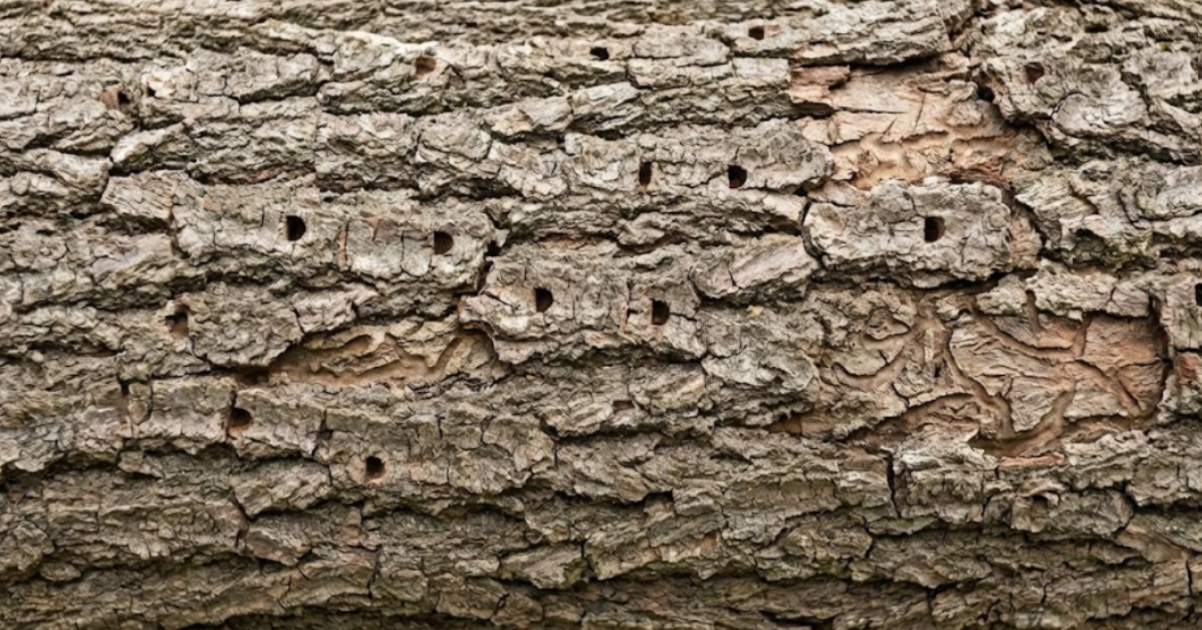
- D-shaped exit holes (about 1/8 inch wide) on bark.
- S-shaped tunnels beneath the bark.
- Thinning canopy and dead branches at the top.
- Increased woodpecker activity.
- Sprouting along the trunk or base (a sign of stress).
Spread and Impact in Michigan
EAB spreads quickly through the movement of infested firewood or nursery trees. While natural flight distance is limited, human activity accelerates its range. In many Michigan counties, EAB has wiped out entire ash populations, dramatically altering local ecosystems.
Management and Treatment
- Systemic insecticide injections can protect high-value ash trees when applied regularly.
- Avoid transporting firewood between regions.
- Remove dead or dying ash trees to prevent hazards.
When to Remove an EAB-Infected Tree
If more than 30% of a tree’s canopy is gone or bark is peeling to reveal larval tunnels, the tree is structurally compromised. Dead ash trees become extremely brittle, posing serious fall risks during storms or high winds. In these cases, professional removal is the only safe option.
How to Tell When a Tree Needs to Be Removed
Tree removal is often a last resort, but it’s sometimes necessary for safety and ecological reasons. A diseased or infested tree can become unstable, increasing the risk of property damage or injury.
Signs a Tree Should Be Removed
- More than half the canopy is dead or declining.
- The trunk shows deep cracks, cavities, or peeling bark.
- The tree leans significantly or has root damage.
- Fungal growth (like conks or mushrooms) is present at the base.
- Disease is confirmed and likely to spread underground.
When a Tree Can Be Saved
If only small branches are affected or the infection is limited, trimming and treatment may help. Some fungal and pest problems can be contained with targeted pruning, systemic fungicides, or soil treatments.
Importance of Timely Action
Waiting too long can make removal more dangerous and expensive. Once decay sets in, a tree’s structure weakens, making it unpredictable to cut or control. Early professional evaluation helps determine the safest course of action.
Environmental Impact of Tree Diseases
The loss of a single tree can ripple through the ecosystem. Trees regulate air quality, prevent soil erosion, and support countless species. When trees compartmentalize wounds to survive, they follow a biological process known as the CODIT model, which allows them to seal off infected wood. When diseases wipe out specific types, like ash or the balance shifts:
- Loss of habitat: Birds and insects that depend on these trees decline.
- Increased flooding: Tree roots stabilize soil and absorb excess water.
- Heat island effect: Fewer trees mean hotter urban areas.
- Reduced carbon storage: Mature trees capture significantly more CO₂ than young replacements.
That’s why preventing disease spread isn’t just a homeowner’s concern; it’s a community responsibility.
Steps to Prevent Tree Disease on Your Property
- Schedule annual tree inspections: Arborists can spot early warning signs you might miss.
- Prune during dormant seasons: Late fall to winter reduces infection risks.
- Disinfect tools: Use a 10% bleach solution between trees when pruning.
- Water deeply during dry periods: Stress makes trees more vulnerable.
- Avoid bark injuries: Mowers and trimmers can create entry points for pathogens.
- Diversify your plantings: Avoid monocultures that make entire landscapes vulnerable to a single pest or disease.
Healthy maintenance is the most effective defense against widespread disease. Furthermore, the Insurance Information Institute emphasizes that homeowners are responsible for maintaining the health of their trees to ensure insurance claims for storm damage are not denied due to negligence.
Replanting After Removal: Choosing Disease-Resistant Species
Losing a tree can feel like losing part of your landscape, but replacement planting helps restore balance. When replanting after Oak Wilt, Dutch Elm, or EAB removal, choose species that are resistant or tolerant to these problems:
Oak Wilt Alternatives
- Swamp white oak (Quercus bicolor)
- Bur oak (Quercus macrocarpa)
Dutch Elm Alternatives
- Hybrid elms like ‘Princeton’ or ‘Valley Forge’ (resistant to DED)
- Hackberry (Celtis occidentalis)
Emerald Ash Borer Alternatives
- Maple (Acer saccharum or Acer rubrum)
- Ginkgo (Ginkgo biloba)
- Kentucky coffeetree (Gymnocladus dioicus)
Diversity helps landscapes adapt to new challenges. A mix of native species ensures better resilience against future pests or diseases.
How to Handle Diseased or Dead Trees Safely
When a tree is confirmed infected or dead, removal must be done with care to prevent further spread. Best practices include:
- Avoid cutting during high-risk seasons when beetles or spores are active.
- Chip or burn infected wood instead of storing it.
- Grind stumps to remove potential fungal reservoirs.
- Clean all tools and machinery used during removal.
For large trees or those near structures, professional removal ensures safety and compliance with local regulations.
Frequently Asked Questions
Can a tree recover from Oak Wilt or Dutch Elm Disease?
Recovery is rare once these diseases reach the trunk or root system. Early pruning may help slow the spread, but complete removal is often necessary to protect nearby trees. Once vascular tissue is infected, the damage cannot be reversed.
Is it safe to use infected wood for firewood?
No. Many pathogens and insects remain active in cut wood and can easily spread to nearby healthy trees. Always destroy, chip, or dispose of infected material properly to prevent further infestation or disease transmission.
How quickly can Emerald Ash Borer kill a tree?
Most ash trees die within two to four years of initial infestation, depending on the tree’s health and local beetle population density. Infested trees typically show canopy thinning and bark splitting within the first year.
What time of year is best for tree removal?
Winter is often ideal because trees are dormant, and frozen ground minimizes damage to lawns and landscapes. However, hazardous or unstable trees can be removed year-round when safety or property risk is involved.
Should I replace the removed trees right away?
Yes. Replanting soon after removal helps maintain soil stability and property aesthetics. Choose native or disease-resistant species suited to your site’s soil, light, and drainage conditions to strengthen long-term landscape resilience.
Act Early to Protect Michigan’s Trees
Michigan’s trees face powerful natural and man-made threats. Oak Wilt, Dutch Elm Disease, and Emerald Ash Borer have already changed the landscape, but awareness and proactive management can prevent future losses.
If you notice unusual wilting, bark damage, or canopy thinning, don’t wait. Early intervention, whether through professional diagnosis, pruning, or removal, can save your remaining trees and protect the surrounding ecosystem.
For expert help and trusted care, contact Clean Cut Tree Experts, proudly serving Farmington Hills and surrounding Michigan communities. Our team specializes in diagnosing and removing diseased trees safely and efficiently.