Key Takeaways
- Uneven canopy growth often signals structural stress, environmental factors, or disease.
- Trees with lopsided branches may be at risk of limb failure or leaning.
- Early assessment and pruning can prevent property damage.
- Soil conditions, sunlight, and nearby obstacles influence canopy shape.
- Consulting a certified arborist ensures safe corrective measures.
Understanding Uneven Canopy Growth
What Uneven Canopy Growth Means
Uneven canopy growth occurs when one side of a tree develops more foliage or longer branches than the other. This asymmetry is rarely cosmetic; it often indicates underlying stress, environmental imbalance, or structural weakness. Left unchecked, it can increase the risk of branches breaking, trunk lean, or long-term instability.
Tree growth patterns and canopy shape are influenced by biological processes such as phototropism and internal resource distribution. You can explore these fundamentals in detail in this tree biology and morphology guide
Common Causes of Uneven Growth
Environmental factors such as sunlight exposure, wind direction, and nearby obstructions play a major role in how a tree develops. Trees often grow toward light sources, which gradually creates an imbalance.
Soil and root conditions are equally critical. Compacted soil, poor drainage, or restricted root zones can limit water and nutrient uptake, leading to uneven canopy development. According to the USDA, soil health principles for plant growth directly impact how evenly a tree develops. Pests, disease, and structural damage can also weaken one side of the tree, contributing to asymmetrical growth.
For more technical reading on tree growth patterns, see Wikipedia – Tree Morphology.
Risks of an Uneven Canopy
A lopsided canopy creates uneven weight distribution across the tree. This increases stress on the trunk and major limbs, especially during storms or heavy snow.
Research from the USDA Forest Service explains how tree structural stability and failure risk factors increase when imbalance is left uncorrected.
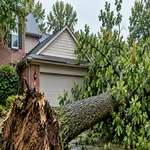
This can result in falling branches, property damage, or safety hazards around homes and driveways.
Property Damage Potential
Even a minor imbalance in branch growth can lead to:
- Fallen limbs cracking driveways or sidewalks
- Canopy overgrowth shading gardens or blocking gutters
- Future emergency tree removal costs if left unaddressed
What Homeowners Should Do
Assessing the Tree Safely
- Stand back and visually inspect the canopy for sagging or broken branches.
- Check for trunk cracks, exposed roots, or lean.
- Take note of nearby structures or obstacles that could be impacted.
When to Call a Professional
Contact a certified arborist if you notice:
- Large branches leaning heavily to one side
- Trunk cracks or splitting
- Signs of disease or insect infestation
- Rapid canopy changes after storms
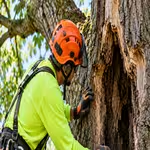
Professional tree services can perform structural pruning, risk assessment, and corrective support to prevent emergencies. For more professional help, visit a tree service company.
Placement and Maintenance for a Balanced Canopy
Pruning and Care Tips
- Remove dead, weak, or competing branches to balance canopy weight.
- Early pruning encourages strong branch attachment and central leader development.
- Avoid topping the tree; it increases weakness and stress.
Mulching, Watering, and Soil Management
- Mulch the root zone to retain moisture and regulate soil temperature.
- Ensure even watering to prevent stress on one side of the tree.
- Inspect soil for compaction or drainage issues and correct if needed.
Real-World Field Insights
Last spring, we visited a home in Lansing where a 25-year-old Red Maple had developed a lopsided canopy toward the southwest. The homeowner assumed the tree was “healthy” because the foliage looked dense. Upon inspection, we discovered:
- Root compaction on the northeast side due to a paved patio
- Minor decay in the lower limbs caused by moisture accumulation
- Lean has been developing slowly over several years
Corrective pruning and mulching encouraged balanced growth and reduced the risk of limb failure in future storms. This example highlights that uneven canopy growth is often a slow-building issue, and early intervention is crucial. Local Michigan tree service companies offer inspections and pruning for these scenarios.
Frequently Asked Questions
Q1. Can uneven canopy growth kill a tree?
Not directly, but it can create stress that leads to limb failure, trunk lean, or increased susceptibility to pests and disease.
Q2. How can I tell if my tree is at risk of falling?
Look for significant lean, cracks in the trunk, exposed roots, or one-sided branch overgrowth. An arborist can perform a professional risk assessment.
Conclusion
Uneven canopy growth is usually a warning sign that a tree is under stress or facing environmental challenges. Early assessment, corrective pruning, and proper care reduce risks to property and people. By addressing uneven growth promptly and consulting a professional, homeowners can ensure healthy, safe trees for decades.
Reviewed by Clean Cut Tree Experts
This safety analysis has been reviewed by the team at Clean Cut Tree Experts to ensure accuracy based on hands-on tree care experience and real-world site conditions. Guidance in this content is supported by industry best practices from the USDA Forest Service and the Michigan State University Extension.