August 17, 2026
Key Takeaways
- Two trees can take nearly identical storm damage and have completely different long-term outcomes.
- A tree’s pre-storm health has more influence on recovery than the severity of the damage itself.
- Root damage and trunk splits are far more serious than broken branches, even when branch damage looks worse.
- Species, age, and how a tree is treated in the weeks after a storm all affect its chances of recovery.
- Some trees that appear fine immediately after a storm decline gradually over the following one to three years.
- A professional assessment soon after a storm can catch hidden damage before it becomes a bigger hazard.
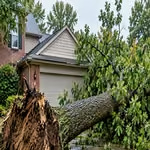
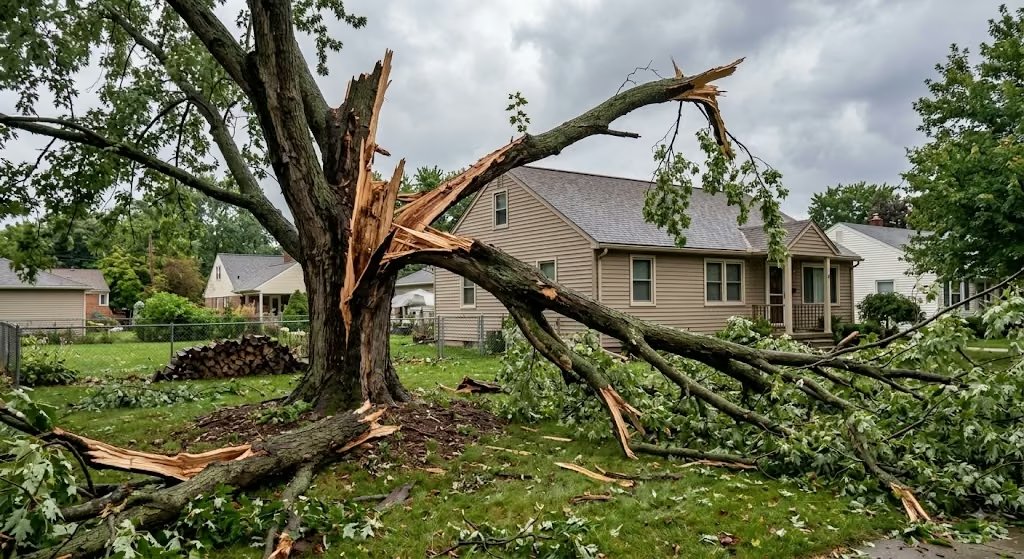
After a significant storm rolls through Southeast Michigan, same pattern has been witnessed almost every time. Two trees on the same street, sometimes even in the same yard, sustain similar-looking damage, and a year later one has filled back in almost like nothing happened, while the other is visibly declining, dropping limbs, or is dead outright. Homeowners often ask us why that happens, since the initial damage from the ground looked comparable. The answer comes down to a combination of factors that aren’t always visible right after the storm passes.
It’s Rarely About How Bad the Damage Looks
One of the most common misconceptions is that the amount of visible damage predicts a tree’s outcome. In reality, a tree that lost a third of its canopy in broken branches can often recover fully within a couple of growing seasons, while a tree that looks almost untouched from the ground can be in far more serious trouble if the real damage happened underground or inside the trunk.
Branch loss is something most healthy trees are biologically equipped to handle. Trees have evolved over millions of years to survive storms, and losing limbs is a normal part of that process. What’s much harder for a tree to recover from is damage to the root system or a compromise to the trunk’s structural integrity, and both of those can be nearly invisible without a trained inspection.
The Health of the Tree Before the Storm
The single biggest predictor of whether a tree recovers from storm damage is the condition it was in before the storm ever hit. A tree that was already stressed by drought, disease, poor soil, construction damage, or old age has far fewer reserves to draw on for recovery. Storm damage on top of pre-existing stress often becomes the tipping point that pushes a struggling tree into terminal decline, even if the storm damage itself was moderate.
Conversely, a vigorous, well-established tree with a healthy root system and no underlying issues can often withstand fairly significant branch loss and still bounce back within a season or two, producing new growth to compensate for what was lost. This is part of why we always ask about a tree’s recent history, not just what happened during the storm, when we’re assessing whether a damaged tree is worth saving.
Why Root and Trunk Damage Matters More Than Branch Damage
Roots anchor a tree and supply nearly all its water and nutrients. When high winds rock a tree’s trunk back and forth, especially in saturated soil, the root system can tear or shear below the surface without any visible sign above ground. A tree with damaged roots may leaf out normally the following spring, giving the appearance of full recovery, only to decline over the next one to three years as the compromised root system gradually fails to support the canopy.
Trunk damage carries similar risk. A crack or split in the main trunk, even a partial one, compromises the tree’s structural integrity in a way that new growth can’t fully repair, because trees don’t heal wounds, they compartmentalize them. A significant trunk wound essentially becomes a permanent structural weak point and, in many cases, an entry point for decay organisms that can spread internally over subsequent years, weakening the tree from the inside even as the canopy looks healthy from the outside.
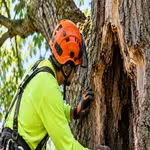
This is why an arborist’s post-storm inspection typically focuses less on how many branches came down and more on checking the trunk for cracks, examining the base of the tree for soil heaving or exposed roots that suggest the root plate has shifted, and looking for any lean that wasn’t present before the storm.
Species Differences in Storm Resilience
Not all trees respond to storm stress equally.
- Species with dense, strong wood and deep root systems, like oaks and hickories, tend to be more storm-resistant and typically recover better from damage when it does occur.
- Species known for weaker wood or shallow, wide-spreading root systems, such as silver maple, Bradford pear, and some fast-growing willows, are both more prone to storm damage in the first place and less likely to fully recover once significant damage occurs.This doesn’t mean every silver maple is doomed after a storm, but it does mean the threshold for concern is generally lower for species known to have weaker wood or more fragile root architecture. A professional assessment takes species-specific tendencies into account when weighing whether a tree is a good candidate for recovery versus removal.
The Critical Window After a Storm
What happens in the weeks immediately following a storm has a real impact on a tree’s long-term outcome. Broken branches with torn, jagged wood left in place are more vulnerable to disease and pest infestation than a branch that’s been properly pruned back to a clean cut at the branch collar. Leaving storm-damaged limbs unaddressed doesn’t just look messy, it leaves an open wound that a compromised, already-stressed tree has to try to compartmentalize without the benefit of a clean, professional cut.
This is a big part of why prompt storm cleanup matters beyond simple curb appeal. A tree given proper post-storm care, including clean pruning cuts on damaged limbs and an assessment of any less obvious trunk or root issues, has a meaningfully better shot at long-term recovery than a tree left to fend for itself with jagged, torn wounds.
Signs a Storm-Damaged Tree Is Declining, Not Recovering
Even after initial cleanup, it’s worth watching a storm-damaged tree over the following one to two growing seasons for warning signs that recovery isn’t happening the way it should:
- New leaves that are noticeably smaller or sparser than in previous years
- Dieback appearing in the upper canopy the season after the storm, rather than immediately.
- A new or increasing lean in the trunk
- Fungal growth or mushrooms appearing at the base, which often signals root or trunk decay.
- Bark that’s cracking, peeling, or separating from the trunk in new areas
- Significantly reduced canopy density compared to neighboring, undamaged trees of the same species
Any of these signs is worth a professional evaluation from an experienced tree service firm in Michigan. Since a tree in gradual decline after storm damage can become a hazard well after the storm itself is a distant memory. For more than 25 years, Clean Cut Tree Experts have responded to storm damage throughout Farmington Hills, Howell, and the surrounding Southeast Michigan communities. Since 2010, Clean Cut Tree Experts has offered 24/7 emergency tree service specifically because the hours and days right after a storm matter for both immediate safety and a tree’s long-term recovery.
Clean Cut Tree Experts don’t just clear debris. We assess the whole picture, checking trunks and root zones for the hidden damage that predicts decline, not just the visible branch loss that predicts nothing on its own. Clean Cut Tree Experts is fully licensed and insured, and for insurance-covered storm damage and we bill your provider directly so there’s no cost upfront during an already stressful time. If a storm has left a tree on your property looking rough, or looking fine but worth a second opinion, Clean Cut Tree Experts are available around the clock to help you figure out what comes next. Call our team at – (734) 290-3370 to Book Your Free Estimate !!
We offer free estimates and a senior discount, along with savings for teachers, first responders, and military families throughout our Farmington Hills and Howell service areas.
Frequently Asked Questions About Storm-Damaged Trees by Homeowners in Michigan
How long after a storm should I have a damaged tree inspected in Michigan?
As soon as possible, ideally within a few days for major damage. For trees that look fine but were near the worst of the storm, an inspection within a couple of weeks can catch hidden root or trunk issues before they become bigger hazards.
Can a tree with root damage still look healthy the year after a storm?
Yes, and this is one of the trickiest parts of storm recovery. A tree can leaf out normally the following spring even with a compromised root system, only to decline gradually over the next one to three years.
Is it normal for a tree to lose some branches in a storm and be fine?
Yes, branch loss alone is something most healthy trees can recover from. The bigger concerns are trunk cracks, a new lean, or root plate movement, which are much harder to spot without a professional inspection.
Do Clean Cut Tree Experts offer emergency storm response?
Yes, we provide 24/7 emergency tree service throughout Farmington Hills, Howell, and Southeast Michigan for storm damage and other hazardous tree situations.
What species are most likely to decline after storm damage?
Species with weaker wood or shallow root systems, such as silver maple, Bradford pear, and some willows, tend to be both more prone to storm damage and less likely to fully recover compared to species like oak.
Summary Checklist: Assessing a Storm-Damaged Tree
| Step | Key Consideration | Action Item |
| Immediate Safety | Check for hanging limbs and hazards | Stay clear and call for emergency assessment if needed |
| Trunk Inspection | Look for cracks or new splits | Have any trunk damage evaluated by a professional |
| Root Zone Check | Look for heaving soil or a new lean | Flag for follow-up monitoring even if not obvious |
| Species Consideration | Factor in the tree’s storm resilience | Weigh recovery odds against species tendencies |
| Prompt Cleanup | Address torn, jagged wounds quickly | Get clean, professional pruning cuts on damaged limbs |
| Ongoing Monitoring | Watch for delayed decline signs | Reassess canopy density over the following growing seasons |
Final Advice
Storm damage to trees does not always reveal its full impact immediately after the event. In many cases, trees that eventually recover and those that gradually decline over the following years may appear nearly identical in the aftermath of a storm. Hidden structural weaknesses or internal damage can remain undetected for an extended period. As a result, a tree that seems healthy today may develop significant problems over time. If your tree was affected by a recent storm in Michigan, it is advisable to have it professionally inspected, regardless of its current appearance. A thorough assessment can identify potential risks before they become serious hazards. Early evaluation also helps determine the most appropriate course of action to preserve the tree’s health and ensure safety. Taking proactive measures can prevent costly damage and unexpected tree failure in the future. Call Clean Cut Tree Experts at (734) 290-3370 for a professional storm damage assessment.