April 16, 2026
Key Takeaways
- Harsh winters expose trees to freeze-thaw cycles, desiccation, and soil heaving that weaken their structure.
- While these are common, MSU Extension highlights that “rodent girdling” (bark stripped by rabbits or mice under snow) is a hidden “secondary killer” that often causes trees to appear normal in spring, only to die suddenly in mid-summer.
- Removing snow from branches incorrectly or late-season pruning often worsens winter stress.
- Proper care — like deep watering in spring, mulching, and careful pruning- supports recovery.
- Some winter damage requires professional evaluation to prevent future hazards.
“Livonia tree stress after winter” refers to the decline in tree health caused by Michigan’s severe winter conditions, especially deep freezes, heavy snow or ice loads, fluctuating temperatures, and late frost events. When winter extremes beat up trees, they don’t always show damage immediately. Many symptoms appear weeks to months later, leaving homeowners puzzled about what went wrong.
What Winter Does to Trees in Livonia
Michigan trees are adapted to cold, but harsh winter conditions push them beyond their limits, especially near urban yards where snow reflection, compacted soil, and limited root space make recovery harder.
Freeze-Thaw Cycles and Bark Cracks
According to UConn research, frost cracks are specifically caused when the sap freezes and expands within the phloem layer after a warm winter day, causing the wood to separate and split longitudinally—sometimes several inches deep. This can result in:
- Vertical cracks (frost cracks)
- Sunscald (bark damage on south/west sides)
- Weakening of vascular tissues under the bark
Bark cracks expose inner wood to pests and diseases, making stress worse over time.
Key Stressors Trees Experience After Harsh Winters
Root Damage from Soil Heaving
During freeze-thaw cycles, soil lifts and settles (called heaving). Roots, especially shallow ones, get stretched or broken. This reduces water and nutrient uptake and weakens overall stability. Trees with shallow roots, like Silver Maples or Elms, show this most easily.
Desiccation (Winter Drying)
Cold winter winds pull moisture from leaves and bark faster than roots can absorb it. Even if the soil isn’t frozen solid, desiccation can leave needle and leaf tips brown and crispy in spring – a major sign of winter stress.
Ice and Snow Load Damage
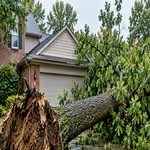
Heavy snow and ice put massive weight on limbs, leading to:
- Split crotches
- Broken branches
- Structural weaknesses that show up later in the spring
Big, leafy trees next fall, like maples or oaks that didn’t drop early leaves, often suffer the worst.
Signs Your Tree Is Stressed from Winter
Early detection makes recovery easier. After a harsh Livonia winter, watch for:
Visible Bark Cracks or Seams
These look like long vertical splits. If you see them on the south or west sides, winter sun + freeze is usually to blame.
Twig Dieback or Dead Branches
Branches that snap easily or show no buds in spring have likely lost connection to the root system.
Delayed Leaf Emergence
Sometimes only part of a tree’s leaves are missing, meaning the rest is dead or too weak.
Leaf Scorch and Brown Tips
Even after leaves emerge, drought-like symptoms in spring can reflect winter dehydration, not lack of rain.
What Homeowners Should Do in Spring
Spring care can mean the difference between recovery and decline.
Deep Watering
Break drought-like stress with slow, deep watering at the drip line where feeder roots live.
Mulching to Protect Roots
Apply 2–4 inches of organic mulch around the base (but keep mulch off the trunk) to regulate soil temp and retain moisture.
Leave Dead Wood for Assessment
Don’t rush to remove branches immediately. Some dead wood falls naturally, and early pruning of marginal wood can stress the tree further.
When to Seek Professional Help
Winter’s effects don’t always show clearly at first. If you see:
- Large cracks or splits near the trunk
- Leaning or unstable posture
- Major limb failures
- Signs of disease or borers
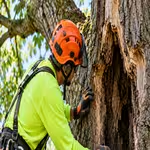
Then a tree risk assessment by an arborist can prevent surprises later in the season.
Local professional Tree Removal in Southeast Michigan can evaluate risk, prune structurally weak limbs, and help plan long-term recovery.
Real-World Field Insight
Last spring, we inspected a mature Norway Maple in a Livonia yard. After a brutal winter with wide freeze-thaw swings, the homeowner noticed one large limb sagging. At first glance, the tree looked okay as leaves were coming in, but closer inspection revealed vertical bark cracks and brittle twigs.
The culprit? Soil heaving had damaged the main roots on the south side, and the weight of ice from the previous winter stressed an included bark union. A structural prune and slow rehabilitation watering plan kept the tree viable, but only after a close call.
Lesson: Visible leaf growth isn’t always a sign of complete health, and internal damage may still lurk.
Frequently Asked Questions
When does winter damage show up on trees?
Damage often appears in spring or even into early summer, after snow melt and wind events reveal internal weaknesses.
Can a tree recover after winter cracks?
Yes, if cracks are shallow and treated early. Deep structural splits may require professional pruning or removal.
Does ice always harm trees?
Not always brief, light ice isn’t usually fatal. Prolonged heavy ice loads do the most damage.
Should I prune right after winter?
The University of Minnesota advises waiting until mid-to-late spring because buds are often more cold-hardy than leaves. A branch that looks dead in April may still “fill in” by June if the buds survived the deep freeze.
Are older trees more susceptible to winter stress?
Yes. Older, established trees with large canopies have more surface area for ice/snow load and slower recovery.
Can mulch help with winter stress?
Yes. Mulch keeps soil temperatures more consistent and prevents freeze-thaw shock to roots.
How does drought after winter affect trees?
Post-winter drought adds icing on the injury; dehydrated roots struggle to supply water to recovering limbs.
Do all tree species respond the same to winter stress?
No. Oaks, hickories, and some pines hold up better than maples, lindens, and birches in freeze-thaw extremes.
Conclusion
Trees in Livonia show stress after harsh winters because repeated freeze-thaw cycles, desiccation, soil heaving, and ice loads all challenge their internal systems. The good news? With proper spring care, deep watering, strategic mulch, careful pruning timing, and professional evaluation when needed, many trees bounce back. Early recognition and intervention keep your landscape strong, safe, and beautiful year after year.