August 14, 2026
Key Takeaways
- Trees don’t heal wounds as humans do; they seal them off through a process called compartmentalization.
- The scientific model behind this process is known as CODIT, or Compartmentalization of Decay in Trees.
- A properly placed pruning cut, at the branch collar, allows a tree to wall off damage efficiently.
- Poor cuts, including flush cuts and stub cuts, interfere with a tree’s natural defense system.
- Time of year, tree species, and overall health all affect how well a tree compartmentalizes a wound.
- Understanding this science is a big part of why professional pruning technique matters as much as the decision to prune at all.
Cut a person’s skin and the wound heals from the inside out, new tissue replacing damaged tissue until the injury is gone. Trees don’t work that way. A tree can never truly heal a wound in the sense of restoring the original tissue. Instead, trees survive injury by containing it, walling off the damaged area so decay and infection can’t spread into the rest of the trunk or canopy. This process is called compartmentalization, and understanding it explains why the way a tree is pruned matters just as much as the decision to prune it in the first place.
What Compartmentalization Actually Means
The scientific framework behind this process was developed by researcher Alex Shigo and is known by the acronym CODIT, which stands for Compartmentalization of Decay in Trees. The core idea is that when a tree is wounded, whether by a broken branch, storm damage, or a pruning cut, it doesn’t attempt to regenerate the damaged wood the way an animal regenerates tissue. Instead, the tree produces chemical and physical barriers around the injury site, isolating it from the healthy wood around it.
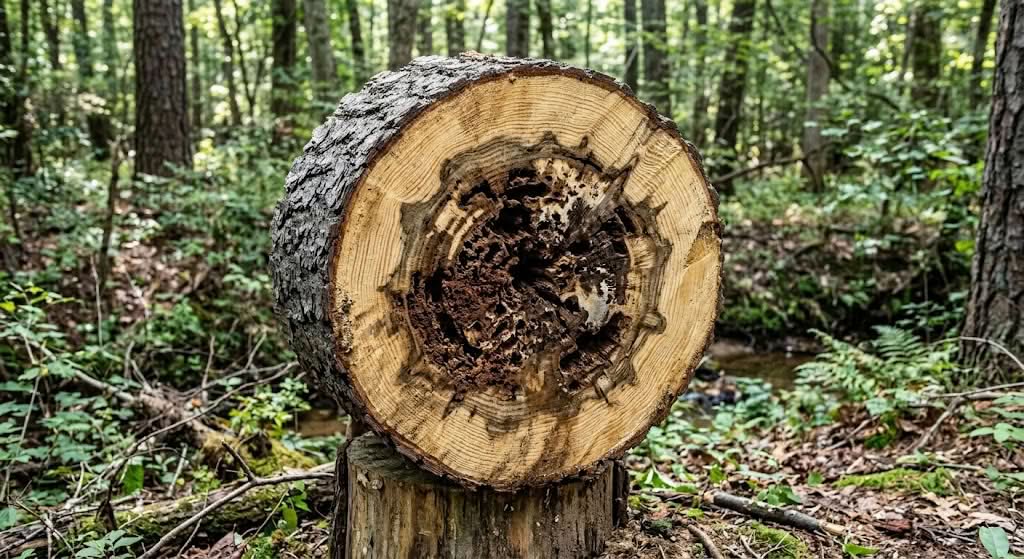
Wood that has been walled off this way stays exactly as damaged as it was on the day of the injury, permanently. The tree simply grows new, healthy wood around that compartment, layer by layer, year after year, effectively building a barrier between the past injury and its ongoing growth. A tree trunk with an old wound is, in a very real sense, carrying that injury inside it for the rest of its life, sealed off but never gone.
The Four Walls of CODIT
Shigo’s model describes 4 distinct types of barriers, often referred to as walls, that a tree constructs around a wound, each with a different function and a different level of effectiveness.
- The first wall resists the vertical spread of decay up and down the trunk through the water-conducting tissue, and is generally considered the weakest of the four walls.
- The second wall resists inward spread toward the center of the trunk, formed by the growth rings present at the time of the injury.
- The third wall is made up of ray cells and resists lateral spread around the circumference of the trunk.
- The fourth wall, generally regarded as the strongest, is the new wood the tree lays down after the injury occurs, forming a barrier between all the wood that existed before the wound and all the wood that grows afterward.
Because these walls vary in strength, decay doesn’t spread randomly through a wounded tree. It tends to follow the path of least resistance, often moving further along the first wall than through the others. That’s part of why a rotted-out cavity in a tree trunk can sometimes extend surprisingly far from the original wound site.
Why the Location of a Pruning Cut Matters So Much
Every branch on a tree has a slightly swollen area where it joins the trunk, called the branch collar. This isn’t just a cosmetic feature. The branch collar contains specialized tissue positioned specifically to compartmentalize a wound efficiently if that branch is removed. A cut made just outside the branch collar allows the tree’s natural defense chemistry to activate exactly where it’s designed to work best.
A flush cut, one made too close to the trunk that removes the branch collar entirely, destroys this natural boundary. Without the collar’s protective tissue, the tree has a much harder time walling off the wound, and decay can spread more easily into the trunk itself. On the opposite end of the spectrum, a stub cut, where too much of the branch is left behind, leaves dead wood that the tree can’t compartmentalize efficiently either, since living tissue can’t seal around a section of wood that has no living cells feeding into the trunk’s defense system.
This is the technical reason professional arborists are trained to identify the branch collar precisely before making a cut. It looks like a small adjustment in cutting angle, but the biological difference between a proper cut and a flush cut can determine whether a tree successfully contains a wound for decades or develops a slow, spreading pocket of internal decay.
Why Some Trees Compartmentalize Better Than Others
Not every tree responds to wounding with the same efficiency. Species matters significantly. Oaks, for example, are generally strong compartmentalizers, which is part of why they can carry old wounds and still remain structurally sound for a very long time. Species like willows and silver maples tend to compartmentalize less effectively, which is one reason those species are more prone to internal decay and cavity formation after injury.
A tree’s overall health and vigor at the time of the wound also plays a major role. A tree already stressed by drought, poor soil, root damage, or disease has fewer resources available to build strong compartmentalization walls. This is part of why pruning is generally recommended during a tree’s dormant season in Michigan, typically late fall through winter, when the tree isn’t actively fighting for resources to support leaf growth and can direct more energy toward sealing pruning wounds once the growing season resumes.
The size of the wound matters too. Smaller cuts, made while a branch is still young and the branch collar is small, compartmentalize far more effectively than large cuts made on mature limbs. This is one of the strongest arguments for regular, proactive pruning throughout a tree’s life rather than infrequent, aggressive pruning sessions that require removing large limbs all at once.
What This Means for How We Prune
Understanding compartmentalization changes how a professional approaches every cut on a tree. It’s why it’s not advisable to top a tree, since topping cuts create large wounds in locations with no branch collar at all, leaving the tree with almost no ability to compartmentalize the damage effectively. That’s why tree service firms time major pruning work around dormant seasons when possible and are selective about how much canopy to remove in a single visit, since a tree with too many wounds to compartmentalize at once becomes vulnerable to decay spreading between unhealed injury sites.
It also explains why wound paint and pruning sealants, once a common recommendation, have largely fallen out of favor with certified arborists. Research has shown that sealing a wound with paint or tar doesn’t help a tree compartmentalize, and can in some cases trap moisture against the cut, interfering with the tree’s own, more effective natural defense process.
Since 2010, Clean Cut Tree Experts has brought a genuine understanding of tree biology to every trimming and pruning job across Farmington Hills, Howell, and the surrounding Southeast Michigan communities. As a tree care firm with more than 25 years of hands-on experience, we don’t just cut branches; we make decisions based on how a tree will respond to that cut for years afterward. Our arborists are trained to identify the branch collar on every cut, time major pruning work appropriately, and avoid the flush cuts, stub cuts, and topping practices that compromise a tree’s long-term health.
Clean Cut Tree Experts is fully licensed and insured, and we take a holistic approach to tree care that prioritizes long-term health and structural integrity over a quick trim that looks fine for one season and causes problems the next. If you want pruning work done by a crew that understands what happens inside the tree after the saw stops, call our team at – (734) 290-3370 to Book Your Free Estimate !!
We offer free estimates and a senior discount, along with savings for teachers, first responders, and military families throughout our Farmington Hills and Howell service areas.
Frequently Asked Questions About Tree Compartmentalization and Pruning in Farmington Hills, MI
Can a tree wound ever fully heal?
No, not in the way human skin heals. A tree seals off, or compartmentalizes, the damaged wood permanently and grows new, healthy wood around it. The original wound stays inside the tree forever, contained but never regenerated.
Why shouldn’t I use wound paint on a pruning cut?
Research has shown wound paint doesn’t improve a tree’s ability to compartmentalize, and it can sometimes trap moisture against the cut, which may interfere with the tree’s natural healing process rather than help it.
Is it better to prune a little bit every year or a lot at once?
Regular, smaller pruning sessions are generally better for a tree’s long-term compartmentalization ability. Removing large limbs all at once creates bigger wounds that are harder for the tree to wall off effectively.
What’s the difference between a flush cut and a proper pruning cut?
A proper cut is made just outside the branch collar, preserving the tissue the tree needs to compartmentalize the wound efficiently. A flush cut removes the branch collar entirely, making it much harder for the tree to contain the damage.
Does tree species affect how well a tree recovers from pruning?
Yes. Species like oak tend to compartmentalize wounds effectively, while species like willow and silver maple are more prone to spreading internal decay after injury.
Summary Checklist: Compartmentalization of Decay in Trees
| Step | Key Consideration | Action Item |
| Cut Placement | Preserve the branch collar | Never make flush cuts or leave long stubs |
| Timing | Prune during dormant season when possible | Schedule major pruning for late fall through winter |
| Wound Size | Smaller cuts compartmentalize better | Prune young trees regularly rather than waiting |
| Tree Health | Stressed trees compartmentalize poorly | Address soil, water, and pest issues before major pruning |
| Avoid Sealants | Wound paint doesn’t aid healing | Let the tree’s natural defenses do the work |
| Species Awareness | Some species decay faster after wounds | Adjust pruning frequency and caution based on species |
Final Advice
Understanding how trees heal after pruning can help you make better tree care decisions. Since trees seal wounds through compartmentalization rather than regenerate damaged wood, every pruning cut should preserve the branch collar and avoid unnecessary injury. Prune during the appropriate season, remove small branches before they become large problems, and avoid flush cuts, stub cuts, or topping. Proper pruning techniques support a tree’s natural defense system, reduce the risk of decay, and promote long-term health. When in doubt, consult a qualified tree care professional to ensure pruning is performed according to accepted arboricultural standards. Call Clean Cut Tree Experts at (734) 290-3370 to Book Your Free Estimate on professional pruning throughout Farmington Hills, Howell, and Southeast Michigan.